Showing posts with label Lee Majors. Show all posts

Monday, October 6, 2014

‘MEN FROM SHILOH’ REVIEW, PLUS ‘GENE AUTRY CHRISTMAS BOOK’, LONE PINE FEST!


THE MEN FROM SHILOH – A Home Video Review


The good folks at Shout Factory/Timeless Media Group have released a ‘special edition’ of THE MEN FROM SHILOH, the 9th and final season of THE VIRGINIAN series.  The nine disk set includes all twenty-four episodes, as well as a disk of interviews.

The TV series THE VIRGINIAN was ground-breaking in many ways when it arrived on NBC in 1962.  It was the first Western series with a literary pedigree, being based, however loosely, on the Owen Wister book which many consider to be the birth of the serious Western novel.  It was the first TV series of any genre to star an actor with the stature of Lee J. Cobb, who’d created Willy Loman on Broadway in Arthur Miller’s DEATH OF A SALESMAN, and was twice Oscar nominated for his work in ON THE WATERFRONT and THE BROTHERS KARAMAZOV.  And while it was preceded by brilliant anthology series like PLAYHOUSE 90, which did live full-length plays on television, THE VIRGINIAN was the first series to do a feature-length, color film, single camera, largely outdoor action movie every week!  They did thirty of them that first year, and by the end of their 9th and final season, they had produced 249 movies.  

The title character was played by James Drury, from the first to the final episode, and to a great degree the series rose and fell on his portrayal of the mysterious man who never revealed his name, or much else about himself outside of the state of his birth.  I’ve heard Drury comment that he was the original ‘man with no name,’ and it’s true; his and Eastwood’s subsequent, quietly confident, sardonic, mysterious characters have much in common.  The Virginian was the foreman of Judge Henry Garth’s (Lee J. Cobb) Shiloh Ranch, outside of Medicine Bow, Wyoming.  Doug McClure, like Drury, was there from the first episode to the last, playing the top hand after the Virginian and his best friend, Trampas – an ironic choice of name, considering that, in the novel, Trampas was the Virginian’s most despised enemy.

Many of the successful Western series up to that date had focused either on families, like BONANZA and THE RIFLEMAN, or groups of working men, like RAWHIDE.  THE VIRGINIAN wisely did both; there were plenty of men in the bunkhouse, and in the big house, Judge Garth, a widower (this is 1960s television after all), always had nieces and nephews to help raise and/or tame.  Among the ‘youngins’ who graced the series were Roberta Shore from 1962 to 1965, Diane Roter from 1965 to 1966, Sara Lane from 1966 to 1970, and Don Quine from 1966 to 1968.  There always needed to be a patriarch, and when Lee J. Cobb left after 120 episodes in 1966, he’d be replaced first by Charles Bickford, and then by WAGON TRAIN’s John McIntire.  Among the many fine actors who appeared as regulars for a few seasons as lawmen or drovers were Clu Gulager as Sheriff Emmet Ryker, Gary Clarke, Randy Boone, L.Q. Jones, and Tim Matheson. 

I had the pleasure of attending the 50th Anniversary Celebration of THE VIRGINIAN series, and its move to the INSP Network, at the Gene Autry Center.  These links will bring you to my four-part coverage of the event, and several interviews:   PART ONE; PART TWO; PART THREE; PART FOUR.

Eight years was a terrific run, but by 1970, a lot of the world had changed.  The once-dominant Western genre was no longer TV’s favorite, at least in part as the result of an anti-violence policy at the networks that restricted how much action an episode was allowed.  WAGON TRAIN and RAWHIDE were gone for five years, THE BIG VALLEY had just ended, and HIGH CHAPARRAL would only last one more season.   GUNSMOKE, which had begun in 1955 and would run until 1975 (plus TV movies), had saved itself from extinction by refocusing its plot-lines around guest stars rather than regulars, and BONANZA had added semi-brothers David Canary and Mitch Vogel to perk things up.


(Here's the VIRGINIAN theme from season three by Percy Faith)

Plus, the freshness and youthful energy of the spaghetti westerns tended to make Western TV appear a bit staid and tired.  That’s when the powers-that-be at NBC decided to try and re-think THE VIRGINIAN (now they’d say re-brand or reinvent), and turned it into THE MEN FROM SHILOH.  Unlike any of the other Western series of the time, SHILOH took its revamping cues from Sergio Leone and Sam Peckinpah.  Gone was the sweeping heroic theme by Percy Faith, replaced by a new, beautiful theme by Leone’s signature composer, Ennio Morricone which was, by turns, wistful and relentless.  Gone was the familiar title sequence with each star riding on horseback towards camera. Instead there was a mix of sunrise footage, historical photos and high-contrast graphics that could have come straight out of the previous year’s THE WILD BUNCH. 


(Here's the MEN FROM SHILOH theme by Ennio Morricone)

Then there were the stars – a new patriarch in one-time big-time MGM leading man Stewart Granger; Lee Majors, fresh from THE BIG VALLEY, as Roy Tate, sporting a big, mean-looking mustache; Doug McClure, back as Trampas, sporting an even bigger mustache; and James Drury as the Virginian, sometimes sporting a gun the length of his leg!  McClure’s and Drury’s wardrobe, unchanged since 1962, were completely different.  Granger played a retired British colonel who had bought Shiloh Ranch, and was maintaining its personnel – but there would be no more nieces and nephews to clutter up the place: this was now a series strictly about men.


The bosses at NBC scored quite a coup in signing Granger.  Not only was he a talented and popular actor, although no longer a leading man, his presence would make the show more valuable in Europe.  Though the films were largely unseen in the United States, Stewart Granger had starred in two of the immensely popular German Westerns which gave birth to the spaghetti westerns.  Based on Karl May’s WINNETOU novels, Granger played the beloved character of Old Surehand.  With Granger, the series had a built-in European fan-base.

As had been the pattern of the series for some time, most episodes focused on one of the younger men, sometimes with and sometimes without Granger.  The first, THE WEST VS. COLONEL MACKENZIE, is noticeably influenced by the spaghetti western.  In the aftermath of the lynching of an accused rustler, the colonel is out to catch the culprits, and the town’s class division between the ranchers and the rabble, bordering on the divine right of kings, is distinctly European rather than American, and the filmmakers have fun with the fact that it’s an upper-class Brit who is trying to see justice done.  The second episode, THE BEST MAN, centers on Trampas, and his efforts to help a friend marry the senorita of his dreams.  As would become clear, in show after show the producers were willing to spend money for an exceptional guest cast; this one included James Farentino as the friend, and Desi Arnaz and HIGH NOON’S Katy Jurado as the bride’s parents. 

In GUN QUEST, a very well-written (by Robert Van Scoyk) and produced (by GUNSMOKE creator Norman MacDonnell) noir episode featuring the Virginian trying to prove himself innocent of murder, the cast is again staggering: CITIZEN KANE stars Joseph Cotten and Agnes Moorehead are reunited (although, as in KANE, they have no scenes together), joined by Brandon DeWilde, Anne Francis, John Smith –late of LARAMIE, former Western leading-man Rod Cameron, and Neville Brand, whose LAREDO series was a spin-off of THE VIRGINIAN.  And when Monte Markham, as the man the Virginian has been misidentified as, shows up, he is wearing -- I kid you not -- the Virginian’s red shirt and black leather vest from the first eight seasons! 


Former VIRGINIAN regular L.Q. Jones and James
Drury in the SHILOH episode TOWN KILLER


LADY AT THE BAR, this time with Trampas accused of murder, stars Oscar winner (for MRS. MINIVER) Greer Garson as his lawyer, E.G. Marshall as the judge, twice Oscar-nominated James Whitmore as the judge’s marshal, along with Kenneth Tobey, RIFLEMAN’s Paul Fix, Ian Wolfe, and Oscar-nominated (for THE BIG SKY) Arthur Hunnicut as the assayer. 

Not that the producers never cut corners.  THE MYSTERIOUS MR. TATE, which introduced Lee Majors’ character, had a good cast, with Majors and Granger joined by Robert Webber, Dane Clark, and young and blossoming Annette O’Toole, but it takes place almost entirely on-board an interior train set.  Similarly, in WITH LOVE, BULLETS AND VALENTINES, Trampas ‘wins’ a riverboat in a poker game, and Universal must have pulled stock footage from every film they ever had with a paddle-wheel – some of the mix of different film-stocks in jarring.     

Among the many other fine actors that turn up in the series are Susan Strasberg, John Ireland, Jane Wyatt, Lew Ayres, Elizabeth Ashley, and many others. 


Lee Majors' character makes an
inauspicious entrance in
THE MYSTERIOUS MR. TATE


As with any series, some shows are better than others, but all of the MEN FROM SHILOH episodes I’ve seen are worth watching, and some are extremely good.  The changes were an attempt to invigorate the series, and not a matter of ‘jumping the shark,’ by any means.  Of course, that raises the question of why it was the last season of THE VIRGINIAN.  At least a partial explanation is suggested by James Drury in the interview disk: many fans of THE VIRGINIAN didn’t even realize that MEN FROM SHILOH was THE VIRGINIAN, so they didn’t watch it. 

Another theory also came from James Drury at the 50th Anniversary Celebration.  When moderator Boyd Magers of Western Clippings  put the question to Drury, this was his reply:

They gave the show a new look, and everybody kind of signed on to it.  I got myself a new horse and a longer gun.  (big laughs from the audience) From a 5 ½ inch barrel to a 7 ½ inch barrel.  Longer sideburns. Much bigger hat.  A sense of accomplishment or…a sense of entitlement – let’s put it that way.  I smoked cigars on the show.  And I just mowed down anybody with my firearms.  But the thing is, we all thought it was a good idea at the time; it was a terrible idea.  And the worst of the terrible ideas was putting Stewart Granger in the same position that Lee Cobb had occupied, that John McIntire had occupied, Charles Bickford had occupied; that John Dehner had occupied.  These were truly great western actors.  Stewart Granger came in and decided that he was going to be the big star of the show:  fired my crew, fired my Academy Award-winning cameraman, got all new people.  He pissed off everyone in the entire organization.  And he sunk the show.  So thank you, Stewart, wherever you are.”

Indeed, there is a smugness and pomposity to Granger’s character that grates on you at times.  My feeling is that after 249 movies, there wasn’t a whole lot left to say.  I thoroughly enjoyed watching the shows, and one of the high points of this collection is the disk of interviews, featuring James Drury, Clu Gulager, L.Q. Jones and Roberta Shore.  They run from 20 minutes for Shore to 45 for Drury.  Each interview covers the subject’s life and career in general, and THE VIRGINIAN in particular, and the insights are often fascinating.  They’re all good, but James Drury’s is the best; in fact, it’s one of the very finest career interviews that I’ve ever watched.      

You can learn more about, or purchase, THE MEN FROM SHILOH, or many other Westerns series and movies, from Shout Factory, HERE


THE GENE AUTRY CHRISTMAS BOOK – Just in time for Christmas!


If you’re not a fan of Gene Autry’s Christmas music, then you either (a) hate Christmas, or (b) don’t realize how many of the best Christmas songs can be traced back to Gene.  Gathered together for the first time are twenty-five Christmas classics that Gene performed and helped popularize, each with sheet-music arranged for piano, vocal and guitar. 

Gene was inspired to write the lyrics to HERE COMES SANTA CLAUS in 1946, when he was Grand Marshal of the Santa Claus Lane Parade in Hollywood, and heard children chanting for their other favorite, just a couple of floats behind.   He had one of his greatest hits with RUDOLPH THE RED NOSED REINDEER, when he sought the song out after everyone had passed on it.  Some of the most amusing songs are not that well remembered – can you sing HARDROCK, COCO AND JOE (the three little dwarfs) without checking the sheet music?  How about SANTA’S COMING IN A WHIRLYBIRD? 

Some of the included songs are available in sheet music for the first time – eight of them, including WHIRLYBIRD and THE NIGHT BEFORE CHRISTMAS (IN TEXAS, THAT IS) were transcribed from Gene’s recorded performances.  Published by Hal Leonard, with an introduction by Gene Autry Entertainment President Karla Buhlman, and featuring photos, including some of Gene’s own Christmas cards, this book is sure to give the musically inclined something new to play and sing around the piano at that special time of year when we all like to think we can carry a tune.  You can buy it wherever you buy your sheet music, or direct from Gene Autry Entertainment HERE.  

And even if it’s a few months early, it’s never the wrong time to hear Gene sing HERE COMES SANTA CLAUS!


25TH ANNUAL LONE PINE FILM FESTIVAL OCT. 10-12!


Come join the stars and other fans at one of the world’s prime Western movie locations, Lone Pine, this coming weekend.  Since the 1920s, hundreds of Western movies and TV shows have been shot in and around the famed Alabama Hills.  Stars from Tom Mix to William Boyd to Gene Autry to Roy Rogers to John Wayne – the list goes on and on! 


Among the guests who will be attending are Bruce Boxleitner, stuntman and author Dean Smith, stuntman Diamond Farnsworth, Oscar-winning sound designer Ben Burtt, THE RIFLEMAN star Johnny Crawford, Republic Western stars Peggy Stewart and Donna Martell, seven-time John Wayne co-star Ed Faulkner, THE SHOOTIST screenwriter Miles Swarthout, plus Clayton Moore’s daughter Dawn Moore, Roy and Dale’s daughter Cheryl Rogers Barnett, Randolph Scott’s daughter Sandra Tyler, and many more.

To learn about all the events and all of the movies to be screened – from THE MACCAHANS to GUNGA DIN – visit the official website HERE

And if you've never been to Lone Pine, here's an excellent featurette to show you why you shouldn't miss it!


THAT’S A WRAP!

As we near 200,000…

This weekend The Round-up surpassed 190,000 hits!  Thank you to all of you folks who keep visiting the site week after week.  We’re read in well over 90 countries these days, and we added two this week, Luxemburg and Bahrain.  And this week’s new Facebook followers are from L.A.; Running Springs, CA.; New York City; and Moscow.  It’s great to know the appeal of Western stories is still international!  Have a great week!

Much obliged,

Henry

All Original Content Copyright October 2014 by Henry C. Parke – All Rights Reserved


Sunday, September 9, 2012

‘BIG VALLEY’ DELAYED BY DIRECTOR’S LEGAL NIGHTMARE


Longtime Rounders know that the Round-up has been cheer-leading for the BIG VALLEY feature ever since it was announced back in 2010.  We’ve followed through cast changes – from Susan Sarandon to Jessica Lange in Barbara Stanwyck’s role as matriarch Victoria Barkley.  We gleefully reported when Lee Majors, Heath from the original series, was cast to play his own father, Tom Barkley, in the feature --  in fact, the Round-up post entitled HEATH’S REVENGE is by-far the most-read post in Round-up history (read it HERE.) 

 
Barkley home in the feature

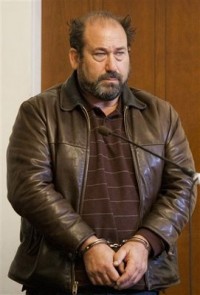
A cast was assembled, cameras rolled, and a large portion of the script (I don’t know how much) was shot.  Then production shut down, and getting further information proved impossible for months.  The problem, it turns out, was with director and co-writer Daniel Adams.  Among his previous credits, he wrote and directed THE GOLDEN BOYS (2008), starring David Carradine, Rip Torn and Bruce Dern, and THE LIGHTKEEPERS (2009), starring Richard Dreyfus, Bruce Dern, Julie Harris and Blythe Danner, both filmed in Massachusetts.  As an incentive to filmmakers, that state offers a 25% tax credit for payroll and other filmmaking costs.  Adams has been tried and convicted of overstating his expenses, as a result receiving an overpayment of $4,377,000.  For example, he claimed to have paid Richard Dreyfus $2.5 million for his role in LIGHTKEEPERS, when the actual fee was $400,000.  Adams has been sentenced to 2 to 3 years in prison, plus ten years probation, plus restitution of the nearly four and a half million dollars. 

 
Director Daniel Adams
 
Kate Edelman Johnson is not only the movie’s producer, her father, Louis F. Edelman, co-created the original series with A. I. Bezzerides.  Not up for a full interview at this time, she told me, “We have been delayed.  I’m trying to work things out as this is a project that needs to be produced.  It’s a bit premature to discuss anything right now, but rest assured, I will let you know the moment things are back on track and it’s full steam ahead.  Believe me, this is a labor of love for me, and a way to honor the memories of two people who I dearly loved – my father and Barbara Stanwyck.”   

 
Set construction
 
The new film’s cast includes Sara Paxton in Linda Evans’ role of Audra Barkley, Jason Alan Smith in the late Peter Breck’s role of Nick Barkley, and Travis Fimmel in Lee Major’s role of Heath.  Stephen Moyer of TRUE BLOOD fame was announced in the late Richard Long’s role as Jarrod Barkley, but now no one is listed for that part.  Also in the cast are Richard Dreyfus and Bruce Dern, who both guested on the original series.  Dreyfus plays the real-life banker and railroad magnate Charles Crocker.

 
Barkley monogram on the gate
 

Other actors of note in the cast are Aidan Quinn, John Savage, and western icon Buck Taylor.  Until the feature is completed, you can get your Barkley Family fix by watching the original BIG VALLEY series daily on INSP and on ME-TV.


ACADEMY VOTES HONORARY AWARD TO STUNT ACE HAL NEEDHAM

 
Hal Needham, Burt Reynolds and Jerry Reed from SMOKEY AND THE BANDIT
 

Hal Needham, whose stunt credits go back to THE SPIRIT OF ST LOUIS (1957), and include 310 features, 4500 TV episodes and 56 broken bones, will receive an award recognizing a career of calculated risk-taking.  Western credits include HAVE GUN, WILL TRAVEL; HOW THE WEST WAS WON; LARAMIE; LITTLE BIG MAN; CHISUM; THE WAR WAGON, and others too numerous to list here.  Long associated with Burt Reynolds, with whom he worked on GUNSMOKE episodes, 100 RIFLES, and THE MAN WHO LOVED CAT DANCING, Burt gave Needham a chance to direct, with the SMOKEY AND THE BANDIT and CANNONBALL RUN franchises, and HOOPER.  Needham has directed 20 features to date.  He also won a Scientific and Engineering Award from the Academy in 1986 for the Shotmaker Elite camera- car and crane, allowing greater freedom shooting action sequences.  He also is a co-founder of Stunts Unlimited.


WESTERN WRITERS OF AMERICA on the Direct-to-DVD Trail


I was flattered to be interviewed by C. Courtney Joyner for the August issue of ROUNDUP MAGAZINE (not my Round-up, you understand), the official publication of the Western Writers of America.  The subject was one that Rounders know is dear to my heart, Direct-to-DVD Westerns.


LIVE EVENTS:


HENRY DARROW – MANOLITO OF THE ‘HIGH CHAPARRAL’ – AT THE AUTRY


Saturday, September 15th, at one p.m., Henry Darrow, who delighted audiences as Manolito on THE HIGH CHAPARRAL, will be at the Autry to take part in the Latin Heritage Month celebration, and to discuss, and sign, his new autobiography, HENRY DARROW – LIGHTNING IN THE BOTTLE, written with Jan Pippins. 


In addition to other Latin Heritage-themed activities, starting at 11 a.m., episodes of HIGH CHAPARRAL and the 1990s ZORRO series, all starring Mr. Darrow, will be screened in the Wells Fargo Theatre.


‘HIGH CHAPARRAL’ MARATHON ON INSP


And speaking of Manolito and ‘THE HIGH CHAPARRAL’, also on Saturday, September 15th, after years of absence from television, INSP welcomes ‘HIGH CHAPARRAL’ back with a marathon, after which it will become part of their regular SADDLE-UP SATURDAY lineup. 


SCREENINGS:


EASTWOOD AT THE AERO SANTA MONICA


The American Cinemateque at the Aero is featuring several Clint Eastwood Westerns in September.  On Monday, Sept. 10th it’s a 20th anniversary screening of UNFORGIVEN; and on Tuesday, Sept. 25th it’s TWO MULES FOR SISTER SARAH, directed by Don Siegal, with an amusing score by Ennio Morricone. 


‘THE GREAT SILENCE’ AT CINEFAMILY 


SUNDAY 9/9 -- TUESDAY 9/11, The Cinefamily, aka THE SILENT MOVIE, will play the only extant 35mm print of THE GREAT SILENCE, directed by Sergio Corbucci and starring Klaus Kinski and Jean-Louis Trintignant! Perfect for a silent theatre, since Jean-Louis's character is deaf. Fascinating spaghetti western!


ARIZONA’ WITH JEAN ARTHUR AND WILLIAM HOLDEN AT UCLA


A restored 35mm print of ‘ARIZONA’ (Columbia 1940) will screen on Sunday, September 16, 2012, 7 p.m. in the Billy Wilder Theatre in the Armand Hammer Museum.  Part of a retrospective on Jean Arthur’s career, this story about a gutsy pioneer woman who sets her hat for an on-the-move cowboy is a delight in its own right, and has great added historical importance for western-movie lovers.  The sets that were constructed for this film, a few miles outside of Tucson, were the beginning of the Western movie-town of Old Tucson, home to over three hundred western movies and TV shows, from RIO BRAVO to WINCHESTER 73 to JOE KIDD to TOMBSTONE to THE HIGH CHAPARRAL.

Directed by Wesley Ruggles from a script by Claude Binyon, from Clarence Budington Kelland’s story, the cast includes Warren William, Porter Hall, and western stalwarts like Edgar Buchanan, Iron Eyes Cody and Kermit Maynard.  It was the first production job, as an uncredited assistant director, for Earl Bellamy, who would direct dozens of films, but become famous for directing over 1,600 TV episodes.  He also directed SPEEDTRAP, the first movie I wrote.  It’s a double feature, the second film being TOO MANY HUSBANDS (1940), a screwball comedy by the same writer and director, based on a play by Somerset Maugham, co-starring Miss Arthur with Fred MacMurray and Melvin Douglas.


That’s a wrap for today’s Round-up!

 
Next week I’ll have my interview with Royston Innes, director of the soon-to-premier internet Western series DEAD MEN.  I’ll also have my review of the two published scripts for CHEYENNE WARRIOR II, and an upcoming RAMONA event held on the rancho where the story was conceived and written.


Happy trails,


Henry


All Original Contents Copyright September 2012 by Henry C. Parke – All Rights Reserved.


Monday, August 15, 2011

DISNEY PULLS PLUG ON ‘LONE RANGER’


“What we do now, Kemosabe?”
“We wait, Tonto.”

Johnny Depp has been on board as Tonto for over two years, and Armie Hammer, late of THE SOCIAL NETWORK, was recently trumpeted as the Masked Man, but now Disney has pulled the plug on the Jerry Bruckheimer LONE RANGER project to be directed by Gore Verbinski. Verbinski’s previous collaborations with Depp and Bruckheimer include the PIRATES OF THE CARIBBEAN films, Disney’s most profitable franchise. The actor and directed also worked together on this year’s hugely successful ($243 million) western cartoon, RANGO.

The problem is the budget. Disney wants to spend $200 million, and while the budget had been brought down from a reported high of $275 million to $232 million, Disney says that isn’t close enough. And Disney’s concern is understandable. Currently the western of the summer, COWBOYS & ALIENS, while in the number three box office spot this weekend, behind PLANET OF THE APES and THE SMURFS, has grossed $81,476,000 domestically, with a budget of $163 million. The westerns that have done well in recent years have kept the budgets comparatively small: 3:10 TO YUMA cost $55 million, and grossed $70 million. TRUE GRIT cost $38 million and grossed $251 million.

No doubt Bruckheimer, Verbinski et al will not give up without a fight. We’ll see where it leads.

TY HARDIN INTERVIEW PART TWO:

In last week’s Round-up, Ty Hardin discussed his life, from his childhood, through his discovery by Paramount, his move to Warner Brothers, and his four years starring on BRONCO. (If you missed, go HERE) http://henryswesternroundup.blogspot.com/2011/08/bronco-layne-talks.html

Now we continue with the post-BRONCO years…

H: If you didn’t have any favorite BRONCO episodes, how about favorite movies of the period?

TY: I had a couple of pictures that I liked, PT 109, and I liked MERRIL’S MARAUDERS. I worked with Jeff Chandler. It was a good picture. It was authentic. We shot it over in Europe. We had a lot of good people in it. And we used all those tanks. We were shooting in Spain and we actually had the last Sherman Tanks in existence. And we tore up a couple of them.

H: While were doing BRONCO, you did THE CHAPMAN REPORT for George Cukor. Then after BRONCO you did P.T. 109, WALL OF NOISE, PALM SPRING WEEKEND, all in 1963. Then your next western was MAN OF THE CURSED VALLEY in 1964, which was shot in Spain.

TY: Well, what happened was Sergio Leone wanted me to do PER UN PUGNO DI DOLLARI (A FISTFUL OF DOLLARS). I could hardly understand the guy; he had hardly any English at all. And I was so busy working in Europe that I just said, “Sergio, I just don’t have time to do it.” You know, he flew me from Spain – I was working on BATTLE OF THE BULGE I think – over to Rome. We went to a theatre, sat down and watched a film that was in Japanese, with Italian subtitles, called SAMAURI. I remember a dog running down the street with a hand in his mouth: all the time I was sitting there, and that’s all that I remember. And he said, “Why don’t you do this film?” He really wanted me to do it. First of all he bypassed my agent, the top agent in Europe or anywhere, MCA. I told him, “Well, get in touch with me when you get a script.” I went back to Spain, back to work again on BATTLE OF THE BULGE. He kept persistently asking me, “When are you going to be free?” And I said, “I’ll tell you what I’ll do. I’ll give you the names of some actors that are going to be out of work.” So I gave him Clint Walker, Clint Eastwood; three or four actors that I had known. And I was sitting on the Via Veneto, kind of a hangout for the actors in Madrid, and I run into Clint Eastwood. And he says to me, “You S.O.B.! I’m down here working with Sergio Leone, nobody here speaks English, and it’s a pile of crap!” I said, “Don’t worry about it.” “Don’t worry about it? I ain’t been paid!” He was one upset character for doing it. And I could understand, because when I saw the film that Sergio wanted me to do, I couldn’t see any way in the world that it would be a western. How he could get it together. But he did. That film was released in Spain. They pulled it out, did some more shots, some re-doing on it. They kicked it into Italy, and a few other places in Europe, and suddenly it took off: it was amazing. The rest is history. And that’s how Mr. Eastwood got his game together. Looking back I’d have done the same thing over again. Plus I was working on too good films over there, all-American films; I wasn’t doing any local films. Even though I did do some after that. A couple of them. Terrible.

H: Were they recording sound live?

TY: They usually dubbed later. Because he’d be talking in Italian, and I’m talking in English. When he’d stop talking, I’d say my line. Soon as I’d finish my line, he’d talk. They were pretty good productions as a whole. But the Eastwood film was a fluke – it’s amazing how that took off. And the credit goes to Eastwood – he gave it the balls that it needed, you know? It needed that kind of strength , because the story line was nothing. You don’t remember anything – there wasn’t any love or loss or anything like that in it. It was just another beat-up Western. But Clint made the thing, himself, with his looks – and the music was dynamite. Genius. You’ve got to appreciate that; there is talent in Europe.

H: When you were doing these films where they were not recording sound, would you record your own dialog later?

TY: Oh yeah, that was in my contract. I didn’t want anyone else dubbing my voice. As far as dubbing it in Japanese and things, I didn’t have anything to do with that. But if they were going to sell in the international market, I wanted to be there to do it. You see, Americans coveted their own market, and it wasn’t easy for these films to get in. I knew they didn’t have a chance in the American market. I didn’t give a damn; I was just having a ball, running around the country and making forty or fifty thousands dollars I could just put in the bank, and it’s like having three hundred, three hundred fifty-thousand in the States.

H: So were you living in Europe at this point?

TY: Oh yuh, I was living mainly in Madrid. I like Madrid, and I had three bars on the coast of Spain – so I’d put in a big investment. I had one in Malaga, one in Touremolinos, and another one in between. So I ran my business down there at the same time. I had a pretty good life: I married Miss Universe!

H: How did you enjoy doing BATTLE OF THE BULGE?

TY: Any time American films came to Spain, any time ‘runaway’ films came, I was in it. And I enjoyed working with Robert Shaw. He was a good, solid actor, and BATTLE OF THE BULGE was a good show, a good picture.

H: You went to Argentina in 1966 to do SAVAGE PAMPAS with two of my favorite actors, Robert Taylor and Marc Lawrence. What was that like?

TY: (laughs) Don’t remember a lot about it, I really don’t. The problem in the industry is, you don’t need to be on the set until they need you. So I don’t know really what’s going on. I don’t think the film turned out really that good. But it was a very good experience for me. You work with these people, but you don’t get to know them. As soon as it’s ‘Cut!’ ‘Print!’, they’re off the set. And they don’t sit around and gab with pissant actors like me. (laughs)

H: Continuing with your globetrotting, you did DEATH ON THE RUN for Sergio Corbucci in Spain, then went to England for BERSERK. How’d you like Joan Crawford?

TY: She was a neat gal – a tough old broad and she’d been down the lane a couple of times. But this was her money, and she wanted it good. I think the problem was, there wasn’t that rapport between us that really makes it work. She was so busy working at being the director that I think her acting suffered from it. There wasn’t that sensitivity that her part (called for), for the problems that the circus was having – that’s just my personal opinion.

H: In 1967 you were in CUSTER OF THE WEST.

TY: Right, with Bob Shaw.

H: I was just watching that last night, and the logo is Cinerama. Was that shot in the Cinerama process, with the three cameras?

TY: Oh yuh. It was wonderful. We shot that in Spain. And all those Indians were Gypsies.

H: Really?

TY: (laughs) Yeah! We don’t have any Indians in Spain! They were all Gypsies, and they was fearless, man! They’d fall backwards off a horse, get run over and get right up! I was impressed, I really was. I couldn’t believe it, and they were so believable. Needless to say, I thought it was a pretty good film.

H: It’s a big movie. How long did it take to shoot?

TY: Took us about a month or so to shoot the thing.

H: Is that all?

TY: They’re pretty efficient. You don’t realize we’re getting seven or eight setups a day, and you have a second unit shooting your close-ups and everything. The industry has become very efficient to work with.

H: You had some excellent actors there, like Robert Shaw. What was he like?

TY: Robert’s a fun guy, I liked Robert. He was just a wonderful guy to work with .

H: How about Jeffrey Hunter, who played Benteen?


(Ty with Jeffrey Hunter in CUSTER OF THE WEST)

TY: Well Jeff and I got along real good. He’s more my type of man. Robert was just uptight all the time; he’s the same as he is in CUSTER. I was real fortunate to work with people like Lawrence Tierney. And Robert Ryan was wonderful, he really was. These are all committed actors. They’ve all been in the industry longer than I have. So I felt very humbled having them to work with.

H: Now Robert Siodmak, who directed, was born in Germany. He had a big career in the U.S., went back to Europe in the 1950s and was directing westerns in Germany before he did this one. What was he like?

TY: I felt he was a little loose. He’d sit there and…he could move the camera good, but I don’t think he knew how to deal with the people themselves. So he didn’t give you (direction). You like to get personal with your director, like to know that what you’re doing is what he’s looking for, and I didn’t get the feeling that he knew what he was doing. I don’t mean to be derogatory, but at the same time, it wasn’t like working with somebody that you had confidence in.

H: Well, what director did you work with that you had confidence in?

TY: Oh, there were a couple of directors that were really hot – they just did not like me at all, and they were my best directors; I worked with some really fine directors. You know, I’m intimidating in some respects, so a lot of lead actors did not want to work with me, so they minimized the work that I did with them. I didn’t realize that I intimidated a lot of people, not so much with my abilities, but that being an extraordinarily good-looking man, I would draw a lot of attention to myself. And I didn’t realize how involved the industry was with egomania. So some of the actors, like Robert Shaw, I had a hard time with him. Bobby was a good friend but, boy, he didn’t want to work with me. He made sure he got all his shots separate. And I didn’t realize this. I was so naïve about the industry, but when I look back I realize that there was a lot of that. And I wasn’t a part of it. I held my own, and did my own series. I did another series, RIPTIDE, right after that.

H: In Australia. How was that?

TY: It was fun. The sad part was that they couldn’t get a sale in the States. And that’s what they needed to continue on, because the budgets were pretty heavy, and we had to mail in a couple of actors from the American sector. It should have gone about four years. Because it was outdoors, it was fun, and with good writing it could have gone into other areas – drug-running and so forth.

H: Before we leave CUSTER, I read somewhere at Akira Kurasawa was supposed to direct that.

TY: That’s correct. He fouled out the first day. Something went wrong between him and…no one ever found out just what went wrong.

H: But he was actually there the first day?

TY: He was certainly hanging around. I wasn’t there, but that’s what I heard, so I’m not sure exactly what happened.

H: In 1968 you starred in KING OF AFRICA, which has been described as a South African western.

TY: That’s about right.

H: Your female lead was Pier Angeli.

TY: She was a doll. And KING was a good picture. You know what happened was, it didn’t get support. You need to have people get behind it and put money in it to make it happen. It’s not all about just shooting, it’s about what you put behind (a film) to get it exposed properly. It was quite an interesting concept, you know, and we actually shot it down among the Zulus. You should have seen those bastards pokin’ me with their swords! Those guys are tough, and they get carried away – I was scared shitless! But it was good and authentic, and the problem with a lot of that foreign stuff, again, was Americans wouldn’t let it in to the American market. Our pictures were made in Europe with European people, and the whole purpose of me being in it was the hope that we’d open the market for them. And it happened in a very special occasions, like P.T. 109, and there was a lot of American money in that too. But a lot of those films we’re talking about, there was no American money in it, and consequently there was no American distribution tied into it. So they had to go on their merits, and it wasn’t that the film wasn’t good; it was that the market wasn’t available. So needless to say, a lot of people have never seen three or four or five of my movies.

H: What about THE LAST REBEL, starring Joe Namath? That was also shot in Spain, and for a change you were playing a bad guy, a crooked sheriff.


TY: Oh, I enjoyed that; if I had my druthers I’d be doing bad guys all the time, but you can’t get away with it too often.

H: You’re just too likable.

TY: That’s it!

H: In that one you had a couple of great pros, Jack Elam and Woody Strode.

TY: Woody Strode, what a neat actor he is. He was just a good, genuine all-around man, just standing tall. I liked Woody; he was just a likable person, very perceptive, and a very good actor.

H: Joe Namath is such a likable guy, but not a great actor.

TY: Well, you said that, I didn’t. The thing is, you’ve got to have compassion. Joe’s working for himself, he visualized himself where nobody else does, so you play to that fantasy, you kind of support it, so you can embellish it a little. Joe doesn’t know he’s a bad actor, and I’m not going to tell him. So what you do, when you realize, and the director does, is you cut away as much as you can when he’s saying his lines, but you give him the reactions. So they’re able to protect him in some degree. We’ve got to protect his money. He had a big investment; otherwise you wouldn’t see Joe Namath in it.

H: After that you did a couple of spaghetti westerns I haven’t been able to find. ACQUASANTA JOE and YOU’RE JINXED, FRIEND. YOU’VE MET SACRAMENTO.

TY: I couldn’t tell you anything about them, because I was the only one talkin’ English.

H: Then in the late 1970s you were back in Hollywood doing an episode of THE QUEST, which was a western series a lot like THE SEARCHERS, with Kurt Russell and Tim Matheson. After being in Europe so long, how did it feel being back doing American TV?

TY: Well, things had changed a lot. My agent, William Morris, wanted me to do another series, but I didn’t want to. I got disenchanted with the film industry as a whole. And I just kind of walked away from it soon afterwards.

H: In 1977 you did a picture called FIRE! for an old pal of mine, Earl Bellamy. You had a great cast in that: Ernest Borgnine, Patty Duke, Vera Miles, Lloyd Nolan, Neville Brand, Gene Evans.

TY: Some real icons in the business. I’ve always enjoyed working with people of that caliber. They’re very interesting people; they’ve had a wonderful life. But they’re surprisingly introverted, you know? You have to kind of flavor up to them to get them to talk. It was almost like do your lines and walk off the set. It never got as personal as I kind of like the film industry to be. That’s one of the disenchanting things about the film industry, why I kind of walked away, said this is no fun anymore. It’s too serious. It’s all about money. Nobody’s interested in having a good time: it really did get boring.

H: You did TV episodes in the 1980s, FLYING HIGH, DAVID CASSIDY – MAN UNDERCOVER, THE LOVE BOAT. In 1988 you were back in the saddle in a remake of RED RIVER, with a lot of good people: Jim Arness, Bruce Boxleitner, Gregory Harrison. Then great pros like Guy Madison, Robert Horton, L.Q. Jones. What’s L.Q. Jones like?

TY: He’s a character, he really is. He’s got diarrhea of the mouth. Everybody likes him. He plays great character parts – he’s just a very fine actor. I think a lot of it is his personality is so good. You’re gonna like him on film, you’re gonna like him in person.

H: How’d you like Jim Arness?

TY: I like Jim. Jim has been in the business a long time, he’s a real pro. He’s Jim Arness on the screen as he is off he screen. He has that appearance, that prestige, an aura about him.

H: You were Sheriff Stone in 1990 in BORN KILLER, an escaped maniac movie. Then you did a western, BAD JIM, which toplined James Brolin and Richard Roundtree. And you’re there with Harry Carey Jr. and Rory Calhoun and Clark Gable’s son.

TY: Big cast, wasn’t it? I didn’t see it, so if you get the chance, let me know.

H: How did you like Harry Carey and Rory Calhoun?

TY: Honestly, I didn’t work with them: I’m in scenes that they’re not in.

H: Now I understand we’re going to be seeing you soon in a romantic comedy called HEAD OVER SPURS IN LOVE, where you play Col. Sanders. Do you have other upcoming stuff we should be looking for?


(Ty speaking at Republic Pictures' 75th Anniversary last year)

TY: Not that I know of. I’ve been retired for quite a while in principle. I don’t even have an agent. But it’s funny you should mention that, because I was thinking the other day that at 80 years old I look good, I feel good, I’m in good shape. What I want to do is do parts to my age; I want to do good supporting roles.

H: What are your favorite westerns, TV or movie, that you’ve been in? What was your best work?

TY: Well, I enjoyed BRONCO. Because it was all centered around being good, and revealing good over bad. I liked that, I liked the concept that we have values, and principles that we live up to. It never got romantically heavy; it avoided a great deal of that, which is often more of a distraction than an attraction. Stay away from that and direct yourself to the plot, and develop the plot. Because there’s a story to tell, and that’s what I’ve been more dedicated to than anything else.

H: What are your favorites of other people’s westerns?

TY: Well, I grew up as a kid with Bob Steele and Roy Rogers and all the others. And as a kid I loved them. And I grew up in Texas where westerns were the big thing. Johnny Mack Brown and all that. And of course going to Hollywood I never had any idea of getting in the film industry. My model was Gary Cooper. Him and John Wayne were my two people, and when I met John Wayne and he helped put me in the industry. I never met Cooper. Wait, I take that back. He was down on the set there at Warners one time. I don’t know what he was doing, but I went down to the set and watched him. And I went up to him, I said, ‘Hi Cooper,’ that kind of thing. He wasn’t very friendly to me. But those two people were I thought a great image for a kid growing up. I’ve always admired their work, and always wished I was as good as they were.

H: Aside from poker, how do you like to spend your time?

TY: Well, I’m in the process of finishing my second book. And I’ve enjoyed it, but I’m just not a good writer. I’ve been trying to find a ghost writer who would do kind of a look-over for the book, because my first one didn’t do good at all. (laughs) Mainly I think because it wasn’t legible, and the company didn’t put any money behind it. That was a big disappointment, and it took out a lot of my money, too.

H: Is there anything your fans don’t know about you that they should know?

TY: I think you should tell everyone that I am a Christian, and that I have tried to hold up those values, that I think are important to make a person feel like he is in essence a creature of God, that he is not just an animal living out of instinct. That he has a value and importance that is inherited in being a part of a belief system. We all know it’s just a belief system, but at the same time, what are we except what we believe ourselves to be? I believe there is purpose behind life, and meaning in life and I think that’s one of the great values that we are losing in our society.

HARRISON FORD SIGNS TO PLAY WYATT EARP!


The current COWBOYS & ALIENS star will portray Earp in BLACK HATS, based on the novel by Max Allan Collins. A blend of fact and fiction, in 1920s Los Angeles, 70ish Earp is working as a film technical advisor and p.i. when Doc Holliday’s widow, Big-nose Kate, approaches him for help. Seems the Doc had a son, who is now in trouble with Al Capone. Also in the mix is Bat Masterson, now sports-writing for the New York Telegraph.

The project is being produced by Thunder Road’s Basil Iwanyk and Kickstart Productions’ Jason Netter. Script is being penned by 300 co-writer Kurt Johnstad.

INSP-TV TO SHOW ‘THE BIG VALLEY’


If you’ve been missing the Barkleys, and getting impatient for the big-screen version of their stories, here’s great news -- The Inspiration Channel, found in many basic-cable plans, will begin airing the classic series THE BIG VALLEY on September 26th. Barbara Stanwyck, Linda Evans, Lee Majors, Peter Breck and Richard Long will soon be back on the air. A family-friendly outfit, INSP-TV currently shows THE WALTONS, and will soon be adding BONANZA and DR. QUINN, MEDICINE WOMAN.

SILENTS UNDER THE STARS FEATURES TOM MIX ON SUNDAY


On Sunday, August 21st, The Silent Society will present their 24th annual Silents Under The Stars program at historic Paramount Ranch in Agoura. THE GREAT K&A TRAIN ROBBERY (1926) stars Tom Mix, Dorothy Dwan and Tony the Wonder Horse, and is directed by Lewis Seiler. The talented Michael Mortilla will present a live musical accompaniment. Admission is $6 for adults, $3 for kids under 12, free for kids under three, and $5 for Hollywood Heritage members. The movie starts at 7:30 pm, and you’re encouraged to come early and bring a picnic dinner. As you’ll be in a National Park at night, a flashlight is a good idea as well. For details call (805) – 370-2301.

WILLIAM SMITH AT COMIC BOOK & SCI-FI CONVENTION SUNDAY


LAREDO fans can meet William Smith, who co-starred with Peter Brown and Neville Brand in all 65 episodes of the series at the convention, held at the Shrine Auditorium Expo Center, 700 West 32nd Street, Los Angeles, Ca. He’ll be signing autographs, and his new book of poetry, from noon ‘til two. Admission to the event is $8. To find out more, go HERE.

http://www.comicbookscifi.com/

TCM FANATIC - WESTERN NOW ONLINE!

And speaking of TCM, have I mentioned that the segment I was interviewed for is now viewable here?


THE AUTRY NATIONAL CENTER

Built by cowboy actor, singer, baseball and TV entrepeneur Gene Autry, and designed by the Disney Imagineering team, the Autry is a world-class museum housing a fascinating collection of items related to the fact, fiction, film, history and art of the American West. In addition to their permenant galleries (to which new items are frequently added), they have temporary shows. The Autry has many special programs every week -- sometimes several in a day. To check their daily calendar, CLICK HERE. And they always have gold panning for kids every weekend. For directions, hours, admission prices, and all other information, CLICK HERE.

HOLLYWOOD HERITAGE MUSEUM

Across the street from the Hollywood Bowl, this building, once the headquarters of Lasky-Famous Players (later Paramount Pictures) was the original DeMille Barn, where Cecil B. DeMille made the first Hollywood western, The Squaw Man. They have a permanent display of movie props, documents and other items related to early, especially silent, film production. They also have occasional special programs. 2100 Highland Ave., L.A. CA 323-874-2276. Thursday – Sunday 12 p.m. to 4 p.m. $5 for adults, $3 for senior, $1 for children.

WELLS FARGO HISTORY MUSEUM

This small but entertaining museum gives a detailed history of Wells Fargo when the name suggested stage-coaches rather than ATMS. There’s a historically accurate reproduction of an agent’s office, an original Concord Coach, and other historical displays. Open Monday through Friday, from 9:00 a.m. to 5:00 a.m. Admission is free. 213-253-7166. 333 S. Grand Street, L.A. CA.


FREE WESTERNS ON YOUR COMPUTER AT HULU


A staggering number of western TV episodes and movies are available, entirely free, for viewing on your computer at HULU. You do have to sit through the commercials, but that seems like a small price to pay. The series available -- often several entire seasons to choose from -- include THE RIFLEMAN, THE CISCO KID, THE LONE RANGER, BAT MASTERSON, THE BIG VALLEY, ALIAS SMITH AND JONES, and one I missed from 2003 called PEACEMAKERS starring Tom Berenger. Because they are linked up with the TV LAND website, you can also see BONANZA and GUNSMOKE episodes, but only the ones that are running on the network that week.

The features include a dozen Zane Grey adaptations, and many or most of the others are public domain features. To visit HULU on their western page, CLICK HERE.

TV LAND - BONANZA and GUNSMOKE

Every weekday, TV LAND airs a three-hour block of BONANZA episodes from 11:00 a.m. to 2:00 p.m. They run a GUNSMOKE Monday through Thursday at 10:00 a.m., and on Friday they show two, from 6:00 to 8:00 a.m.. They're not currently running either series on weekends, but that could change at any time.

NEED YOUR BLACK & WHITE TV FIX?

Check out your cable system for WHT, which stands for World Harvest Television. It's a religious network that runs a lot of good western programming. Your times may vary, depending on where you live, but weekdays in Los Angeles they run DANIEL BOONE at 1:00 p.m., and two episodes of THE RIFLEMAN from 2:00 to 3:00 p.m.. On Saturdays at 2:00 p.m. it's THE RIFLEMAN again, followed at 2:30 by BAT MASTERSON. And unlike many stations in the re-run business, they run the shows in the original airing order. There's an afternoon movie on weekdays at noon, often a western, and they show western films on the weekend, but the schedule is sporadic.

RFD-TV has begun airing THE ROY ROGERS SHOW on Sundays at 9:00 a.m., with repeats the following Thursday and Saturday.

Also, AMC has started showing two episodes of THE RIFLEMAN on Saturday mornings.


EDITORIALIZING

More than once in the Round-up I’ve made comments to the effect that every western that does well helps the cause of all, and every western that does badly makes it more difficult to get another made. So while I’m sorry that THE LONE RANGER may not happen in the near future, I’d rather see it pulled than see it made for so high a price that it could never be profitable.

I think that there are two absolutely crucial elements for making a good, successful western, and the first is a strong plot and screenplay. It’s not by chance that both 3:10 TO YUMA and TRUE GRIT, the two most successful westerns of recent years, were based on an Elmore Leonard story and a Charles Portis novel. Conversely, the potentially upcoming LONE RANGER and the current COWBOYS & ALIENS and the recent JONAH HEX were all based on comic books or graphic novels (and no, this LONE RANGER is not based on the radio or TV series, but on a comic). COWBOYS has a strong screenplay considering the source material, and I found the movie very enjoyable, but it still is saddled with a comic-bookish premise.

The second crucial element to a western film is some humor. There’s humor throughout the films of Howard Hawks and John Ford, and those who imitate just the dark elements of Leone and Peckinpah need to watch the whole of the films: for all of the grimness, THE GOOD, THE BAD AND THE UGLY and THE WILD BUNCH have hysterically funny moments. If the west was as relentlessly bleak as a lot of recent films show it, there’d be no need for shootouts: everyone would have shot themselves.

Happy Trails!

Henry

All Contents Copyright August 2011 by Henry C. Parke -- All Rights Reserved