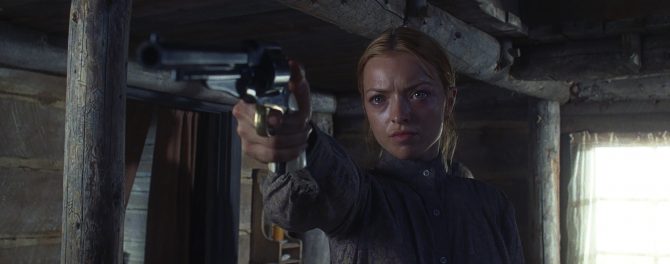
Showing posts with label Ruta Lee. Show all posts

Sunday, August 17, 2025

ALEXANDER NEVSKY ON HIS SUMO-SIZED WESTERN, ‘THE WIDE WEST’, RUTA LEE ON AUDIE MURPHY AND ‘BULLET FOR A BADMAN’, PLUS ‘EDDINGTON’ AND ‘BURY ‘EM DEEP'’ REVIEWED!


HIGH, WIDE AND HANDSOME!


ALEXANDER NEVSKY ON HIS NEW FILM, THE WIDE WEST, AND HIS LONG, EVENTFUL JOURNEY FROM MOSCOW TO AN ARIZONA MOVIE RANCH!


(The Wide West trailer. A link to the film follows the article)

The Wide West, following Gunfight at Rio Bravo and Taken from Rio Bravo, is the 3rd Western movie collaboration of star and producer Alexander Nevsky, director Joe Cornet, screenwriter Craig Hamann, composer Sean Murray, and cinematographer Sam Wilkerson. The seemingly absurd premise of a pair of Sumo wrestling stars stranded in the Old West is, surprisingly, based on – or suggested by – facts: U.S. President Theodore Roosevelt negotiated the end of the Russo-Japanese War of 1904-1905, receiving the Nobel Peace Prize for his efforts. In gratitude, and knowing the President’s interest in martial arts, particularly Judo and Jiu-Jitsu, a contingent of Japanese athletes, including Sumo wrestlers, was dispatched to Washington to entertain Roosevelt, sailing to California, then making their way to the East Coast.  In The Wide West, two of those Sumo wrestlers, Daiki (Hiroki Sumi) and Ichi (Takashi Ichinojo) find themselves stranded in a Western desert town, in mortal conflict with an outlaw gang led by villain Jarrett Kingrey (director Joe Cornet), and reluctantly befriended by a Russian immigrant, a gambler known as Max (Nevsky). It’s an amusing film that, happily, doesn’t take itself too seriously, except when it comes to action.

Alexander Nevsky is himself a world-class athlete and an immigrant. The three-time Mr. Universe, actor, producer, director, grew up picturing himself in movies, but not necessarily in Westerns. He loved the genre, but getting access to them in Russia was no simple task. “When I was a kid, we couldn't watch westerns from the United States, but we still watched some Easterns, as they call it, because in East Germany, they will make westerns. In Yugoslavia, they made westerns with Gojko Mitic, who was a big star at the time, playing Chingachgook (note: from James Fenimore Cooper's The Deerslayer). And in Easterns, Indians were good guys, and all the cowboys, the army, they were bad guys, so basically it was all in reverse. But we loved it and we loved the culture.”


Don't mess with Max!

Nevsky wouldn’t have a chance to see the real Hollywood product in Russia until the 1990s, with the rise of bootleg videotapes. “The Soviet Union was collapsing, and pirated videos suddenly appeared at all those kiosks close to subway stations. They put two Hollywood movies on one video tape, and I was buying them every evening when I was going back home from my University or from the gym. I had old Korean VCR with my old Russian tv, only black and white picture,” he recalls with a laugh. “But even in black and white, it was almost like a window to completely different, magic world. And the funny thing is, those Soviet pirates who made those tapes, they didn't understand the difference between huge movies and small movies, right? They can put like Arnold's $40 million Commando or Predator, and second movie could be Lady Dragon with Cynthia Rothrock, or a Don “the Dragon” Wilson picture, because it was also action picture. It was all Hollywood, right? It was all magic. And now as a producer, I understand that piracy's bad. But sometimes it could be good, and it could give a lot of people a great escape, at least for a couple of hours. So you never know.”

He wasn’t a natural-born Mr. Universe. “I had a little scoliosis. I was tall already, but when I started to lift weights, I was young and very skinny, I didn't have muscles at all.” So he trained.

“My background in bodybuilding and in boxing taught me to be prepared for hard work. I was happy when I won Mr. Universe, and when I won a second and third one, but before I started to win, it was like decades of preparation and training.”

He came to the United States in 1999 well-prepared not only physically, but educationally. “I graduated from Moscow State University of Management, and I had my PhD in Economics.”  He’d already had considerable success at home. “I was established TV star in Russia, a bodybuilding star. I had my own TV show on Channel One Russia, and 20 million people watched my TV show every week. I already wrote three books about bodybuilding and believing in yourself, and they sold like hundreds of thousands of copies.  When I moved to Los Angeles, I just had student visa, because I became a student at the UCLA, I started to study English, and later, I transferred to Lee Strassberg Theater Institute where I started to learn acting.

“It was kind of like trip to the moon, because Russian Americans all knew who I was, but Americans, they didn't have a clue. I started from scratch and, like six months after I came, I started to get some callbacks from auditions.”


Max's nemesis, played by Joe Cornet

His first big opportunity was an athletic competition series. “Battle Dome was Columbia Tristar TV show, kind of like American Gladiator. It was open call. I saw probably 300 huge guys. They told me, just wear black t-shirt, blue jeans. So when I came, I saw like hundreds of huge guys in black t-shirts and blue jeans. Someone was a little taller, someone was a little shorter, someone had smaller biceps, someone had bigger biceps, but volumes of them! So when they call us back a month later, it was just fifty guys, just 15 guys two months later, then it was just five of us who they want to sign. When I saw the contract, of course it was almost no money. It was scale and whatever, but it was the first time when they described my character. It was like stupid stereotypical Russian, wearing a red star on the back. And when I said to casting director and to producers, I cannot play it, they looked at me like I was an idiot, because they chose me out of 300, and I didn't want to do it. But again, Henry, I didn't come here to promote stereotypes. I came here to crush stereotypes, but to be completely honest with you, it was heartbreaking.

“Then one of my idols, Jean Claude Van Damme, invited me to make a movie with him, called The Order, with Charlton Heston and Brian Thompson, in 2000. Jean Claude was playing an adventurer who was stealing things from museums. The great, late Jack Gilardi, vice President of ICM, introduced me to Jean Claude and Sheldon Lettich, the director of the film, who directed, in my opinion, best of Jean Claude's films in ‘90s, like Double Impact. Sheldon and Jean Claude right away created a part for me. I was happy, but when I read it, it was a security guard in some museum in Kazakhstan: just scream something in Russian, and fight with Jean Claude, and get killed by Jean. I explained it to them that I couldn't play these stereotypical roles, because my Russian audience will not understand it. And it was Sheldon who told me that, if I want to be a star, I should find a way to produce, because here, unfortunately, if you big Russian, you will play stereotypical roles. Back then it was heartbreaking. But I still think it was the right choice because, how Sinatra sang it, I did it my way. And 11 years later, Sheldon became executive producer of my director debut, Black Rose.”

I told Nevsky that my first job as a screenwriter had been a film called Speedtrap (1977), which I’d co-written with producer and Romanian immigrant Fred Mintz: we worked out the story together, I did the actual writing, particularly the dialog, and we’d rewrite it together. Nevsky’s first film as producer and star came in 2004. “I co-wrote my very first English-language motion picture, Moscow Heat, which was the great Michael York, and Joanna Pacula. It was the film which opened the door for me into action genre. I was executive producer, it was my first starring role and I co-wrote it with my American friend, Robert Madrid exactly the way you worked with your friend from Romania. I'm proud to say that I also created a story for my biggest one, Maximum Impact, which was written by Ross Lamanna, who wrote the Rush Hour movies for Jackie Chan.”


Max riding to the rescue!

So, how did Alexander Nevsky move on to Westerns? It was because of a meeting between Nevsky and Western director Joe Cornet, who were brought together by their composer. “Sean Murray, great composer, introduced us to each other. Sean wrote music for Joe's Western, The Promise, and he wrote music for my Black Rose. Sean told me that he wants me to meet with his friend because he wants me to try a Western. Sean, he's a great composer, but also he's a great friend. So I was honest with him. I told him, of course I'll meet you with your friend, I'll be happy to, but come on: me in a Western?” But they hit it off immediately.  “Joe’s like a walking encyclopedia of Westerns. I mean, all the knowledge he gave me, it was amazing. (With the) pirated videos in Russia, that's when I became a huge fan of spaghetti Westerns, of Clint Eastwood, the Sergio Leones, and John Wayne. John Wayne, I like him a lot because he was tall and big, right? And his movies, they were kind of like, if I can say, like clean Westerns, not so down-to-earth, like Sergio Leone kind of Westerns. John Wayne's Westerns were bigger and brighter and more positive. I just love him. But my point is, I was huge fan of Westerns, but I never really imagined myself in a Western. So going back to end of 2020, those conversations with Joe, he told me we should do a Western. ‘Trust me, you will love the experience, you will love the film.’ And I told him, Joe, if we doing something together, it shouldn't be just straight Western. Because my background is in sport and bodybuilding. I was a boxer and kick-boxer. And good thing about sport: sport will give you discipline.  So you always know your strong points and your weak points. I said, Joe, if we're making a movie together, it shouldn't be just a Western. It should be an action western, so we can bring together my favorite genre, which is action, and your favorite genre, which is Western.

“And that's how Gunfight at Rio Bravo was born. And Joe did an amazing job because he was always positive, he was always prepared, he was always very supportive. And before we started, we had like four-and-a-half months, and he even gave me his horse to train with, because I never rode a horse before. I never shot Western guns like Winchester or Colts. Of course I shot a lot of modern guns. He helped a lot. And by June, 2021, when we came to Arizona to make our first Western, I was prepared. And it was complete fun. It wasn't easy at all, but it was complete fun. And I brought my action guys with me. I brought Olivier Gruner and I brought Art Camacho, who is a great fight choreographer, and I brought Matthias Hues, and we all had fun. And thanks to Joe, we got a Western, like a real Spaghetti Western. And thanks to my team, we also got an action movie.”


Nick Baillie as the Judge, Tatiana Neva as a stylish shopkeeper

Also turning in a dynamic guest performance in one of Nevsky’s Westerns is another martial arts legend, “My great friend and colleague Cynthia Rothrock. I hope it was me and Joe who inspired her to make her great action Western, Black Creek. Because right before that, she made our Taken from Rio Bravo, and she was amazing in it. We introduced her to everyone over there in Arizona, to John Marrs, our armorer and also costar, and to other guys. She made her own Western, which is great.” You can read my article about Black Creek, and my interview with Cynthia Rothrock, here:  https://henryswesternroundup.blogspot.com/2025/04/black-creek-action-star-cynthia.html

Now that he’s had extensive experience in both Action films and Westerns, which genre presents more challenges? “To be honest with you, making Westerns is harder. It's much more fun, but it's harder, because every time you're doing a film about something which happened many years ago, you really should be authentic.” I wasn’t going to say anything about his somewhat anachronistic costume, but he brought it up.  “Now, saying that, of course you know I was criticized because of my outfit in the films. Because even in the Westerns, I always have cool leather jackets. With one simple reason, Henry, and again, I'll be completely honest with you, because if we talk about business for a second, I understand that a lot of your readers, they're huge fans of Western genre, and they don't want to read about business side of film making. But we both understand that it’s really important. If you talk about sales, if you make any Western, you will almost always sell it in the United States. Because United States has a huge culture of Westerns, huge fan base for Western genre historically. But internationally, it's really hard to sell the Western, even if it's a huge studio Western. And that's the reason why studios actually stopped making big Westerns. So what I was doing as a producer, I was trying to put together Action and a Western. So in America, film will be sold because it's a Western, but internationally, we can sell it because it's an Action picture, because Action always sells. And that's why even in Gunfight at Rio Bravo, last 25 minutes of the film, I don't have my hat anymore. I just have my leather jacket, and I’m killing people, right and left, in very cool way. It's an Action picture, not just a Western. It's kind of the same thing in the Wide West, because in the end I have, yes, old-fashioned sunglasses, old-fashioned jacket, but still, I look like a Terminator,” he laughs, “in the Wild West. The cigar, of course, is in homage to Arnold's movies. So that's how I approach it.”


ICHI takes aim!

As international as The Wide West is, perhaps we shouldn’t be surprised that one of Nevsky’s major influences in creating it was the Western that James Bond specialist Terrence Young directed in 1971, Red Sun. “I think it was first Charles Bronson film released in Japan. And it was first Toshiro Mifune film that really made him popular in Europe and the United States. And Ursula Andress, she already did the Bond picture, Dr. No. The producers, they played their cards so smart, because they got American star, they got Japanese star, they got established European star -- because Alain Delon wasn't just a French star. He was one of the biggest European stars at the moment. They basically sold all the territories, even before they made the movie. So it was a terrific business model. Bronson, in Red Sun, he was my inspiration for my character Max. Because when you watch my action pictures, and both Rio Bravo movies, I always played like a stoic, hard-boiled action heroe. You don't have to ask me twice to protect you, to help you,

In this one, I was playing a different character, and Charles Bronson was my inspiration because in Red Sun, if you remember, he is not playing your hero. No, he's just the guy who's having fun. He wants to make money, he wants to get some revenge, but mostly the money. And of course, basically, he's changing over the course of the movie, but it's a different Charles Bronson.”

The Wide West is currently available exclusively on XUMO Play, for free!

In this one, I was playing a different character, and Charles Bronson was my inspiration because in Red Sun, if you remember, he is not playing your hero. No, he's just the guy who's having fun. He wants to make money, he wants to get some revenge, but mostly the money. And of course, basically, he's changing over the course of the movie, but it's a different Charles Bronson.”

The Wide West is currently available exclusively on XUMO Play, for free! Just click the link below:

https://play.xumo.com/free-movies/the-wide-west/XM0XFMQGKZICWS


RUTA LEE REMEMBERS AUDIE MURPHY AND MAKING 'BULLET FOR A BADMAN'


Here's the trailer!

 Kino Lorber has just issued Collection V – that’s 5 for you non-Romans – of the Westerns which Audie Murphy starred in at Universal in the 1950s and ‘60s. Each collection features 3 films, and this set contains Seven Way from Sundown, Walk the Proud Land, and Bullet for a Badman.

While I’ll soon write reviews for all 3, I recently had the pleasure of discussing one film from the set, 1964’s Bullett for a Badman, directed by R.G. Springsteen, with one of its stars, the still-lovely Ruta Lee, who recently turned 90. I highly recommend her hilarious, fascinating memoir, Consider Your Ass Kissed.


Ruta with Berkeley Harris

In Badman, Ruta plays the third point of a, while not a truly romantic triangle, a practical one, between Audie Murphy and Darren McGavin. If the other actors’ names that she mentions are not familiar, their faces would be. Alan Hale, Jr. was Skipper on Gilligan’s Island. Genial George Tobias, a comic character in 100 movies, mostly at Warner Brothers, is best remembered as Elizabeth Montgomery’s neighbor, Mr. Kravitz, on Bewitched. Skip Homier made his name as a child actor playing a Hitler Youth in Tomorrow, The World, and played many Western villains, memorably in The Gunfighter. If you haven’t seen Bullet for a Badman, you’re warned that there’s a big spoiler in Ruta’s first sentence. “Audie was of course the good guy, Darren was the bad guy, and I got shot with a bullet in my forehead somewhere in the movie. And my little grandmother, that I had brought over from Lithuania, had never seen television or the movies. She went screaming to my mother that I had been shot, and having hysterics when she saw that movie. I had such fun, because Alan Hale was in that movie, George Tobias, Skip Homeier. We laughed so hard. You know, it's surprising that they ever got a clear shot of us not laughing because we'd be out there and R. G. Springsteen, and God love him, he had a sense of humor too, but we laughed and laughed and laughed. And darling, the leading man of course was Audie, who was somewhat remote. You know, he didn't mix and mingle a lot, which is kind of sad because he would have had such laughs with us. When you have someone like George Tobias, who's been there, done it, seen it all, and has a story to tell about everything he's ever done, when you've got Alan Hale Jr., who carries on like a lunatic about things, and of course, Skippy Homeier as well. And my darling, Darren McGavin who's full of piss and vinegar, oh God, it was such fun! We were in St. George, Utah, but we travelled to a lot of different places. But I loved the Westerns. I didn't like the idea of having to get up at four to make it to the studio by five, so that you could be out on location at six. But what was really nice was that chuckwagon, the trailer that was the cooking wagon would be there at the location already. And you learned from the cowboys what to eat and you'd have every day, a bacon and egg and sausage and onion and tomato sandwich for breakfast. Boy, was that good! I can smell it now. You know, when you're sitting outside and it's cold and the coffee is there, and the sandwich is ready when you want it. Oh, that was great!”


Some of the spectacular mountain scenery!

You can read my Ruta Lee Western career article at the INSP blog, by clicking the link below:

Ruta Lee – Lithuanian-American Queen of the West

You can find Ruta Lee’s memoir at Amazon by clicking the link below:

Consider your Ass Kissed

And you can purchase Audie Murphy Collection V from Kino Lorber, including Bullet for a Badman, by clicking the link below:

https://kinolorber.com/product/audie-murphy-collection-v-walk-the-proud-land-seven-ways-from-sundown-bullet-for-a-badman?srsltid=AfmBOor-p5NVTnb6lc8ZBY9YcjU-Sq5B04LP4CPXhG6ujmhd-yWnNObF


FILM REVIEWS:

EDDINGTON


EDDINGTON TRAILER

Eddington is the new ‘Contemporary Western’ from the much-lauded writer-director of the Horror films Hereditary and Midsommar, Ari Aster. He has a wonderful cast – Oscar winner Joaquin Phoenix, double Oscar winner Emma Stone, 4-time Emmy nominee Pedro Pascal, Oscar nominee Austin Butler. There are strong performances, and an intriguing premise – what happens in a tiny New Mexico town when Covid divides its mask/no mask residents politically during an election? I guess all that it lacks is a plot. There are countless mystifying loose ends, absolutely no characters you care about, and nothing Western besides the locale. It’s pointlessly, brutally in-your-face violent, and if you’re going to call your movie a ‘black comedy’, you need something comic to happen at some point. I counted 3 smirks in two and a half hours.  It’s currently in theaters.


BURY ‘EM DEEP


Bury ‘Em Deep is as unexpectedly enjoyable as Eddington is disappointing. A slim-budget, legitimate period Western, it stars Robert Bronzi, a Hungarian-born actor who has built a leading-man career – over a dozen films so far – based on his uncanny resemblance to Charles Bronson. Here he plays legendary bounty hunter Link Maddock; the kind they wrote dime novels about. He makes a bad choice when he delivers a corpse to Sheriff Michael Pare for the reward: the stiff is a relative of the lawman, and Maddock is shot down, only to revive some 3 weeks later, nursed back from the brink by an orphanage-running nun, Sister Marie (Rosanna Wyant). And wouldn’t you know it? The bank is foreclosing on the orphanage. Maddock heads out for his hidden cache of bounty cash, but is jumped, beaten, and again left for dead.

With the mortgage clock ticking, Maddock is hunting down each member of the ‘posse’ that robbed him. While in lesser hands, a simple checklist of killings would follow, the script by Eric Zaldivar, from a story he devised with Mike Malloy, gives each malefactor their own personal vignette, ala Hang ‘Em High or Chato’s Land. The actors are not familiar, but the performances are varied and original. Wisely, they are given most of the dialog, keeping Bronzi’s speeches down to semi-intelligible bon mots. Incredibly, it’s the 60th feature Michael Fredianelli has directed since 2008, and his skills as an editor and cinematographer are also very much on display. It’s an often-stunning looking film, and the final shootout in a pumpkin patch, while perhaps too long, is a remarkable accomplishment of direction, photography and cutting.

Bury ‘Em Deep is available on Amazon Prime, currently for $4. Below is the trailer.


AND THAT’S A WRAP!


Please check out the July/August True West – here’s a link to my column looking at Val Kilmer’s first starring Western, Billy the Kid, an update on the progress of Young Guns 3, a DVD review of Was Once a Hero, and a chat with the director of the new Pierce Brosnan/Samuel L. Jackson Western, Unholy Trinity.

https://truewestmagazine.com/article/val-kilmers-billy/

Here’s my most recent INSP blog, Grit, Guns & Getting it Right!

https://www.insp.com/blog/what-tv-and-movies-get-right-and-wrong-about-cowboys/

And coming soon to the Round-up, I’ll be reviewing Ron Howard’s new film, Eden, looking at recent Westerns on the Broadway and Off-Broadway stage, and sharing my Lone Pine interview with Robert Carradine, remembering John Wayne and The Cowboys!

Much obliged,

Henry

Copyright August 2025 by Henry C. Parke – All Rights Reserved

This material is not to be used for Artificial Intelligence training.


Thursday, July 14, 2016

UPDATE! NEW WESTERNS 'OUTLAWS AND ANGELS' AND ‘THE TIMBER’ REVIEWED, PLUS INTERVIEWS WITH FRANCES FISHER, FRANCESCA EASTWOOD, THE TCM FEST, AND MORE!


I rarely update a Round-up post, except to correct errors.  But as the movie OUTLAWS AND ANGELS has just become available on YouTube, Vudu, Google Play Movies & TV, and iTunes, and having just had the opportunity to interview two of its stars, Frances Fisher of TITANIC and UNFORGIVEN, and Francesca Eastwood, 
incidentally the daughter of Frances Fisher and Clint Eastwood, I’ve decided to front-load my interviews and review onto the current Round-up post. 


The OUTLAWS AND ANGELS cast at Sundance


Written and directed by JT Mollner, OUTLAWS AND ANGELS is the story of three on-the-lam villains, led by Chad Michael Murray, who hole-up in the home of a frontier family, the Tildons.  Ben Browder is the father, Teri Polo the mother, and the daughters are Francesca Eastwood and Madisen Beaty.  Frances Fisher plays Esther, the aunt of one of the outlaws. 

FRANCESCA EASTWOOD Interview


Francesca Eastwood

HENRY: Most of us don’t start life with a pair of movie stars as their parents, and acting as the family business.  Have you always wanted to act?

FRANCESCA:  I’ve always been aware of it, and I grew up going on location with my parents and visiting them on set.  I always loved it and admired it.  I had a vivid imagination as a child, and I loved playing pretend.  I wanted to act, and my parents used me in a couple of things when I was younger.  Then I didn’t want to act, and they were very supportive of that.  I came back to it on my own when I was about eighteen.  I was twenty-one when I shot OUTLAWS AND ANGELS, and I feel like it’s the first of hopefully many films. 

HENRY: Do you have any interest in following your father’s footsteps behind the camera? 

FRANCESCA:  I do have interest behind the camera one day.  Some people would probably say I’m annoying to work with because I ask questions about things  -- how cameras work, and how this works and what that means.  This is a great learning experience, and hopefully I can take that with me and maybe one day, if I feel I need to tell a story, I can do something behind the camera.

HENRY: There’s probably nobody alive today that knows more about Westerns, on both sides of the camera, than your dad.  Did he give you advice?

FRANCESCA:  I didn’t really emphasize to him that it was a Western! (laughs)  I didn’t really look at it as a Western, going into it.  I looked at it as a family drama.  I just looked at it as a character, and I’m going to tell the story as best as I possibly can.   I don’t remember exactly what my parents said at the time, but probably something embarrassingly positive. (laughs)

HENRY: When you’ve worked with your mother in other films, like STARS FELL ON HENRIETTA (1995) and TRUE CRIME (199), you were a little kid.  What’s it like working with her as an adult?

FRANCESCA:  It was really cool getting to go to work, see her do her thing, that I’ve seen her do so many time, but to do it on a project that I was actually involved with separately.  It was really cool to sit behind the monitors.  That was the first time I saw any of what the film looks like.  And I thought it looks so cool, and really reminiscent of the films of the 70s and 80s, and I loved it.  It was very cool to see that, and to see her working with characters that I was also working with.   

HENRY: You don’t have scenes together in the film.  Did she give you any advice?

FRANCESCA:   Yes.  She’s given me so much advice over the years, and so much guidance.  She also gave me space to do my own thing, to make my own choices.  To tell the truth, and to focus.  To always know what you want, and how many ways you’re going to try and get it.

HENRY: I’m almost afraid to ask; are you much like your character, Florence?

FRANCESCA: (laughs) I think there are some similarities.  This project, for me, was very similar to what she was going through, so far as starting a new chapter in her life.  I feel like this was a new chapter for me, and it was empowering for me, to do a project that I really believe in. I feel like I got to be an artist, for lack of a better way to say it.  It was very much beginning of her life as an adult, and that’s how I kind of feel this project was for me.  But (laughs), I think that’s the only way that we are similar. 

HENRY: To try and get into your character’s head a little, Florence lives in a family with a degenerate father, an enabling mother, and a hateful sister.  But she’s isolated – no close neighbors, to let her see what ‘normal’ looks like. 

FRANCESCA:  Absolutely.  Reading the script, or as an audience member, you see so clearly that this is wrong.  I think there is a deep hatred for her family, but there’s also love.  You know, that’s all she knows.  So it’s still frightening, and what she goes through is a hard decision.  I don’t think she knows fully what she’s going to do until right before a lot of the time.  There’s only a small amount of calculating that she did.  And playing her love for the family, even in a situation like that was important.

HENRY: Who did you particularly enjoy working with?

FRANCESCA: I loved working with everyone.  Madeson was really wonderful.  And we got along so well, I think it really made it work that we didn’t get along so well on camera.  Teri Polo was amazing.  And I was very impressed how she could go from Teri to (her character) Ada, so different, at the drop of a hat.  She could turn it off and turn it on quickly.  Ben was incredible, and Chad really took me under his wing and encouraged me to do my best work.

HENRY: Are we likely to see an OUTLAWS AND ANGELS 2?

FRANCESCA:  I think no. (laughs) It’s the beginning of a new life for my character, so I definitely think it would be interesting.  I hope to do more Westerns, and I’d love to play a character, maybe her, older, or in times past.

HENRY: Did anything about making a Western surprise you?

FRANCESCA: It was all a new experience; I’d never been on-set of a Western before.  My parents did that before I was born.  Actually no, I was in HENRIETTA, technically, but I was one year old.  It was all very new and very special.

HENRY: What’s your next project?

FRANCESCA:  Well, my next feature is called THE VAULT, and I have two more lined up, but I can’t talk about them yet. 


FRANCES FISHER Interview

Frances Fisher in UNFORGIVEN

When you acted with your daughter in the past, in THE STARS FELL ON HENRIETTA and TRUE CRIME, she was a little kid.  What is it like working with her now as two grown-ups?

FRANCES:  Well, unfortunately I didn’t get a chance to actually work with her (in the same scenes), but hopefully we will in the future.  But watching her work was wonderful; her concentration was amazing.  She was so friendly, and amenable to everything going on around her.  She was such a professional, and I was so proud of her.  When she first started out I would help her with auditions, so we’ve acted together like that – reading her lines with her, and helping her make choices.  She’s good, she’s got it, you know?

HENRY:  She’s very good.  I enjoyed her work in the film.  She and I talked a couple of days ago, and she told me she gave up acting for a time, and then came back to it.

FRANCES:  I always knew she was going to be an actress.  Because I saw how she’d played dress-up in the house, and imitate characters.  She would make me play out scenes from TITANTIC incessantly, because she was obsessed with Kate Winslet.  (laughs) So I had a feeling she would go into the family business.  Then she said she didn’t want to because everyone assumed she would.  But then she did a couple of jobs, and she really got bit by the bug, as they say.  She didn’t take any acting lessons when she first started; she has since studied with people like Larry Moss, and taken scene classes and things like that, but she’s got a natural ability that is great.

HENRY: This is your third Western that I know of, following UNFORGIVEN (1992), and an episode of YOUNG RIDERS (1991) –

FRANCES:  -- Oh my God -- YOUNG RIDERS!  I forgot all about that one!

HENRY: What do you think of the genre, after the third time?

FRANCES:  I think there’s more to explore, and I think JT Mollner does a terrific job of bending some of our perceptions of what Westerns are.  Because of some of the scenes he wrote are so unusual, I’ve never seen anything like them in Westerns.  I think it just something that’s in our consciousness.  It’s our American history, the Western, and I don’t think anyone’s going to get tired of seeing a good Western, when everyone walked around with guns, everyone could open-carry, you know?  (laughs)

HENRY: Did you grow up with Westerns? 

FRANCES: Not particularly.  I actually grew up overseas, and I didn’t really see any movies or any television until I moved back to the States when I was eleven years old.  I didn’t have much exposure to anything like that.

HENRY: You were born in Great Britain?

FRANCES:  Yes.  I was only there for a year, and then we moved.  Because my father built oil refineries and steel mills all over the world.  The job took him to many, many countries, and he just took the family along.  I’ve been on location all my life.

HENRY: Do you have any favorite actresses in Westerns? 

FRANCES:  I think about the old Westerns, even though they were shot in the ‘50s and ‘60s, and everybody had on full make-up, and hair done up like they’d walked out of a beauty parlor.  But Amanda Blake, Miss Kitty from GUNSMOKE, of course: I loved Miss Kitty.  She was great.     

HENRY: You’ve starred in films with tremendous, deserved acclaim – TITANTIC (1997), UNFORGIVEN – and tremendous budgets.  And you’ve also done small budget films, like OUTLAWS AND ANGELS.  How do you choose your projects, and how different is the experience in a low-budget film?

FRANCES:  Well, I choose the project by what the role is; obviously the role is the most important thing.  And I like a challenge, like the one in OUTLAWS is a very different character than I’ve ever played.  And also the people involved; if they’re people I admire, obviously that makes a different.  I just love to work, you know and pretty much, I’ll take anything that’s not a horror movie.  If it’s something that sparks me, I’m connecting with the character, if I feel that I understand who she is, so I can play her authentically, that’s the most important thing.  (SPOILER ALERT – IF YOU HAVEN’T SEEN THE FILM YET, SKIP THE REST OF THIS ANSWER) And the difference between working on a big budget or a low budget?  Well! (laughs).  You know, low-budget movies, everyone’s scrambling.  Everybody’s helping each other do all the jobs.  On OUTLAWS I was helping the prop kids make the bloody heads that Francesca puts on the horse at the end.  I was helping make them look more authentic, because they were too little.  I would say to them, “You have to look at Keith Loneker’s head.  You see how big his head is?  You’ve got to put a big head in the bag.”  So we were running around getting stick and rocks and dirt to fill up the head bag and make it look bigger.  It’s fun, because it just takes you back to your roots.  And it’s great working on a low-budget movie because mostly it’s young people, who are just starting out in the business, and everybody’s working so hard, they’re enthusiastic, and that’s a great feeling, to be on the set with people who are really excited about what they’re doing. 

HENRY: You have one key scene in OUTLAWS AND ANGELS, you’re wonderfully passionate in it, and not to give too much away, but you take a lot of abuse.  Was it hard to shoot?

FRANCES: Not really, no.  We worked out all the stunts, the moves.  It wasn’t difficult; it was fast, because we were losing the light of course – we always do that.  So we didn’t get many takes. It’s the kind of thing where, on film, you have to be ready to go.  You do a quick rehearsal, work out the moves, roll the dice, and see what works.  That whole thing with going into close-up, wasn’t really supposed to happen that way.  But my passion really got a hold of me, and fortunately the DP was so good he was able to keep focus on me when I came in close on the screen.   That worked out really well – I think we only did it once or twice before we had to move on.  It turned out really, really good.  I’m very happy with it.

HENRY: You’ve done many historical films of different periods.  Do you feel you have a special affinity for period movies?  What are your favorites?  Do you have a favorite period in history?

FRANCES: You know, but I was just looking at some photographs of Francesca when she was visiting me on the set of THE AUDREY HEPBURN STORY (2000), and going into another period of time is fun, because there’s so much research you can do.  I just love being able to transform into another character; and being able to go into another time period is great also.  I’m going to work on something next week that takes place in 1963, Birmingham, when those four little girls were blown up in that church.  So I’m looking forward to doing more research.  I’m well aware of it, but I’m going to refresh my memory of that time period, and go back into 1960s hair and all of that. 

OUTLAWS AND ANGELS – A Film Review


By Henry C. Parke

OUTLAWS AND ANGELS has a wonderful premise – take Joseph Hayes’ THE DESPERATE HOURS, and set it in the Old West.  In Hayes’ novel, play and screenplay, the latter directed by William Wyler in 1955, a trio of escaped convicts terrorize an innocent family whose home they’ve invaded.  While the police are searching for the bad guys, the family members must rise to the occasion and defend themselves, or they’ll surely die. 

First-time feature writer and director JT Mollner has upped the ante by making the outlaws (Chad Michael Murray, Steven Michael Quezada and Keith Loneker) not escaped convicts, but the perps of a startling and bloody bank robbery.  The opening scene is wonderfully abrupt and upsetting, and you know just how bad these guys are when they arrive at the home of the unsuspecting Tildon family.  The family is isolated to begin with, and with tuberculosis sweeping through the nearby town, casual guests are not wished-for. 

And here is where Mollner gets too cute for his own good.  Instead of a normal family fighting evil, he decides to make the family as creepy as the outlaws.  The father (Ben Browder) is a degenerate.  The mother (Teri Polo) is his clichĂ©-Christian enabler (and by the way, why is it that outside of faith-based movies, nearly every religious character is a hypocrite or a fool?).  The older daughter (Madisen Beaty) is a hateful bitch, and her younger sister (Francesca Eastwood) is…well, a younger and somewhat less hateful bitch.  So who do you root for?  You don’t care about anyone, and the least-worst characters gets worse as it goes on. 

A pair of aunt and uncle abettors, played with wonderful verve by Frances Fisher and Luce Rains, make a dynamic impression early on, but are quickly dispatched, again in a way that destroys empathy for other characters whom we’re meant to care about. 

And of course, while the endless night is happening, the outlaws should be relentlessly pursued by a posse.  But the posse is lead by the lethargic Luke Wilson, who plays his entire role of disinterested tracker for comedy, seemingly modeling his performance on Gene Wilder’s in BLAZING SADDLES.  He creates anti-suspense.

Chad Michael Murray and Francesca Eastwood are the eerie Romeo and Juliet of the piece.  He mostly plays straight-man to the screwyness around him.  Eastwood has the most to do, and carries her role with surprising confidence, beauty, and a quirky style that is enjoyable to watch in spite of the odd things she’s asked to do.

Cinematographer Matthew Irving (WAITRESS, 2007) does wonderful things with the Santa Fe locale – much more than just making it beautiful.  Mollner knows how to direct actors, and he knows how to write smart dialogue and scenes that will appeal to actors; but he doesn’t know how much to trim them – some sequences go on endlessly.  And even Tarantino didn’t try so hard or so long to get laughs out of threatened sodomy.   I look forward to better things from everyone involved.  


THE TIMBER – A Film Review


Josh Peck and James Ransome


Gregory Peck starred in every kind of movie imaginable, and brought his dignity, magnetism, sly amusement, and projected sense of honour to all of his roles.  Best known for his Oscar-winning performance in TO KILL A MOCKINGBIRD (1962), he did equally well in romantic comedies like ROMAN HOLIDAY (1953), thrillers like MIRAGE (1965), and he particularly made his mark in Westerns, starting with THE YEARLING (1946) (more about that from Claude Jarman Jr. in the TCM article), DUEL IN THE SUN (1946), THE YELLOW SKY (1948), THE GUNFIGHTER (1950), ONLY THE VALIANT (1951) and many more, all the way to BILLY TWO HATS (1972) (check out my review in the July issue of True West), and playing Lincoln in the BLUE AND GREY (1982) miniseries. 


So Gregory’s grandson Josh Peck has some major shoes to fill in his first Western, THE TIMBER, directed and co-written by Anthony O’Brien, and available in DVD and Blu-Ray from Lionsgate. 
Set in the Yukon Gold Rush of 1898, Samuel (Josh Peck, of the RED DAWN remake) and Wyatt (James Ransome of SINISTER and THE WIRE) are brothers whose family farm is about to be taken by the bank.  In a last-ditch effort to save the place, they make a deal with the banker, (Julian Glover of GAME OF THRONES) to act as bounty hunters with a very unusual quarry: their own father.  It seems that the old man (David Bailie – ‘Cotton’ of the PIRATES OF THE CRIBBEAN franchise) got gold fever, went prospecting in the mountains, went a bit mad and killed some folks, and never came back.  A bone of contention between the brothers arises almost immediately: the warrant says ‘dead or alive.’  Family man Samuel plans to bring his father back to stand trial; Wyatt, less forgiving for his father’s abandonment, has no qualms about bringing him back dead. 

Most of the picture takes place as the brothers climb ever higher into the snow-covered mountains, arguing, making friends or enemies with the lawman and mountain men they meet, and gradually losing all of their equipment and animals in this quest which they are clearly not equipped for in any sense of the word.  


Despite O’Brien’s skill as a director, and the interesting characterizations by Peck and Ransome, monotony begins to set in.  We know Wyatt is the bad brother because he tells us he is – there is far too much telling and too little showing throughout.  Conversely, with very sparse data the audience is supposed to divine an awful lot about Samuel’s relationship with his wife (Elisa Lasowski).  The mountain men and/or prospectors are all insane and all indistinguishable. Samuel’s dream sequences are more confusing than revealing.  The snowy mountains are beautiful, but unchanging.  THE TIMBER was shot at the MediaPro Studios in Bucharest, and knowing that the Yukon Mountains were in fact the Carpathians, one wonders if the mad mountain men were influenced more by gold fever or Vlad the Impaler. 

THE TIMBER is a solid audition for the cast and crew for better-plotted films – the performances are good, action is exciting and brutal, and the production design and look of the film are admirable. THE TIMBER is available on Amazon Video, Vudu, YouTube, iTunes, and Google Play Movies & TV, and on BluRay and DVD.


TCM CLASSIC FILM FESTIVAL 2016

The first weekend in May, Turner Classic Movies held their TCM Classic Film Festival in Hollywood, in and around Sid Grauman’s fabled Chinese Theatre.  As always, it is the place and time for film loonies from around the world to meet, and gorge on the world’s finest films seen under the best circumstances imaginable.  Each film is introduced, whenever possible by someone with a connection to that film.  For instance, Elliot Gould introduced M.A.S.H.; Marlee Matlin introduced CHILDREN OF A LESSER GOD; Eva Marie Saint introduced THE RUSSIANS ARE COMING! THE RUSSIANS ARE COMING!; and Gina Lollabrigida introduced BONA SERA MRS. CAMPBELL.   While there was not a great focus on Westerns this year – only four were shown – their participants were among the very best.


Not a great picture of Keith Carradine,
but at least it's in focus

Keith Carradine, who every Tuesday and Wednesday in July is hosting ‘SHANE’ AND 100 OTHER GREAT WESTERNS on TCM, introduced SHE WORE A YELLOW RIBBON (1949).  “Thank you all for being here, for supporting this extraordinary film festival, the only one of its kind that I’m aware of, that celebrates the legacy of our extraordinary industry, that started here 100 plus years ago.  It’s so important that we are able to preserve these films for future generations, so that they can understand the beginnings of this craft; so they can see the masters of this craft when they were at the top of their game.  I believe that this was the sixth time that Ford and John Wayne collaborated, the sixth out of fourteen altogether.  This is one of my favorites, and according to the Duke, it was one of his favorite performances.  It’s kind of a travelogue of Monument Valley.  Which Ford used to great effect in so many of his films, but in this one he seemed dedicated to showing every corner of that place.  Kayenta (Arizona) is probably where they all hung out when they were filming.  There isn’t much there now; I can’t imagine what was there in 1948, when they were filming this.  

"Extraordinarily beautiful, vivid Technicolor cinematography by Winton Hoch is beyond compare.  And by this time, John Ford’s stock company is fairly well established, and most of them are here, including my late and dear friend Harry Carey, Jr., the incomparable Victor McLaglen.  Ben Johnson, somebody who made a few Westerns; he was a serious ham, as they say.  That guy, nobody sat a horse better then Ben Johnson and you can see Ford made full use of that in this film.  You will see a lot of Ben Johnson doing some major horseback riding.  There’s one shot in particular that --  Bobby, my brother,  and I were watching it, and we had to smile and turn to each other and say, ‘Did you see that?’  Because (Ben Johnson) came from behind camera, and he rode off to do a hard ride across the countryside, but just as he got into the camera, when he was full-frame, he turned to look back, so you know it was him.  That’s an actor.  Thank you for supporting this festival, and enjoying SHE WORE A YELLOW RIBBON on this glorious screen, the way it should be seen.”


Claude Jarman, Jr. & Margaret O'Brien

You had to be tough to handle the next pair that was screened nearly back-to-back:  THE YEARLING (1946) and OLD YELLER (1957).   Both beautiful pictures, but both heartbreakers about children, beloved pets, and tragedy.  YEARLING, the story about a rural farming family, and their son’s love for a young deer, starred Gregory Peck, Jane Wyman, and Claude Jarman Jr. 
After the movie, Jarman, who played the son, spoke with interviewer Kerry Beauchamp about the film.
“Clarence Brown, who directed the film, was determined to find someone from the South, who had not been in pictures before, to play that role.  And he toured the Southern cities.  He would go into each city, to the board of education, and identify himself, and say he wanted permission to go to the different grammar schools, and if he saw anyone he liked, he wanted to talk to them.  And if he didn’t, no one would ever know that he’d been there.  He came to my school in Nashville, Tennessee on a Friday afternoon, I was in 5th grade, saw me, and the rest is history.  I was sent to the principal’s office.  They introduced themselves, but didn’t say who they were, said they wanted to come back to my house and take some pictures this afternoon.  I told my mother that I didn’t know what these strange men wanted.  My sister said, ‘They were building inspectors, because they came to my room.’  I said this is crazy; I’m not going to pursue this any further, so I left.  And they came out and I was gone.  They called my mother, so she called and got me home, and then we talked a little bit about it.  Was I interested in it?  Well, I’d never read THE YEARLING, but the strange thing is I was interested in acting: community theatre and school plays, I always had an interest in it.  We met for the next few days.  Then they said, we’re moving on to Knoxville, and you’ll hear from us.  You know the old saying – Don’t call us, we’ll call you.  Nothing’s going to happen with that.  Next thing we know, next Monday, they call and say, be ready to go to California in a week.

“We started filming in April.  The picture came out the following December.  So it was almost eighteen months.  My father went out with me, basically as a vacation. We never did test for it.  We ended up testing with people they were testing to cast for the mother.  Clarence said to my father, quit your job; he’s got the role.  So I literally spent eighteen months with Clarence Brown.  Ended up making another picture with him a little later: INTRUDER IN THE DUST (1949).  It’s a William Faulkner story about race relations in Mississippi.  And a lynching.  After THE YEARLING I went to the MGM school for five years, and it was one of the most interesting times that I ever had.  I went to school with Elizabeth Taylor, Jane Powell, and someone that’s here, that I want to acknowledge, Margaret O’Brien.” 

Margaret O’Brien, easily recognizable from when she played Tootie in MEET ME IN ST. LOUIS (1944), then joined Claude on the stage, saying, “And he was my first crush.”

Jarman then continued, “Anyway, it was a great experience.  I spent five years at MGM; I ended up making eleven films in all.  I made about seven of them at MGM in five years.  You always worked – everyone worked on that lot. Then I left in 1950; the whole business changed, as you know.  When I got there, there were twelve people in the MGM School.  When I left, there were none.  So it all changed.  I moved back to Tennessee, went back to school. 

“I worked in the summer; I did RIO GRANDE (1950) with John Wayne, where I played John Wayne’s son.  I really had a wonderful time.  I don’t regret leaving.  I’ve been reflecting on it because I’m trying to write a book.  I’m trying to review all of this, so next year I’ll have the book.  The thing that really impresses me about THE YEARLING is that it’s one of those films that an actor gets only one time in a lifetime: that’s when you’re in every scene.  There was a lot of pressure.  It was a movie that was very, very difficult to do, because you were working with animals that you could not train.  People say, ‘What was it like working with Gregory Peck?’  He was the most generous, calm – I never heard him get angry about anything.  Normally, in a scene like we did in RIO GRANDE, John Ford would take us, make a shot, do it like three times at the most.  The average take in this picture was twenty.  And the most we ever had was 150 times.  That was when we were waiting for the deer to follow me.  I’d be running through the forest, and the deer had to come behind (me).  149 times.  So there was a lot of pressure to do it right, because if it played, you really didn’t want to be the one to screw up the scene.  It was the most difficult year and a half I ever spent when I was making film.  Everything else was a piece of cake.” 

ILLEANA DOUGLAS INTERVIEWS BEVERLY WASHBURN

(SPOILER ALERT – major plot elements are given away in this interview)
 Next there was OLD YELLER (1957), the story of another rural family, made up of Fess Parker, Dorothy Malone, Tommy Kirk, Kevin Corcoran, and their dog.  Beverly Washburn, who plays Lisbeth, the neighbor, and romantic interest for Tommy Kirk, was interviewed by actress and film historian Illeana Douglas, who said it was still heartbreaking to watch at times.


Beverly Washburn & Illeana Douglas


BEVERLY: I know, it’s a tearjerker, and I haven’t seen it myself in maybe six, seven years.  And I’m a huge animal lover, so when I went on the audition for the role of Lisbeth I just really, really wanted this part, because I love animals.  And Old Yeller, his real name was Spike, and they got him out of an animal shelter.  So there was only one of him.  Like with Rin Tin Tin and Lassie, there were several Collies and several German Shepherds to do whatever it was that needed to be done.  But because they got him out of a shelter, he did everything, and he was just a wonderful dog.  He had a big dressing room; bigger than mine.  Back then the Weatherwax family were the ones that trained all the dogs, and what they could do with just a hand-signal!  Watching some of these scenes, it was hard to watch, because you wondered if they were getting hurt.  But they always had someone from the Humane Society on the set, and they were very careful that the dog was never hurt.  People have asked me if in between scenes we were able to play with him, toss a ball or a Frisbee or whatever.  Because they took such good care of him, when he finished his scene he would go into his dressing room and have his water and his treats.  And then the three of us, Tommy and Kevin and I, we were minors, so we would have to go to school for three hours.  So we were allowed to pet him, and he was just the sweetest, but we couldn’t really play with him.

ILLEANA:  You can feel in the film there really was a family atmosphere on the set.

BEVERLY:  Dorothy Maguire was just the loveliest lady.  You could tell with this character how she just exuded warmth; and that’s just exactly how she was in real life.  We filmed it actually in ’56, so it’s 60 years old.  You know, it’s sad to look back on this film and realize that it’s so long ago that there’s only two of us still alive from this film.  Tommy Kirk, who played Travis, is unbelievably talented and gifted, and he and I are still really really good friends.  And sadly, Kevin Corcoran, who played the adorable little Arliss, some of you probably know that he passed away this last October from cancer.  He was just such a sweet guy, and I feel so blessed to say that we remained friends all these years.  And Tommy and I still remain friends and have dinner together.

ILLEANA: You and Tommy had a little off-screen chemistry, from what I hear.

BEVERLY: For about a week and a half.  I actually had a crush on him when we were doing the film.  So we met one Saturday afternoon to go to a movie and to lunch.  And he was the first boy that I ever kissed.  And he gave me this very romantic ring (to show) that we were going together: it was a skull and crossbones.

ILLEANA:  In the pivotal scene, which is so upsetting, where Travis has to kill Old Yeller, how do you even prepare for that, especially for a child?

BEVERLY:  It was traumatic just to watch it.  That scene where he’s in the pen, and the fire and everything, that was actually filmed on-set, on the stage.  It was supposed to have taken place in Texas, but we never went (there).  It was all filmed at Walt Disney Studios, and then we went on location, past Ventura to a place called Lake Sherwood.  As we get older, we get to an age where our memories get a little foggy, and we go into the next room, and can’t remember why we came there.   And yet there are still some memories that are forever embedded in our heart.  And I have to honestly say that having been a part of OLD YELLER is a memory that is so dear to my heart.  And I feel so blessed just to have been a small part of that movie.

ILLEANA:  Did Walt Disney ever come on to the set?

BEVERLY: He would come on the set daily.  He was hands-on, and he wanted to look over everything, and talk to us.  But he never interfered.  He let the director direct and the producer produce.  He was just very nice.  One of the things that was fun for me especially is it was back in the days when they were doing the MICKEY MOUSE CLUB, with Annette, the lovely, sweetest woman in the world, and all the Mouseketeers.  So Tommy and Kevin and I would have school every day in this big red trailer with all the Mouseketeers.  And I’m still friends with many of them.  Sharon Baird she and I are best friends; we’ve known each other sixty years.

ILLEANA:  You said that even though you didn’t have any scenes with Fess Parker, you met him years later, and he remembered you.

BEVERLY:   He did.  You know, we really didn’t have a scene together; I met him of course on the set in the last scene, where I’m walking away.  Maybe ten years ago they had a Disney anniversary in Orlando, and they were nice enough to invite me.  I went there and I was sitting with Sharon and some of the Mouseketeers, and I said, ‘Oh look, there’s Fess Parker.’  And she said, ‘You should go over and say hello to him.’  I said, ‘Oh gosh, it’s been fifty years, he won’t remember me.’  I had no sooner gotten over to his table when he stood up and gave me a big hug, and said, ‘Beverly!’  And I was so overwhelmed that he remembered me.  He invited me to come to his vineyard, where he has the best wines.  Just the sweetest man.  And the whole cast – I know it sounds clichĂ©, but we filmed that for three months, and it really truly was like a family.  It’s a memory that I just treasure.


Beverly Washburn

ILLEANA:  I wanted to talk about some of the other greats that you worked with.  You worked with Kirk Douglas, Loretta Young, and Jack Benny.

BEVERLY:  When I was seven or eight it was the first time I ever worked with Jack Benny.  They had me planted in the audience, and while he’s doing his monologue, I come up out of the audience, and the orchestra pretends they’re trying to stop me, and I go up on stage and ask for his autograph.  And it turns out my name is Margaret Truman, that was the gag.  It’s in the days of live TV.  When you’re a child you’re fearless.  But looking back, he really took a chance on me, because today there’s always a tape delay, so you if something’s said that shouldn’t be, you can cut and do it again, but back then it went on as we did it.  So he took a chance with me, and it all went smoothly, and so we stayed in touch until the time he passed away.  And he was one of the most generous people I’ve ever known in my life.  As we all know, he played the stingy tightwad, but he was anything but.  He was wonderful; and I toured with him all over the East Coast, appeared with him at The Hollywood Palace, and the Sahara in Tahoe and Vegas.  And I feel so blessed because, when you’re a child, and you’re directed by Cecil B. DeMille and George Stevens and Frank Capra and Stanley Kramer, I had no idea, I had no concept.  And it was not until I was an adult that I realized how truly blessed I was.  

ILLEANA:  You had a specialty, as a child actor that you named your book after.  

BEVERLY:  I don’t know why, but for some reason it seemed that just about every role I was cast in, I had to cry.  My brother used to tease me, ‘Oh, you cry at supermarket openings.’  It was just easy for me to cry for some reason, because I was overly emotional.  And so my book is called REEL TEARS. 

REEL TEARS is available in paper and audio from Bear Manor Media HERE.   
To learn more about Beverly Washburn, visit here website:  www.beverlywashburn.com

‘BRAVE EAGLE’ AND ‘FISHING WITH JOHN CARRADINE’ – NEW RELEASES FROM ALPHA!


I’m always excited when there are new releases from Alpha Video, because you never know what they’ll come up with.  Their Westerns run the gamut from silent William S. Hart classics to forgotten B series to live TV dramas.  They put out TV series in 4-episode volumes, and have just released Vol. 6 of HAWKEYE AND THE LAST OF THE MOHICANS (1957).  If you’ve always thought of John Hart as merely the actor they tried to switch for Clayton Moore in THE LONE RANGER, you have a pleasant surprise coming.  Hart, who plays Hawkeye in all 39 episodes, is a solid performer in his own right.  He is joined by Lon Chaney Jr., who brings a joyful exuberance to his role of Chinachgook, the last of the Mohicans that the title refers to.  If not much is drawn directly from James Fennimore Cooper’s stories, these shows are in the spirit of the tales. 

Though filmed in Canada, and with somewhat smaller budgets, the shows are very much like the other Western kid series of the period: if you enjoyed ANNIE OAKLEY and THE CISCO KID, you’ll probably enjoy these as well.  All but one were directed by Sam Newfield, the king of PRC, whose 282 directing credits include THE TERROR OF TINY TOWN (1938), the only Western featuring an all-midget cast.  One notable pleasure in this series is the frequent appearance, as a hateful villain, of John Vernon, who would later be hateful in THE OUTLAW JOSEY WALES (1976), and most hateful of all as Dean Wormser in ANIMAL HOUSE (1978).You can find all six volumes HERE.  


Two volumes of BRAVE EAGLE – CHIEF OF THE CHEYENNES (1955) have been released, and though only 26 episodes were made, this unique series is a must-see.  The only series produced by Roy Rogers other than his own THE ROY ROGERS SHOW, BRAVE EAGLE was the first TV series ever to feature an American Indian as the lead character.  I don’t know if the fact that Roy’s great grandmother on his mother’s side was Choctaw in any way motivated him to make the show, but regardless of what triggered it, BRAVE EAGLE is a fascinating, and often successful, experiment.
Keith Larsen, who three years later would have his most memorable role as Robert Rogers on the series NORTHWEST PASSAGE, played the wise, patient and strong Brave Eagle, who was trying to preserve his peoples’ traditions while helping them to coexist with the white man.   While Larsen was of Nordic background, the actor who portrayed his adopted son, Keena, was Hopi Anthony Numkena; and Brave Eagle’s romantic interest, Morning Star, was played by a Sioux, Kim Winona.  Her father, Brave Eagle’s half-Indian medicine man/advisor Smokey Joe, a smart side-kick, was played by Bert Wheeler, who had once been half of the comedy team Wheeler and Woolsey.  The plots by and large are nothing like the plots of most Westerns series.  A few revolve around the problems of dealing with white men in general, and soldiers in particular.  But most are about conflicts within the Indian community, many of whom are shown as remarkably warlike.  Particularly memorable in volume one is SHIELD OF HONOR, where Lee Van Cleef plays a Pawnee Chief eager to enlist the Cheyenne in his war against a third tribe.  When persuasion fails, Lee tries to manipulate Brave Eagle through his son Keena.  Many plots center around Keena, a boy who is likable, but at times so callow that he’s not above stranding another boy on a mountain if he thinks Brave Eagle likes him too much. While the print quality varies widely, and the shows may have their awkward moments, their sincere attempt to tell original Western stories from a native point of view is striking.  Both volumes are available HERE.


And now, for something completely different, there is JOHN CARRADINE GOES FISHING.  Made in 1947, shot in home-movie beautiful Kodachrome, this is the nearly hour-long story of a Wisconsin fishing trip, with inexperienced angler Carradine  learning the ropes from pros Tubby Toms and Stu Pritchard.  While long John gamely tries to keep things lively, it often feels like you’re watching folks fish in real time.  Tubby and Stu try to promote some humor, but they are no Abbott and Costello – more like Brown and Carney actually.  (Too obscure?  Okay, the guys from ZOMBIES ON BROADWAY.)  If you can make it through to the end, it’s worth it to hear John’s speech about how much he’s learned about both the sport and sportsmanship, adding, “Most of all, you’ve taught me the principals of conservation,” while all the time holding a fish that’s gasping desperately. 
Also included is an episode of Forrest Tucker’s first series, CRUNCH AND DES (1956), about a pair who run a fishing boat, and three vintage fishing shorts.  You can find it HERE.  

A WORD ON WESTERNS, WEDNESDAY,  JULY 20TH AT THE AUTRY!


Ruta Lee

Once again Rob Word brings his ‘A Word On Westerns’ program to the Autry.  Usually they begin with lunch at the Crossroads CafĂ©, but the event has become so popular that lunch will come after: they’re beginning instead with interviews in the Wells Fargo Theatre – doors open at 10:30.  The topic will be, ‘What makes a good Western?’  Providing the answers will be several guests, including the lovely Ruta Lee, who has alternated good girls and femmes fatale on GUNSMOKE, BONANZA, MAVERICK and many others.  She will be joined by the also lovely BarBara Luna, who has been the fiery senorita on ZORRO, HIGH CHAPARRAL, FIRECREEK, and many more.  They will be joined by cowboy and singer Rusty Richards, stuntman and director Mic Rodgers, and the sagebrush musical stylings of Will Ryan and the Saguaro Sisters.  Don’t miss it!


BarBara Luna


THAT’S A WRAP! 


It’s hard to accept that on Saturday, July 23rd, the final episode, #57, of HELL ON WHEELS, will air.  I personally think that Joe and Tony Gayton created the best Western series since the days of GUNSMOKE.  The current revival of interest in the Western started with DEADWOOD, but the sustained quality of story-telling on HELL is what has led to the now happily frequent appearance of new Western features, big-budget and small, and TV series and mini-series.  After the final show, I plan to drink a toast to Cullen Bohannon (Anson Mount), a toast to ‘Doc’ Durant (Colm Meany), one to Eva (Robin McLeavy), one to The Swede (Christopher Heyerdahl), one to Elam Ferguson (Common)…  I won’t be driving for a while.  Unless it’s a wagon.  Thanks for the memories! 

Happy Trails,

Henry


All Original Content Copyright July 2016 by Henry C. Parke – All Rights Reserved