SIX GUNS AND SLAY
BELLS – A NEW ANTHOLOGY FROM
THE WESTERN
FICTIONEERS

As both a writer and a reader, I have a personal preference
for the short story form over the novel.
Sometimes tales need to sprawl, but more often I prefer them to get to
the point. I particularly like
collections, whether it be old pulps, new mystery magazines, or anthologies,
for two reasons: they expose you to a lot of different writers, and if you
don’t like one story, you may like the next.
If you don’t like a novel, you’re either stuck tossing it, wasting the
money you spent, or worse, stuck wasting your time as well, if you make
yourself finish it.
The WESTERN FICTIONEERS has published their second anthology
of western fiction, SIX GUNS AND SLAY BELLS, and it is a hum-dinger. For those of you not familiar with the
FICTIONEERS – and they are a very new outfit, so don’t kick yourself too hard –
they are a group of professional writers of traditional western fiction. Though virtually all members also belong to
the WESTERN WRITERS OF AMERICA, that organization, started in 1953, spreads a
much bigger poncho, covering non-fiction writers, poets and songwriters among
others. The FICTIONEERS was formed a
couple of years ago to focus entirely on western prose, and “…preserve, honor,
and promote traditional Western writing in the 21st century.” They’ve been mighty successful at it. Their first anthology, THE TRADITIONAL WEST,
was a big success.

Their new volume has an unusual focus, which the full title
reveals – SIX-GUNS AND SLAY BELLS: A
Creepy Cowboy Christmas. Its fifteen
“heart-stopping yuletide tales” have married the west and Christmas and the
supernatural, and while some would say marriages are better between two rather
than three, there is a great deal of pleasure to be found here among the graves
and horses, and I heartily recommend it.
The fifteen authors featured include some of the most
respected authors writing today in the western genre: Robert J. Randisi, Chuck
Tyrell, Troy D. Smith, C. Courtney Joyner, Matthew P. Mayo, Douglas Hirt, James
Reasoner, John Guin, Charlie Steel, Clay More, Cheryl Pierson, Larry D. Sweazy,
James J, Griffith, Christine Matthews, and L.J. Washburn.
MATTHEW MAYO

While making my way through the stories I have had the
pleasure of chatting with three of the authors.
I spoke to Matthew Mayo, whose story, O Unholy Night, concerns a pair of snow-bound cowhands who find
shelter in a most disturbing place. His
most recent book is the non-fiction HAUNTED OLD WEST. I asked him why someone who writes so well
about the west lives in Maine
MATTHEW MAYO: Western
writers, I have found, live pretty much everywhere. They live in New
Zealand , Australia ,
all over Britain , all over Europe . I grew up
in New England, though I have lived in Montana ,
and travelled extensively throughout North America . A love the West, especially, I guess you’d
call it the Hollywood version, before you get old enough to worry about the
real history of the West, that’s what started it all, growing up in a household
where my dad liked westerns, books and watching the movies and TV shows.
HENRY: What westerns
that you read or saw as a kid influenced you?
MATTHEW: Everything
John Wayne did that was available on-screen.
I really enjoyed BONANAZA, and later on GUNSMOKE, always in re-runs of
course. I also liked THE WILD WILD WEST
because it was a little off-beat.
HENRY: Were there any
western writers who influenced you?
MATTHEW: I think I
started out like so many people reading novels by Louis L’Amour, because his
books were so ubiquitous. I still have
tons and tons of them just because he’s so reliable. I can turn to any one of them, even if I’ve
read it before, and still find something which will amuse me. He led to my discovering all sorts of other
writers.
HENRY: You’ve written
both novels and short stories. Is your
approach to the two forms different, in terms of preparation, and how much you
outline?
MATTHEW: Yes, in that
a short story takes less time, but it doesn’t necessarily take less mental
power. It’s a little more
straight-forward, less complex.
Certainly less time for subplots and that kind of thing. It’s as fun, maybe more fun, to write a short
story. Because you can frequently
shoe-horn them in between the bigger projects, and they’re so satisfying and
gratifying when they come together. It’s
like writing a poem. When you rearrange
the words, and everything sort of works together, and you lean back and say,
‘Oh, great! I hope other people like
this as much as I do right now.’ As a
matter of fact I just cracked Louis L’Amour’s YONDERINGS, which is a collection
of short stories.
HENRY: What was the
first thing you wrote that got published?
MATTHEW: I don’t really remember, because I started writing
poetry, years and years and years ago.
I’ve published poetry for a few decades now; and I still like to submit
now and again to literary journals. And
then I went on to short stories and I don’t recall what the first short story
was. And wrote a novel, WINTER’S WAR,
submitted it to Hale Heywood at Black Horse, published that in 2007. I just re-released it under my own
imprint.

HENRY: Was UNHOLY
NIGHT written for this anthology?
MATTHEW: I wrote a
book early in 2012 called HAUNTED OLD WEST, that just came out the end of
August. It’s a collection of stories
about real places that are allegedly haunted.
And one of them was the story, passed around campfires and such, about a
haunted saloon, that has popped up over the years to various people in Wyoming
HENRY: Can a writer
actually make a living today, writing just short stories?
MATTHEW: (Laughs)
That depends on how much overhead he has.
I’m especially reminded of that in New England, although it’s a trait that
people all across America
You can learn more about Matthew here: www.matthewmayo.com
LARRY SWEAZY

Indiana-based Larry Sweazy’s story, THE LONGEST NIGHT,
transports a traditionally Transylvanian milieu to the American West. However, his non-writing activities revolve
around not bats, but birds.
HENRY: How did you
get so involved with rehabbing birds?
LARRY SWEAVY: I’ve
volunteered for six or seven years. I’ve always been a birder. I found an injured bird, and I ended up at a
rehabbers ten minutes from my house. We
hit it off, so I just started going out there once a week, at least. And then I run rescue, so I’ll get a call to
go pick up an owl or a hawk or a baby humming-bird or whatever it may be, I
go. One of the perks of being a freelancer. A lot of times they will have been hit by a
car, or attacked by a cat. This has been
a really bad year for West Nile here. So
they’ll be down and lethargic, and in need of help if that’s possible.
HENRY: I just
finished THE LONGEST NIGHT, enjoyed it very much, and I was wondering if you’re
much influenced by Jack London.
LARRY: (startled) How
did you know that?
HENRY: Seeing the
opening of the story from the point of view of the wolf.
LARRY: Hah, very
good! Jack London’s absolutely one of my
earliest influences.
HENRY: What other
writers influenced you?
LARRY: A.B. Guthrie, as far as older western writers. Elmer Kelton of course. Present day would be a lot of the guys that
are Fictioneers. Randisi, James Reasoner
of course, Loren D. Estleman. James Lee
Burke, who’s not a western writer. Long
list really.
HENRY: Is your
approach to doing a novel and a short story very different?
LARRY: Absolutely.
I’m one of those guys who find short stories much more difficult to
write than novels. Even though they
don’t take as long, although sometimes they can, it depends; fits and
starts. With a novel you can wander
around and go off on tangents, and sometimes they turn out to be something
completely different from what you started.
You don’t really have the opportunity for that with a short story. If you don’t have that sort of O. Henry twist
in your mind, something that you’re working toward, boy, it’s going to be a
fight and a struggle. So I always really
try and think it through, and have that destination, that little twist, or that
revelation. I see a novel as an
evolution, and a short story as a revelation.
If you think about it, that’s what a good short story has to have.
HENRY: If income
wasn’t a factor, would you rather be writing short stories or novels?
LARRY: Wow. You know, I like both forms. I started writing short stories, that was
really where my focus was when I started writing. It took me a long time to work up the courage
to try a novel, and to take on something that big. I really like writing them both. I really can’t say that I’d pick one over the
other.
HENRY: Why westerns?
LARRY: Why westerns;
that’s a really long story. Every
western has a mystery, and I think I write mysteries as much as I write
westerns. The whole genre conversation I
find really interesting. I grew up in
the ‘60s as a kid. So I turned on the
TV and all three channels, what did I have?
I had THE RIFLEMAN, BIG VALLEY, BONANZA, GUNSMOKE. Those are my early influences. They really kind of stuck with me. It wasn’t something I started out toward,
when I started out as a writer. But I
kind of found my way there, and the western found me, so it’s kind of
interesting how it turned out.
HENRY: What’s the
first thing that you had published?
LARRY: The very first
thing was a mystery short story, Loretta’s
Garden, in a little magazine called HARDBOILED in 1993.
HENRY: Do you think
the traditional western is endangered?
LARRY: Every genre
goes through peaks and valleys. If you
look at TV right now, depending on your interpretation of a western, JUSTIFIED
and LONGMIRE and the new CBS thing VEGAS, they’re all westerns. They’re not set in the traditional 1870s or
1880s west, but they’re still westerns.
And you’ve got DJANGO UNCHAINED coming out. I think westerns are enduring. I don’t think they’re ever going to go
away. But I think it’s important that
people who love or write or want to write traditional westerns have a place to
go. (To the WESTERN FICTIONEERS.)
HENRY: Did you write
THE LONGEST NIGHT with this collection in mind?
LARRY: I wrote it
specifically for this collection, this anthology. They put out the call, ‘We’re going to do a
western Christmas supernatural anthology.’
And I thought, wow, now that’s a challenge. That’s not something that comes along every
day. How am I going to incorporate all
three of those elements, and bring something fresh to it? And at the same time, you’re dealing with
Christmas and holidays and (the) supernatural, and that’s kind of a conflict in
itself, unless you go…. I went a little
dark. (chuckles) I didn’t go
touchy-feely with it.
HENRY: Was there anything in particular that triggered this
story?
LARRY: You know, I
started thinking about Christmas being a celebration for us. And it is the longest night. So it would be, for these creatures, their
reason to celebrate. Their longest time
when they can exist with the energy that they needed. So I started thinking what ‘The Longest
Night’ would incorporate, and that was kind of where the idea came from. And the title kind of stuck. Oddly enough, another one of the authors
picked that title too, and he acquiesced gracefully to my story, which I
greatly appreciate.

HENRY: Have you ever
written something with a supernatural bent before this?
LARRY: Yeah, I’ve
written short stories that had a supernatural twist to it. I wrote a steam-punk short story that came
out last year in an anthology, WESTWARD WEIRD, that Marty Greenberg
(edited). I think it was his last one, actually,
before he passed away.
HENRY: What are you
writing that people should be looking out for?
LARRY: My next Josiah
Wolfe novel, which is my series, comes out in May.
HENRY: How many
Josiah Wolfe’s have you written so far?
LARRY: The fifth one
just came out in August. The one in May
will be number six. You have a great
site, by the way. I subscribe on the
RSSP. It keeps me informed, and it keeps
me hopeful about the western, because there’s always things going on that I
learn from your site.
C. COURTNEY JOYNER

C. Courtney Joyner’s story is Christmas for Evangeline, and it deals with the fact that, when two
people commit a crime, and someone dies, even if they get away with it, the two
are, in a way, joined for life. I told
Courtney that as I was reading Evangeline,
I found myself picturing it in black & white, with Alfred Hitchcock doing
the opening and closing.
C. COURTNEY JOYNER: (laughs) I think it just goes from my
background, and a tendency to write in a way that reminds people of a movie or
a TV episode. That can be a good thing,
but that can also be a bad thing. The
switch in shifting those gears, as I’ve been working with the novel, really
trying to adjust myself to the freedom that comes with prose, hasn’t been easy
for me. I don’t want to water down
whatever strengths I have because of my professional background, but by the
same token, one of the great reasons to do prose is you’re stretching your
muscles. But thank you very much; that’s
a lovely compliment.
HENRY: Is your
approach to writing a short story very different from your approach to writing
a novel?
COURTNEY: Of anybody
who has contributed to these collections that I am fortunate enough to be in,
THE TRADITIONAL WEST, LAW OF THE GUN, FISTFUL OF LEGENDS, I am absolutely the
new kid on the block. These other
writers not only are terrific writers, but they have enormous background, an
enormous catalog of material. They are
novelists with extensive publication histories.
And that just isn’t me: I’m a screenwriter, and I came to this very late
in the game. So I’m still brand new – my
first novel has yet to be published. And
it’s been a direct result of the few short stories I’ve been fortunate enough
to have published. Straight out, none of
this would have happened if I’d not been involved with either the Western
Writers of America and the Fictioneers.
Because that’s where I got to know Matt Mayo, and that was so
instrumental in getting me going with Nik Morton and Blackhorse Express Publishers. Western Writers of America is
completely how I got to know Gary Goldstein, and Gary Goldstein is Pinnacle Books, and they’re publishing
my first novel. None of this would have
been possible without all of these incredible veteran writers – and half these
guys are younger than I am, but they’ve done so much more in this area. It’s the most supportive community of writers
that I’ve ever seen.
HENRY: What writers
influenced you as a youth?
COURTNEY: Because of
the connection with the movies, it really boils down to Elmore Leonard. The first that I ever read was a dog-eared
copy of HOMBRE that my father had. And
George Gilman, creator of THE EDGE series, a very violent paperback series out
of England
HENRY: Did you know
you wanted to write when you were very young?
COURTNEY: My mother
was a newspaper woman, and also wrote a lot of non-fiction. She wrote a very good book about furniture
refinishing that is still cited as one of the best books for antiquers. My father was not only a physician, but a
professor of medicine, so he also had written several text books; in fact he’s
considered the father of ultrasonic medicine in the United States
HENRY: What was the
first thing you wrote that got made?
COURTNEY: I did an episode of a television show, I’ve never
been able to get a copy of, called LAMP UNTO MY FEET (a religious series that
ran on CBS from 1948 to 1979). Keenan
Wynn was in it, and it was one of the last things he ever did. He was deaf as a post, I remember that. When I got out of college, (writer-director)
Virgil Vogel brought me over to Universal.
He had read a screenplay of mine, and put me together with a writer on a
project that didn’t happen. But then
Virgil and I wrote a spec MAGNUM P.I. that got sold, and we also did a spec
AIRWOLF that got sold. The first feature
was FROM A WHISPER TO A SCREAM, with Vincent Price. That was made independently with my college
roommates and I. The very first things I
had published were newspaper cartoons.
The first print that I had published was movie journalism.
HENRY: How has
the Fictioneers been important to you?
COURTNEY: Wanting to
be so actively involved in publishing certainly gives an opportunity to writers
like myself to get their work out there and exposed, and also to be put in a
collection alongside some pretty amazing fellows and ladies. It’s a wonderful open-door policy for members
to participate in these projects.

HENRY: I was
wondering if anything in particular triggered the idea for Christmas For Evangeline?
COURTNEY: I thought
about CHRISTMAS CAROL; what is that about? It’s about guilt, and the sins we carry with
us, and how they effect us. And that’s
what I wanted to do something about. You
have these guys who have this terrible bloody secret, and it’s driving one of
them literally crazy. And if you have
someone like that, can they be manipulated?
You can learn more about Courtney here: http://www.ccourtneyjoyner.com/
In addition to the anthologies, the Fictioneers are also
publishing a series of collaborative western novels called WOLF CREEK

You can learn more about WESTERN FICTIONEERS, and order any
of their books here: http://www.westernfictioneers.com/
The official release date for SIX-GUNS AND SLAY BELLS is
Halloween, October 31st. If
you’re in Southern California , and would like
to pick up a copy autographed by one of the authors, Courtney Joyner will be
signing at Dark Delicacies on Friday, November 16th, at 6 p.m. http://www.darkdel.com/ And on December 1st Courtney will
be signing at OutWest in Santa Clarita. http://www.outwestmktg.com/
BBC AMERICA

On the eve of tonight’s airing of the final season-one
episode of COPPER, BBC America has announced that the series has been renewed
for a second season. Better still, while
the first season was ten episodes long, the standard for cable series, season
two will have thirteen episodes.
According to BBC America’s General Manager Perry Simon, "BBC AMERICA New
York City
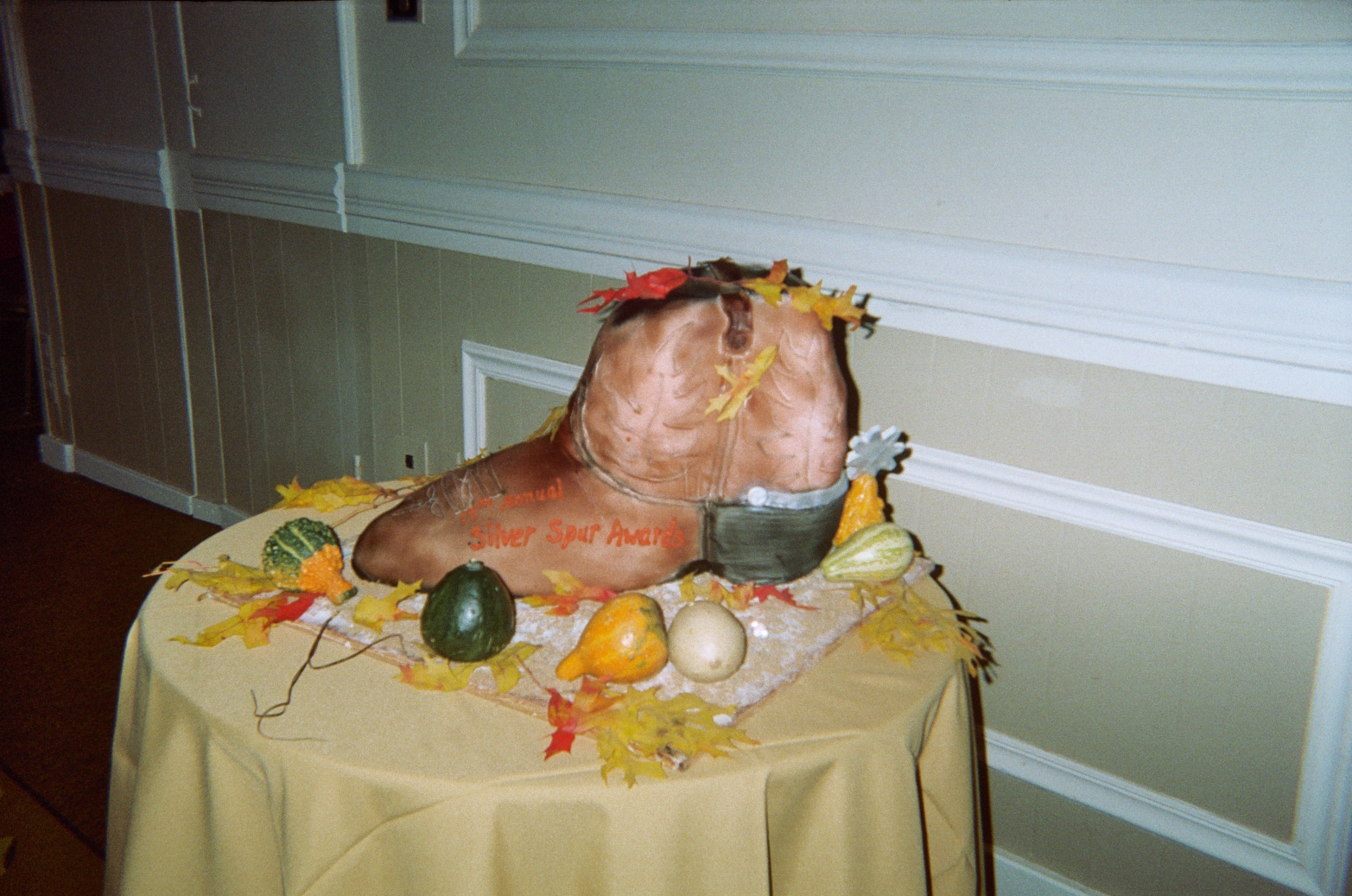
SILVER SPUR TICKET PRICE SLASHED!

THE SILVER SPUR AWARDS is just days away, on Saturday,
October 27th, and you need to BUY YOUR TICKETS NOW! When I spoke to REEL COWBOYS President Robert
Lanthier on Thursday, he told me tickets which were $125 are now just $99! Honorees are western leading lady Anne
Jeffreys, Robert ‘Elfego Baca’ Loggia, Tom ‘Billy Jack’ Laughlin, Bo Svenson,
ace stunt-man Clifford Happy, and the late, great singing cowboy Rex Allen. Presenters are Bo Hopkins, Louis Gossett Jr.,
Wilford Brimley, Terry Moore, Ben ‘Alias Smith & Jones’ Murphy and Boyd
Magers. Rex Allen Jr. is your master of
ceremonies, and he and Erwin Jackson and the Canyon Riders will provide the
music. It’s at the Sportmen’s Lodge in Studio City
Every year the non-profit REEL COWBOYS chooses a different
charity to support with their banquet, and this year it’s the MVAT
Foundation. When I spoke with Robert
Lanthier on Thursday, things were, frankly, looking pretty dire. “We have 166
tickets left to sell. This is for
charity, for quadriplegic veterans, for families of veterans.” But I just got
off the phone with Robert on Sunday afternoon, and the great news is that since,
the word got out, so many of you have stepped up to help, and happily there are
still a few tickets left.
The biggest thank-you must go to the talented and beautiful
Rhonda Fleming. She’s bought two tables,
and offered them to the Wounded Warriors Charity, so that many of our heroes
can attend! Robert tells me that the man
who has been helping him pull all the talent together is actor Tommy Cook, the
movies’ original ‘Little Beaver’ from THE ADVENTURES OF RED RYDER. To buy tickets with a credit card, call Sharon
Evans at 818-352-7665. To buy by check
call Robert Lanthier at 818-395-5020.
For more information about the event, visit the REEL COWBOYS site at www.reelcowboys.org
TCM FANATIC - WESTERN NOW ONLINE!
And speaking of TCM (okay, nobody was), have I mentioned that the segment I was interviewed for is now viewable here?
THE
Built by cowboy actor, singer, baseball and TV entrepreneur Gene Autry, and designed by the Disney Imagineering team, the Autry is a world-class museum housing a fascinating collection of items related to the fact, fiction, film, history and art of the American West. In addition to their permanent galleries (to which new items are frequently added), they have temporary shows. The Autry has many special programs every week -- sometimes several in a day. To check their daily calendar, CLICK HERE. And they always have gold panning for kids every weekend. For directions, hours, admission prices, and all other information, CLICK HERE.
Across the street from the Hollywood Bowl, this building, once the headquarters of Lasky-Famous Players (later Paramount Pictures) was the original DeMille Barn, where Cecil B. DeMille made the first
This small but entertaining museum gives a detailed history of Wells Fargo when the name suggested stage-coaches rather than ATMS. There’s a historically accurate reproduction of an agent’s office, an original Concord Coach, and other historical displays. Open Monday through Friday, from 9:00 a.m. to 5:00 a.m. Admission is free. 213-253-7166.
WESTERN ALL OVER THE DIAL
INSP’s SADDLE-UP SATURDAY features a block of rarely-seen classics THE VIRGINIAN and HIGH CHAPARRAL, along with BONANZA and THE BIG VALLEY. On weekdays they’re showing LITTLE HOUSE ON THE PRAIRIE, BIG VALLEY, HIGH CHAPARRAL and DR. QUINN, MEDICINE WOMAN.
ME-TV’s Saturday line-up includes BRANDED, THE REBEL and THE GUNS OF WILL SONNETT. On weekdays it’s DANIEL BOONE, GUNSMOKE, BONANZA, BIG VALLEY, WILD WILD WEST, and THE RIFLEMAN.
RFD-TV, the channel whose president bought Trigger and Bullet at auction, have a special love for Roy Rogers. They show an episode of The Roy Rogers Show on Sunday mornings, a Roy Rogers movie on Tuesday mornings, and repeat them during the week.
WHT-TV has a weekday afternoon line-up that’s perfect for kids, featuring LASSIE, THE ROY ROGERS SHOW and THE LONE RANGER.
TV-LAND angered viewers by dropping GUNSMOKE, but now it’s back every weekday, along with BONANZA.
AMC is the HELL ON WHEELS station, and they’ve been a block of episodes of THE RIFLEMAN, sometimes a half-dozen of them, on Saturday morning, before Western features.
That's a wrap for tonight's Round-up! Have a great week, and please DON'T send me emails mentionting how HELL ON WHEELS or COPPER ended, since I'm several weeks behind on both!
Happy Trails,
Henry
All Original Contents Copyright October 2012 by Henry C. Parke -- All Rights Reserved