Showing posts with label Mason Beals. Show all posts

Thursday, October 2, 2025

EXCLUSIVE: ‘ELKHORN 2’ RED CARPET PREMIERE! PLUS ‘RUSTLER’S RHAPSODY’, RON HOWARD’S ‘EDEN’ REVIEWED!


‘ELKHORN’ SEASON 2 RED CARPET – TR’S TRIUMPHANT HOMECOMING!


Elkhorn Abby Road -- Mason Beals, Elijah Mahar,
Jeff DuJardin, Ashton Solecki
Photo by Morgan Weistling

On Saturday, September 27th, at 6:30 p.m., the entire population –and then some -- of Medora, North Dakota turned out to welcome favorite son Theodore Roosevelt back to the Badlands, the frontier outpost that played such a part in developing the man who would become our 26th President. In Roosevelt’s own words, “I would never have been President but for my experiences in North Dakota.”

Elkhorn, the INSP series, begins in 1884, the time TR spent in the Badlands at his two ranches, the Elkhorn and the Maltese Cross, so it seems fitting that the series should hold its second season premiere in Medora. I’d had the pleasure of visiting the set for some of the filming of season one – you can read my interview with series star Mason Beals HERE -- and I was delighted to be invited to cover the events in Medora for True West Magazine.

Just as surely as Teddy is the protagonist of the tale, French cattle baron the Marquis de Morès and his bride Medora, are the antagonists. I asked Ashton Solecki, who plays Medora, how it feels to attend a red carpet in a town that’s named after her. “Wow! To say it's surreal is an understatement. To be named Medora in the city of Medora, whose children -- many children here are also named Medora! I've met many fans of the show. It's an honor. Happy to be here!”

Ashton Solecki

I asked Ashton what was her favorite thing she’d done during her visit. “Definitely visiting the Chateau,” the actual, still-standing mansion where Medora and the Marquis lived. “Our guides were so kind, so gracious, so knowledgeable. Obviously, I was already a super-fan of Medora, being that I play her, but I got to learn so much more about Medora. For example, I found out that on one bear hunt alone, Medora shot three bears, and she faced down a bear that was charging right at her calmly, coolly, collectedly. The coolest thing was being in their house with her things everywhere, and feeling their love -- it's next level. Honestly, meeting all the locals here, that's been really great because it's one thing to play a role on tv, but to understand how important this person is to the locals and to the history of the area, that was really transformational.” Then, looking into the crowd, she exclaimed, “Oh, my grandma's over there! She's so cute!”

I asked Mason Beals, who plays TR, if this was his first time on a red carpet for his own show. “100%, yes. It's incredible. This is so much fun. Seeing everyone so excited, it just fills my heart. We've been doing this show for a few years now, and to see real love and support in person is just, it makes every hour of work worth it, you know?”

Two Teddys -- Mason Beals and
Joe Weigand

When I asked him what was the most interesting thing he’d seen so far, he agreed with Ashton. “The Marquis' chateau we just saw today; just to see how preserved it is, and that he called that ‘a cabin’! And how huge it was – it just says everything you need to know about him. We had such great guides, and it gave me a lot of perspective on the Marquis. This town knows a lot about Teddy Roosevelt, but to learn even more about the Marquis is just great.” I asked if what he had learned made him like the Marquis more or less. “I actually have more sympathy for him. Definitely. I think that he tried really hard; he had a lot to prove and he was unlucky in those endeavors. He wasn't probably the greatest human being on earth, but I have a little bit more sympathy for the villain after this.”

Matt Wiggans plays William Merrifield, a tough man who already lives in Medora, and wises up not only the future President, but his Maine-born associates, on the ways of the West. Matt had visited the location of TR’s Elkhorn cabin, now gone save for the massive rocks of the foundation, which outline where it once stood. “We shoot the show just north of Los Angeles, in a place called Acton, and I was pretty amazed at how close the sets come to the real thing. But what's been magical is to go out and experience the actual locations. The Elkhorn cabin isn't there anymore, but you can visualize it there. And what Theodore Roosevelt was experiencing in that solitude, that was so imperative in his life, it was goosebump-inducing.

Matt Wiggans

“I spent a lot of my childhood in Spearfish, in Brookings, South Dakota. I played hockey in North Dakota. But this is my first time in Medera, and my wife and I are already super-excited to come back for the opening of the Theodore Roosevelt Presidential Library. I warn people that when I go to historical places or museums, just prepare for hours, because I like to read everything. I love history. This is not just a premiere, it's an experience: <laugh>, it's The Teddy Roosevelt Experience! Understanding how real it is to people -- Eli (Elijah Mahar), who plays Sewell, and I were talking yesterday about how this just makes you want to be better, just step it up even more.”

Sam Schweikert

One of the startling elements of the Elkhorn story is the youth of the people involved: when Roosevelt and the Marquis first clashed in 1884, they were both 26. Newspaper editors in Westerns tend to be Edmond O’Brien or Thomas Mitchell, usually portly drunks in their 50s. Sam Schweikert, who portrays editor Arthur Packard, couldn’t be less like that cliché. As Sam points out, “Arthur Packard was 22 years old when he came out and opened up the Badlands Cow Boy, which is amazing, to be that young and to have that sense of wherewithal to say: I'm gonna go to a place that is lawless and scary, and help spread the word. And given that we're here in this flourishing town of Medora today, I think Arthur had a lot of foresight.”

Elijah Mahar

Next on the red carpet was Elijah Mahar, who plays William Sewall, one of two friends TR sends for from Maine to help build his cabin. Elijah notes, “I grew up in a small town in Washington, a logging, dairy, farming town.” Logging? Does he have the kind of experience his character has? “I have not chopped down trees. I've sawed down trees with a chainsaw, and I have chopped them into logs.” And while he isn’t from Maine, “My wife, her family, have a house in Maine. So we go there every summer for a few weeks. And Sewell’s house is still there. I go see the house, I called the number, left a message saying, Hey, my name's Eli. I'm on a show called Elkhorn. I play Bill Sewell, the man who built your house. I'd love to come see it. Within minutes, there was a message from the woman, who's Bill Sewell's great-granddaughter! She was so excited. ‘I'm a huge fan of the show!’ The next day, my wife and I spent a couple hours there. It was kinda like coming here. I got to be in his bedroom, sit at his desk, saw his bassinet from when he was a baby. It was a great experience. When it's a real person you’re playing, you feel like you have to kind of honor them.”


Brittany Joyner

William Sewell spends some time in the first season pining for his wife, Mary, whom he has left back in Maine. In season 2, he gets his wish, rejoined by his wife in the person of Brittany Joyner, who is a fiery redhead in reality, but a brunette as Mary. Looking at the premiere’s turnout, far more than Medera’s population of 160, she gushed, “This is fantastic! I can't believe that all these people showed up just for little old us -- I'm so glad! It's a really, really cute town, lovely people, lovely food and coffee and experiences. But getting to see the threshold stones of Elkhorn, that has such a close memory for me of filming, and our entire series hinging around this location. The Chateau de Mores was wonderful. It really gave us a good glimpse of how differently they were living than Teddy was, in his rustic cabin in the middle of the woods.” Architecture is not just of passing interest to Brittany.  “I spent the summer in France, doing carpentry on a medieval castle, so I'm recovering from that.”

Jeff DuJardin

Jeff DuJardin plays the Marquis, a Frenchman, of course. Jeff was born somewhat closer, “In the smallest state, in Providence, Rhode Island. I was the very last person who was cast in the project. And part of it might have been, someone who could do a French accent, but maybe not too French.” The rumor is, they auditioned some French actors, whose accents were too thick, and some Americans, of the Pepe le Pew school. “I got an email from my agent. ‘Can you put yourself on tape for this role? You have to do a French accent.’ My mother spoke it fluently. I would hear her on the phone growing up, speaking to my grandmother, so I knew what the French accent was supposed to sound like. So I recorded this audition, and heard back a few days later that they really loved it, and they wanted me to do a chemistry read with Mason. And the rest is history.”

North Dakota First Lady Kjersti Armstrong

Soon it was time for everyone to find seats in Medora’s Old Town Hall Theater for the screening of Elkhorn, season 2, episode 1, A Fine Welcome. The audience loved the show, cheered every star’s entrance, and on the big screen it was striking how beautifully the series is photographed. A second screening would be held to accommodate the overflow crowd. Historian, entertainer and TR impersonator Joe Wiegand had emceed on the red carpet. Inside, the hosting duties were handled by Elkhorn producer Gary Tarpinian, who introduced North Dakota First Lady Kjersti Armstrong, people from various foundations and organizations who had helped with event, the executives of the INSP Channel, and the cast members who took the stage for a spirited Q & A, which is available tonight on the Theodore Roosevelt Presidential Library’s Youtube page, and below.


 My favorite moment was when someone asked, “What will you remember about your time in North Dakota?”

When series star Mason Beals spoke about how welcoming the town was, and how “incredibly beautiful it is out here. Driving in from Dickinson, passing all those canyons, it's just mind-blowing,” Brittany Joyner commented, “I'm actually 100% shocked you didn't say breakfast sandwiches. They have not stopped talking about them!” The cast took a deep, rhapsodic dive into the merits of the spectacular food available at the C-Store.

Producer Gary Tarpinian

From the audience, Rolf Sletten, author of Roosevelt’s Ranches, and one of the great movers and shakers in making Medora a hub of Roosevelt history, raised his hand. “I wanted to tell you (that) those breakfast sandwiches are made by a woman named Robin Griffin. And Robin Griffin is Margaret Robert's great-great granddaughter. And Margaret Roberts was TR's nearest neighbor at the Maltese Cross Ranch.” In Medora, yesterday, today and tomorrow, Teddy Roosevelt history runs deep!

INSP's Doug Butts, Rolf Sletten, Emily Sletten,
ELKHORN creator Craig Miller, INSP's Dale Ardizzone

Season 2 of Elkhorn will premiere tonight, October 2nd, at 9pm Eastern time – check your local listings – and will continue Thursdays at 9. If you want to catch up on season 1 – and you should – it’s streaming on Prime and Tubi and Plex.


RUSTLERS’ RHAPSODY

Kino Lorber – BluRay $29.95


Tom Berenger's 1930s singing cowboy 
doesn't blend in easily.

Since you obviously read Henry’s Western Round-up, I know you’re going to love a lot about Rustler’s Rhapsody – maybe even the whole thing. But your friends may not, if they haven’t got the background. Writer and director Hugh Wilson, had already more than proven himself as a comedy writer, creating WKRP In Cincinnati, and as a comedy director: his first time at bat was the low-cost, hugely profitable, and grossly funny Police Academy, which spawned a 7-film franchise.  Perhaps that’s why he was given a free hand for his next production, writing and directing Rustlers’ Rhapsody. It’s the sort of film that, under normal studio procedures, would never have been green-lighted, not because it wasn’t good, but because most studio execs would never have enough Western movie knowledge to get the jokes.  When Blazing Saddles was made 11 years earlier, Westerns in theatres and on TV were so ubiquitous that viewers couldn’t help knowing all that was required. But Rustlers’ Rhapsody is specifically a sweet celebration of B-Westerns which likely went over the heads of its 1985 audience, and would certainly go farther over the heads of an average audience today.

Tom Berenger, who in 1979 had played Butch Cassidy in the prequel Butch and Sundance: The Early Days, stars as Rex O’Herlihan, not a singing-cowboy B-Western movie actor, mind you, but a singing-cowboy B-Western movie character. A lot of the humor comes from the similarity of so many B’s – Rex wistfully notes that he can see the future, because the future is always the same: every town he enters has the same stores and sheriff’s office, interchangeable schoolmarms and henchmen. He has a fabulous wardrobe but we have no idea where he carries it. He diligently practices shooting guns out of bad guys’ hands – he wouldn’t think to shoot at a person, nor would they be able to shoot him. It’s all begins in exciting, chasing-the-stagecoach-robbers black and white, but a narrator wonders what would happen if Rex had moved from the B’s of the ‘30s and ‘40s to the Westerns of ‘today,’ and guess what: suddenly we are in widescreen Technicolor, and the bad guys are shooting awful close!

Berrenger and Patrick Wayne seem too evenly matched!

The problem is, we never quite learn which ‘today’ they mean – ‘today’ doesn’t seem a whole lot grittier than 1960s TV – certainly not Peckinpah ‘today’. It’s sort of like if Mark Twain wrote A Connecticut Yankee in Somewhere Other Than Contemporary Connecticut. If you don’t know he’s in King Arthur’s Court, you don’t know what to base the gags on. It’s well-worth seeing, and lots of the jokes are very clever but a lot are just not focused enough to pay off.

G.W. Bailey – Lt. Harris from the Police Academy films – is Peter, the town drunk and prototypical sidekick-to-be, who takes naive Rex under his wing. Rex’s kindness is endearing when he lies to Peter, assuring him that, while everything and everyone else is the same going from town-to-town, he’s never met anyone like Peter before.

Berenger plays it as straight and as straight-arrow as he should, with Marilu Henner and Sela Ward both lovely to look at and very funny. Patrick Wayne plays a good-guy who is as good as Rex, and their interplay is great fun. Andy Griffith, as the wealthy cattle baron is under-utilized, because his part was drastically cut: he was supposed to be a gay cattle baron, but 1985 audiences weren’t ready for that. Incredibly, it’s shot in Almeria, Spain – Fernando Rey is included for some funny nods to Spaghetti Westerns – but looks more American than European.   


EDEN – A Film by Ron Howard

Ana de Armas, supported by Felix Kammerer 
and Ignacio Gasparini, photo by Jason Boland

Currently streaming on Prime for $19.95

(Note: I realize that Eden is not a Western, but it’s a pioneering story, about people moving away from civilization, so I say, close enough!)

The fact that it’s based on the truth notwithstanding, the premise of Eden, the very dark new film directed by Ron Howard and co-written by him with Noah Pink, could have been a wonderful comedy: post-World War I, a pompous German philosopher and his lover move to an unpopulated island in the Galapagos Archipelago, to be completely alone, to work out a plan to save humanity. And when word of his plan spreads – making them among the first media stars -- true-believers flock to join him, making his work impossible. I feel like re-writing it for Charlie Chase, or Clifton Webb!

Daniel Bruhl and Jude Law
photo by Peter Jowery

We are immediately sympathetic to Jude Law as Ritter, the philosophoid who, despite his pomposity, is trying to accomplish something important, along with Dore, played by Vanessa Kirby, who won’t even let her MS derail her. Without warning they are joined by the unwanted, unprepared and destitute Wittmer family – Margaret (Sydney Sweeney), Heinz (Daniel Bruhl) and young son Harry (Jonathan Tittel). They’re about as welcome as Blondie, Dagwood, and a tubercular Baby Dumpling. No sooner are they settled than the arrogant “Baroness”, played by Ana de Armas, arrives with her entourage of 3 lovers, and her lunatic plan to build an exclusive hotel on the island’s shore.  You have an inkling of what’s coming, as the opening titles tell us that it is a true story, as told by the survivors.

While not a popular theme in recent years, stories of “civilized” people alone on jungle islands have been the subjects of several memorable films: various versions of The Island of Dr. Moreau, The Most Dangerous Game, Lord of the Flies, Swiss Family Robinson – even comedies like The Tuttles of Tahiti. In fact, this group of castaways is the subject of a fascinating 2013 documentary, The Galapagos Affair: Satan Came to Eden, currently streaming on Amazon Prime, from directors Daniel Geller and Dayna Goldfine. Incredibly, it’s full of footage of the actual islanders, as newsreel companies and narrative filmmakers visited them. There is even a brief dramatic film starring the Baroness!

The ultimate flaw of Ron Howard’s film is that there is no one to care about. Unlike all of the fictional jungle films I’ve mentioned, there is no likable character – our sympathy for Ritter quickly dissipates. The irony is that you don’t like anyone in The Galapagos Affair either, but you don’t lose patience with that film because it’s a documentary, and the appeal is intellectual. We’ve all watched true crime stories where the victims are as hateful as the killers, but the truth, sympathetic or not, keeps our interest. But our interest in drama is not intellectual but largely emotional: we want to root for someone. The closest we come to caring is about young Harry Wittmer, and there is a promising moment between him and the Baroness, when she’s befriending him, and we immediately distrust her motives. But the set-up is never paid off. Instead, the plot becomes an uninvolving scorecard of who gets killed in what order.

Sydney Sweeney, photo by Roger Lawson

In spite of this, Ron Howard’s direction is excellent. Jude Law’s character’s deterioration, his transition from pretentious philanthropist to psychotic fascist, is Oscar-worthy wonderful. I wanted to choke de Armas’ Baroness, but I found her fascinating. Eden is beautifully photographed by Mathias Herndl, particularly the strangely ominous cutaways to the animal life on the island. We don’t see a single Galapagos Tortoise, but in fact, filming is not permitted on the islands, so it was shot in Australia.

The most powerful sequence by far is Sydney Sweeney’s character giving birth while her cabin is being burglarized, and then being attacked by blood-smelling dogs! That had me not only on the edge of my seat, but gnawing on my knuckles.

AND THAT’S A WRAP!


Please check out the September/October True West, featuring my article, A Century of Disenrollment, and my interview with author Anne Hillerman. And here’s the link to my newest INSP blog, What TV and Movies Get Right and Wrong About Cowboys.


Much obliged,

Henry

All Original Contents Copyright October 2025 by Henry C. Parke – All Rights Reserved


Tuesday, June 24, 2025

HAPPY 90TH BIRTHDAY MONTE MARKHAM! HERE’S OUR ‘GUNS OF THE MAGNIFICENT 7’ INTERVIEW, PLUS 'ELKHORN' RETURNS TO INSP OCTOBER 2!


Monte shooting low


Monte Markham, who in 1967 starred in the series The Second Hundred Years, is closing in on his first hundred! A busy actor on film and television since his 1966 debut on Mission: Impossible, and Debbie Reynolds’ co-star in 1973’s Broadway hit musical, Irene, he’s still very in-demand. But beginning in 1992, with son Jason Markham and wife Klaire Markham, Monte founded the independent documentary production company Perpetual Motion Films, and they have produced hundreds of hours of documentary television, including the first 10 episodes that premiered the landmark A&E series, Biography.

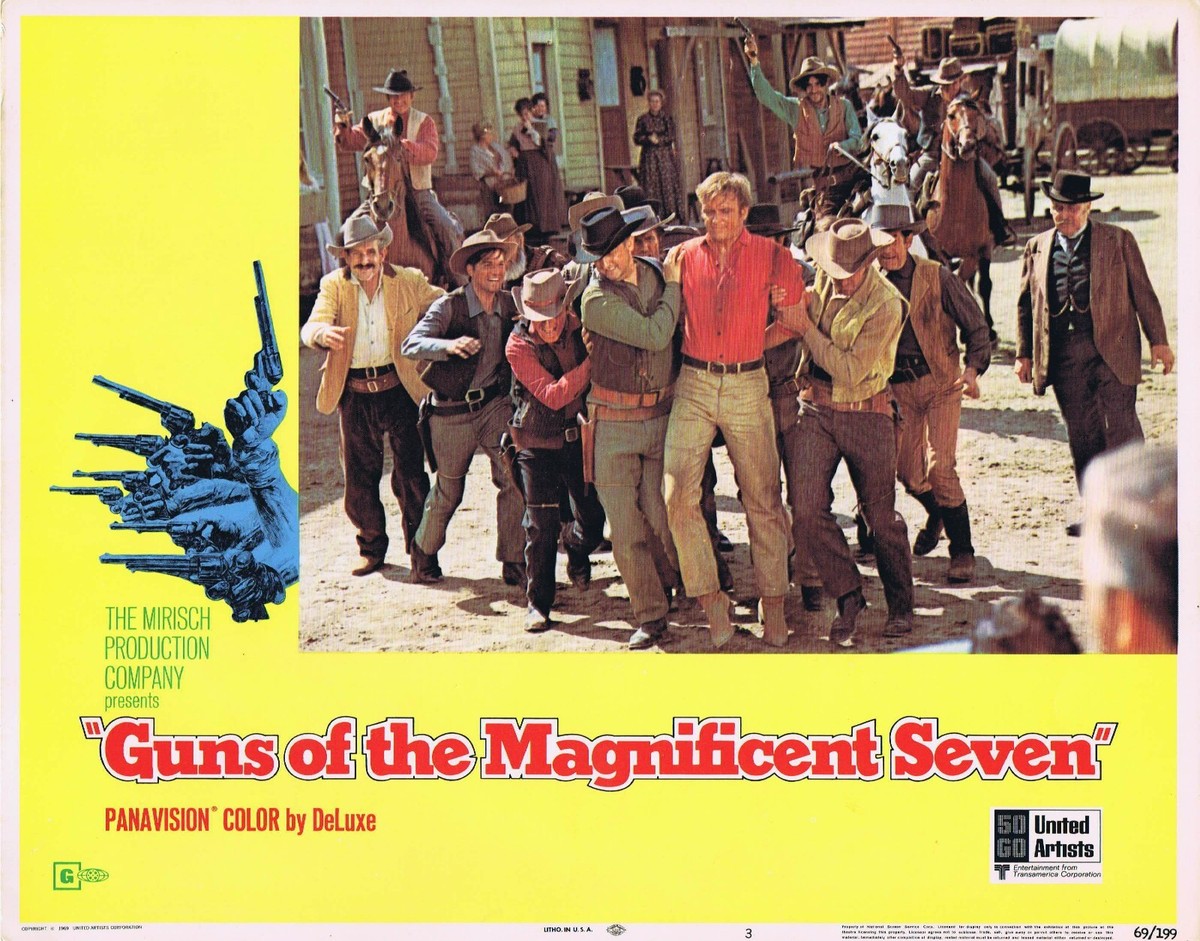
At 2022’s Lone Pine Film Festival, I had the pleasure and privilege of interviewing Mr. Markham onstage before the screening of 1969’s Guns of the Magnificent 7, speaking mostly about that film, and also about his first Western, 1967’s Hour of the Gun.  So much of our talk was punctuated by laughter, both Monte’s and the audience's, that I left the “laughs” in. I’m particularly happy that Monte shared a great story about the late Joe Don Baker.


Me and Monte against the Sierra Nevadas 

Henry Parke: Hello, I'm Henry Parke, Film Editor for True West Magazine, and we are so lucky to have with us one of the magnificent people of The Magnificent 7, Monte Markham. To put Guns of the Magnificent 7 in a historical context, in 1960, director John Sturges took his crew to Cuernavaca, Mexico, along with Yul Bryner, Steve McQueen, Eli Wallach, and a script based on Akira Kurasawa's Seven Samurai, and made The Magnificent 7. It's a wonderful western and it made stars of James Coburn, Charles Bronson, Robert Vaughn. It introduced Horst Buckholtz and gave Brad Dexter his best-ever film role. In 1966, The Mirisch Company sent director Burt Kennedy to Spain with a script by Larry Cohen, with Yul Bryner back as Chris, Robert Fuller in Steve McQueen's role of Vin, and Warren Oates, Simon Oakland, Fernando Ray, Emiliano Fernandez, and Rudolpho Acosta, to make Return to the Magnificent 7. It's widely considered to be, well, a movie, but nobody's best work. Then in 1969, working in Spain with a script by Herman Hoffman, Paul Wendkos directed what is clearly the best of the three sequels, and we won’t even discuss the remake, Guns of the Magnificent 7. George Kennedy, fresh from his Oscar win for Cool Hand Luke, played Chris, and as his right hand, in what would be the Steve McQueen role, the first of the new 7 he'll recruit, as you know, is Monte Markham. We're so fortunate to have him with us tonight. Monte, Guns was early in your film career, but not your first Western.

Monte Markham: No, the first Western was called The Law and Tombstone, and I was cast and got down to Mexico, and it was John Sturges directing. It was the sequel of the Gunfight at the OK Corral. They hated the name, because it would translate only to The Law and the Grave Marker in the European market -- that wouldn't have the same cache that Tombstone means in America. (Note: It was eventually retitled Hour of the Gun.) And that was just a hell of an experience. I gotta tell you. It was my first film; I had just come into town. I hadn't done any television, hadn't done any film, and we were in Torreon, Mexico and it was the first time anything was shot there. And in the cast was Sam Melville (as Morgan Earp), his first film; Johnny Voight (as Curly Bill Brocius), his first film; Frank Converse (as Virgil Earp), his first film. And we were surrounded with some of the finest character actors in New York and Hollywood. And it was such a great experience. Jason Robards playing Doc Holliday and Jimmy Garner playing Wyatt Earp. They became lifelong friends. It was a great time.

Monte in Hour of the Gun

Henry Parke: And of course, you played Sherman McMasters.

Monte Markham: Yep. He was the deputy sheriff out of Arizona.

Henry Parke: What was John Sturges like to work with?

Monte Markham: John was a very impressive and a very reticent man, a man of few words. He loved to party. Jason Robards was known to be in his booze. He was divorcing Lauren Bacall at the time. And he spent every night in the whore-house, not whoring necessarily, he just loved the company and he had a great time, <laugh>, and he drank a lot.

And the next morning, they'd be bringing him onto set with cucumbers on his eyeballs. It was an interesting time for all. We were all in the hotel dining room and having dinner. And Jason came in and said, “Hello everybody.” When he was not drinking, he was just the sweetest man in the world. "And John, " he said to Sturges, like a hurt boy, "I said hello to you on the street, and you didn't even acknowledge it." John looked at him and said, "I never speak to strangers on the street." Jason was so upset. But it (became) a joke between the two of them.

When I got the call to do the film, they said report to Los Angeles. And I had a great wife, a 2-year-old child, and I was off to Mexico. It was raining, I got a taxi, arrived at LAX, then a Mustang pulled up and spun around and stopped. Out stepped Lonny Chapman and Jason Robards and Bill Windom, drunk as coots. Got on board the plane and we flew to El Paso, Texas, had a brief news conference, and everybody was drinking the whole time. Bill Windom and Jason were wearing their wardrobe, and we flew to Mexico, to Torreon, on a DC 3 plane. We got off the plane and I ran down and said, "Hello." Mr. Sturges was standing there. And I’ll never forget the look on his face when Windom and Robards just crawled off the plane and fell down the stairs <laugh>. It was like that the whole shoot. But it was just very exciting, particularly for a young actor; just great.


Monte guesting on High Chaparral

Henry Parke: You'd also made a couple of TV Westerns, episodes of Iron Horse and Here Come the Brides. Did those, and Hour of the Gun help prepare you for Guns of the Magnificent 7?

Monte and Ed Begley on The Mod Squad

Monte Markham: Nothing really prepares you for any of that. You are all fans of Westerns, you love it, and we have the great Cowboy poems, and the writing, and it's all true: there's no greater fun. That’s when the stables were all working in Sun Valley, and the north section of the Valley; that's where all stunt men had their horses. And you want to understand that at that time, everybody had three horses. Jimmy Garner got James Stewart's horse, that was Henry Fonda's horse. Jimmy Garner had three horses, they were Buckskins. Jimmy didn't own them; the people running the studios had them. The stunts were all worked out there, at the barns.

And when I went to Hal (Note: sorry, I couldn’t decipher the last name), who was a good friend of somebody, and he introduced me, and we became great buddies. He said, come on out and we'll fix you up. And instead of having lunch I was trying to learn everything. I would learn how to jump over the butt of a horse, and mount this way, and mount that way. It was just wonderful. And Dustin Hoffman was training for Little Big Man. I remember him standing over in the corner learning how. He was just in from New York. He was working his butt off. It was great. There's the horse sequence where we get on and again, it was the American cowboy horses, the ones that we had down in Mexico, the ones that we didn't have in Spain. They'd be all over the place; they were agitated all the time.

George (Kennedy) runs up, says "Mount up," and I ran to the horse to mount, and boom, the horse ran away. <laugh> Paul (Wendkos), the director, was furious. We kept trying. And that horse would not wait for me. He said, “How are you doing?” Then, Boom. “Get away from me!” “Don't jump at me like that!” We had to tie the horse, and finally it took three different cuts to make it work so I could take off, and it was a nightmare for him. But it was just a different way of filming everything. I didn't get to jump on a horse after all that hard work. That's my story, and I'm sticking to it. But, don't tell me I'm not having a good time. It was just great. Great.

Reni Santoni, Monte, George Kennedy, James Whitmore

Henry Parke: Had you seen the original Magnificent 7?

Monte Markham: Several times, as we all have. I remember Jimmy Coburn, and it was like, my God, who is that? And the various actors; McQueen! It was great. It was an honor to do the film. I felt very strongly about it. Madrid was like the hub, and we would drive out every day, 30, 40 miles to the different locations. It was four months and it was great preparation. Paul Wendkos was the great New York director. John Frankenheimer and he were competitors all the time. And Paul just never got the role of the director that he should have. And unfortunately, he died early.

But it was just a great shoot. Joe Don Baker, just a wonderfully spooky guy. We had a great time. In Madrid at that time, it was bullfighting season. Up until a certain young man appeared on the scene, bullfighting had really degenerated into corruption, et cetera. They would drop sandbags on the bull's back to weaken them. They shaved the horn, because the bull would think, I got you. Well, I thought I got you, but they took about an inch off his horn. They were cheating all the time. Then came a young guy named El Cordobes. Many of you here may remember the name and remember seeing some of his work, those of you that are into bullfighting. We had that to go to on Sundays, and it was just wonderful. I hated the picadors, I hated a lot of it, but it was really spectacular.

George Kennedy and Joe Don Baker in
Guns of the Magnificent 7

Joe Don bought a cape, and he wore that cape, <laugh> walking down the street. A guy would look at him on the street as they're passing, like, what? What the hell you lookin' at? Whatcha looking at? Whatcha looking at? And he had a stunt girl in Spain that he dated, and she wore like the first mini skirt. This is ‘68, and we'd be in the Great Plaza Ventas, the magnificent bullring stadium there. And he'd make his entrance in that cape and have a grand time and look around. Everybody -- whatcha looking at? Whatcha looking at? It was a great time. It was a crazy time. James Whitmore -- it was an honor to know James. He was one of the finest men and finest actors I've ever worked with, one of the finest human beings. The work that he started with actors and theater all over the country that's resonating to this day.

George Kennedy, he said, “Hell, what a stroke of luck! Yul Bryner decides he doesn't want to do it, and I’d just won an Oscar, and here I am.” And he was thrilled to be doing it. He said, “We're all doing cowboys and Indians, cowboys and Mexicans.” Frank Silvera; what a gift, what a man. Tragically, shortly after we made the film, he died installing a damned garbage disposal: electrocuted himself. Bernie Casey is a great artist. Had an incredible career as a painter. That was his first film. You aren't necessarily Los Angeles Rams fans, but you remember that was the winning team, and Bernie was a great wide receiver. So it was a thrilling, thrilling shoot.

Monte about to get his neck stretched

Henry Parke: As long as you talked about most of the 7, how about Reni Santoni?

Monte Markham: Reni, I didn't know very well. And he really was pissed off when I jumped off that horse and knocked him down. I just kicked him down and knocked him down, and he kept going, "You son of a bitch!" We never really got along. I would point out that Fernando Rey, the little dove, I don't know how many remember, but he was The French Connection, another great film. Fernando was a very elegant man and a very well-known Spanish actor and spoke beautiful English.

All 7 left to right: James Whtmore, Joe Don Baker, Bernie Casey
George Kennedy, Reni Santoni, Scott Thomas, Monte

Henry Parke: And as far as elegant, evil people, Michael Ansara as Colonel Diego --

Monte Markham: He was cool, very, very cool. Married to Barbara Eden at the time, but he had a good time in Spain.

Henry Parke: With all of the location work, was it a physically difficult shoot to do?

Monte Markham: I'd like to say yes, but it was just...no. It was great people, great locations. But I will say that for me, that first day of the shooting, me just being hauled out of the saloon and down the street. We fought, and guys got shot, and finally it was the end of the day. And it was this hot hot, day. The guys were sweating like pigs. The next day it was freezing cold. I remember Jimmy Whitmore, he was working on other scenes that day. And (to match how they looked the day before) a guy was spraying (water on everyone) And Jimmy kept saying, "Don't do that. Please don't do that. If you do that again I'm going to kill you." Each time, “Just one more time.”

The difference in location shooting is we had a lot of time off. As my character, Keno. I do some tricks; I do karate and all that. So there were three guys with me on the train. And one guy, Ray, they were making a joke. He had a straw hat on. Again, this is 1968, and he took off his hat, and he had long, I mean really long hair. And they called him El Indio. He fought bulls dressed as an American Indian chief, and he was well known. We had been working, working, working. They said his village is having a fiesta, and they invited me. He's gonna fight a bull, and we'd like you to join him in the ring, and be his assistant. And I said fine, that's great. 200 kilometers north of Madrid. They picked me up on Friday night at about nine o'clock, after shooting, and we drove all night. We got there about two a.m., went into the hotel. The next morning, they were singing and dancing in the street. It was like choirs. And in the middle of it is Ray Olo, the big barrel-chested guy. And so we go down, looked at the bulls. The bulls were not bulls, they were just big, big bull cattle. And it was for charity; in fact, the mayor was one of the guys to fight a bull. And Ray was gonna take one. So we got there. I was tall, blond hair, white shirt, marching with the crowd. They gave me brandy and we're having a great time. We got to the arena, and it was like something in Sun Valley in 1938. I stood there in the ring. And the first guy introduced himself, and then he got on his knees in front of the entrance and had the cape in his hand. And the bull ran out and ran right over, knocked him down.

Monte from the book Western Portraits,
photography by Steve Carver, written 
by C. Courtney Joyner

The mayor took on his bull, and he got hit several times. And he kept saying, "My God, the things we do for charity!" <Laugh>. So in comes Ray, and Ray had the full regalia on, and I've never seen the like of it. And the bull came and it was a big one. Big -- hell, about this high at the shoulder. And Ray had stripped off his vest, he ran toward the bull, and the bull was running toward him. He was running straight at the bull, nothing in his hands. And he did a vault over the bull!

I was thrilled. I stood up applauding, like it was a football game. So then they said, “It’s your time.” I went out and they gave me a cape, the lavender one with the yellow side. I’d watched them do it. So I stood like this, the bull's charging me. And I got mixed up to where I was, and the bull hit me and ran right over me, right across my chest <laugh>. I said, I must get up. And I did. And I ‘passed’ the bull. And then ‘passed’ him again. And I looked over at Ray, and he said, "Anytime you're ready. It's my bull." It was great. It was a great time, but my chest looked like hamburger.

Henry Parke: Do you have any favorite memories from shooting the film that you haven't mentioned yet?

Monte Markham: That was a big one.

Henry Parke: I should think so.

Klaire and Monte Markham

Monte Markham: Not a favorite, but my wife was able to join us for 10 days and we were able to travel around, but Franco was still in power. All around town you would see that everything was stopped and there'd be a parade of tanks, and Franco coming through town. There'd be a big event, and Juan Carlos, the son of the ex-King was being groomed. They knew he would take over and be King, and that's the only time Franco would have let it happen. But he seemed to be everywhere. More police than I had ever seen anywhere. We were in the massive -- maybe it was about the size of the Rose Bowl -- the famous Casa de Toros in Memphis. Before one of the fights, the picadors come out. But some guy in the crowd, he kept yelling something, and he was cursing; he was drunk and he was making comments. Everybody was very shocked and quiet. And then they started laughing, and he was going on, and all of a sudden a voice went -- (Shouting in Spanish). And that was one of the policemen. 150,000 people stopped in silence. There were several different kinds of uniforms. They took him away. It was something. I mean, you were safe (from crime). You could do anything. If I came back to my room, and I’d left my money laid out in denominations on the bureau, it was (untouched), because it was a pure dictatorship. And 50 years later, my wife and I, we went back and they'd removed Franco from where he was buried. (Note: Franco was originally buried at the Valley of the Fallen, a memorial built by the forced labor of his political enemies. In 2019 Franco’s body was exhumed, and was reburied in a regular cemetery.) So there was a mix of great memory of a great people, and the rise of really artistic bullfighting with Cordobes, and us being able to play-act like that and yet have such a great time and love each other. And I can't describe it more to you, how great the memory is and how great the opportunity was. You hear it from all the guests, but I truly am one of the most fortunate people who's ever been able to act. And I thank you all for that.

Henry Parke: We have a question from an audience member.

Audience Member: The Magnificent 7 theme song is pretty iconic. It's like the James Bond theme: everybody knows it. I'm just curious, when you guys were doing those group riding scenes, did you ever think about that theme?

Monte Markham: Every moment! <Laugh> Bernie Casey was a big man, and they needed to have a particular grey, a beautiful grey, for him to ride. And the first time we were all together, for those who will remember, we came over the hill. It was early morning, dawn, dew was on the mountain and a lot of grass. And we all come over, it's George and me, and then I hear, "Whoa! Whoa! Whoa!" I looked over my shoulder, and Bernie's horse, that big grey, had just sat down on his butt and was sliding down the hill. <laugh>

And Bernie, it was all he could do to stay on. We did it twice more, and it still happened. And finally the sheepish wrangler said the horse had a saddle sore. But you always did (think of the theme). You remember in school, if you had a track meet, you’d tie a number on your back. I went to a sporting goods store, and I bought seven numbers. They set up another morning shot. We all came riding into camp. Long shot. So we're up there, we're over the mountain, and I'm passing out the numbers. George put on 1, I put on 2, and we had the music playing, we come over the mountain, they're riding in, riding in, riding in, Paul Wendkos saw it, "Very funny! Cut! Cut! Cut! " But yes, you always knew it; I'd even hum it sometimes.

INSP'S 'ELKHORN' SEASON 2 BEGINS OCTOBER 2ND

The INSP Channel just announced that season 2 of Elkhorn, their series about the young Teddy Roosevelt, will begin airing on Thursday, October 2nd. If you haven't seen it, it's quite a show, and good history. Mason Beals stars as the rising New York politician who suffered the double tragedy of losing his young wife and his mother in one night. In despair, he travels to the Dakota Badlands, where he begins the process of remaking himself as the vigorous outdoorsman we would come to know. Beals won Best Actor, and the show won Best Western TV Series in the Cowboys & Indians Movie and TV Awards. Here's a sneak peek!


And that’s a wrap!


I need to get this posted, and get ready for the interview I’m doing in a few hours with Alexander Nevsky about his newest Western, The Wide West!

To see my most recent other writings, check out the left hand sidebar near the top, where you’ll find links to my most recent articles for INSP, about Westerns at the Drive-in, and my 4 pieces in the May-June issue of True West, on different aspects of the miniseries American Primeval. And catch me on Thursday, July 3rd, on the Rendezvous With a Writer podcast!

Much obliged,

Henry

All Original Contents Copyright June 2025 by Henry C. Parke – All Rights Reserved


Thursday, April 18, 2024

TCM FEST, INTERVIEW WITH ELKHORN'S TR - MASON BEALS, PLUS JOIN ME AND GREATEST WESTERNS EVER MADE AT L.A. BREAKFAST CLUB!


COME TO THE L.A. BREAKFAST CLUB ON WEDNESDAY, MAY 1, FOR ‘THE GREATEST WESTERNS EVER MADE’, WITH TRUE WEST’S HENRY C. PARKE


That’s right, my book, The Greatest Westerns Ever Made, and the People Who Made Them, has been published by TwoDot, and I’ve been asked to speak about it. If you like Westerns, and you wouldn’t be reading this blog if you didn’t, and you’re in the L.A. area, we’d love to have you join us, have a delicious breakfast, and you can purchase a book if you’d like. The Los Angeles Breakfast Club is a fascinating organization, started 99 years ago, to promote friendship, and the illustrious members over the years have included all of the studio heads, from Disney to Zanuck, not to mention Tom Mix. You can buy tickets, and learn all about the Club, here: https://www.labreakfastclub.com/event-details/greatest-westerns-ever

I’ve been the Film and TV Editor of True West magazine for nine years, and the book is based on about eighty of my articles. I don’t mean to brag, but here are a few reviews:


“Film and TV critic for True West, Parke presents a collection of his essays that will be a treat for western film fans… There’s plenty of behind-the-scenes detail and also sharp examination of the cultural impact of western films and of the social changes that affected their content… Parke’s enthusiasm is infectious.”

― Booklist


"A great read... a comprehensive, carefully curated look at the western genre on film and television. Chock full of personal anecdotes that bring humanity to its pages."

-- Patrick Wayne, Actor, The Searchers

"Honored to be featured in this new book by Henry C. Parke, film and TV editor for True West magazine. It’s an in-depth, on point, and eclectic review of the Western film and TV genre, from John Ford to Taylor Sheridan. If you love Westerns, you’ll get lost deep in this one."

-- John Fusco, Writer, Young Guns and Young Guns II


Here are links to a couple of places where my book is available:

https://www.amazon.com/Greatest-Westerns-Ever-Made/dp/1493074393?_encoding=UTF8&linkCode=sl1&tag=insptv-20&linkId=40670747d047d3241c54003bcabb179f&language=en_US&ref_=as_li_ss_tl

https://bookshop.org/p/books/the-greatest-westerns-ever-made-and-the-people-who-made-them-henry-c-%20parke-true-west-magazine/18667151?ean=9781493074396


TCM FESTIVAL BEGINS THURSDAY!

The TCM Classic Film Festival is back in Hollywood, from Thursday, April 18th, through Sunday the 21st, and as usual, they will be headquartered at the Hollywood Roosevelt Hotel. The venues where films will be screening are the Chinese Theatre IMAX, several of the Chinese Multiplex Theatres, the Egyptian – newly refurbished by Netflix, the El Capitan, and there will be poolside screenings at the Roosevelt.   Check out their website here -- https://filmfestival.tcm.com/programs/schedule/20240418/

They have, as always, a wonderful array of films that are almost never shown in theatres. While the packages are insanely expensive, if you go on the stand-by line for a movie that isn’t THAT popular, or one that’s in a HUGE theatre, you can often get in: those tickets are only $20, and with a valid student i.d., only ten!


Among the screenings that will be of particular interest to Western fans, on Friday at 9:30 a.m., at the Multiplex 4, they’re showing MIGHTY JOE YOUNG, the 1949 follow-up to SON OF KONG. A western? No, but it stars Ben Johnson, and it’s introduced by John Landis, director of not only ANIMAL HOUSE, but THE THREE AMIGOS! At 12:15 p.m. in the same theatre, Leonard Maltin is introducing the 1936 version of THREE GODFATHERS. This is not the John Ford, John Wayne 1948 Technicolor version. It’s directed by Richard Boleslawski, and stars the movies’ Boston Blackie, Chester Morris in the Wayne role, plus Walter Brennan before he was cute and folksy, and Lewis Stone, when he was playing outlaws instead of Mickey Rooney's father in the HARDY family films. Very tough, very gritty, very good.


That night at 6, still in theatre 4, it’s John Ford’s 1936 film THE PRISONER OF SHARK ISLAND, starring Warner Baxter as Dr. Mudd, who treated John Wilkes Booth after he assassinated Lincoln, and was sent to prison for it. The cruel prison guard is the great John Carradine, and his son, Keith Carradine, will introduce the film.


Robert Taylor teaches the women to shoot in
WESTWARD THE WOMEN

Saturday morning they’ll be showing a rare 35mm nitrate print of ANNIE, GET YOUR GUN at the Egyptian Theatre. At 6:15 at the Egyptian, it’s WESTWARD THE WOMEN, with Robert Taylor leading an all-female wagon train, directed by William Wellman, and written by Frank Capra – he wanted to direct it himself, but couldn’t get it set up. Its premise might sound cute, but it’s a serious film, beautifully done, and Robert Taylor does some of his best work as a man who truly doesn’t expect many of his charges to survive. If you’d like to read the article I wrote about Robert Taylor’s Westerns for the INSP channel, here’s the link: https://www.insp.com/blog/robert-taylor-hollywood-star-husband-to-barbara-stanwyck-and-cowboy/. WESTWARD is introduced by this year’s honoree for the Robert Osborn Award, Jeanine Basinger. I was not familiar with her until I interviewed Dana Delaney, who told me of her college experience, “Wesleyan is more of an academic school than a theater school. But they had a wonderful film department run by Jeanine Basinger, and that was where I really developed my love of westerns.”


Sunday at 9:30 a.m. in the Multiplex 6 they’re showing 1932’s LAW AND ORDER, the first talkie version of the Gunfight at the OK Corral, starring Walter Huston as Wyatt Earp, and Harry Carey as Doc Holliday, introduced by Brendan Connell Jr., C.O.O. of the Academy of Motion Picture Arts & Sciences.


And at 3:15 p.m. at the Egyptian Theatre, see the premiere of the 70mm restoration of John Ford’s THE SEARCHERS, introduced by the director of THE HOLDOVERS, and two-time Oscar-winner for scripting SIDEWAYS and THE DESCENDANTS, Alexander Payne.


MASON BEALS – THE MAN WHO WOULD BE TEDDY ROOSEVELT


ELKHORN, the new INSP series which airs on Thursday nights, stars Mason Beals as 25-year-old Teddy Roosevelt, a well-educated, socially prominent urban up-and-comer with a happy homelife and a growing political career, who saw his life shatter when, in one day, his mother died of Typhoid, and his wife died giving birth. Determined to rebuild his life, the frail, sickly young man abandons east coast city life and travels west, settling in the Dakota Territory.

Mason Beals, who plays Teddy has, to put it mildly, followed a non-traditional route to stardom. His self-generated career began as a reaction to desperate boredom. “For about nine months, I lived in the middle of nowhere, Idaho, in this town called Bonners Ferry. That’s because my dad had traded a Jeep for an acre and a half of property. My parents wanted to live debt free, so we built this place that looked like Noah's Ark, and lived there when the building was three-quarters finished. We were really trapped inside in the wintertime, and my younger brother and I were as bored as could be. I was just chopping and stacking firewood all winter, and I just started making YouTube videos, doing silly little vlog type things, and eventually started making stuff that was more scripted. That's where I learned how to edit and shoot.”

Mason Beals as Teddy Roosevelt

When his family moved back to his hometown of Coeur d'Alene, Idaho, the performing bug had bitten him, “but there wasn't much of an acting scene out there, so if you wanted to act, you had to make your own stuff.” He moved to Austin, “and I worked for a production company as an editor, as a shooter, sometimes producing, directing, and continued to make short films,” until his final move to Los Angeles, when he “started to do work with other people.”

Unlike many men his age, the Western genre is not foreign to Mason. “My dad’s a really big movie fan. He’s a blue-collar guy, did hardwood floors for 30 years.  I was reminiscing about how we were going to Blockbuster every week, and I remember he and I had watched 3:10 TO YUMA for the first time and I just loved it. And TRUE GRIT is great. So there were a handful of westerns, and I always enjoyed them. And now having done one, anytime I watch a Western, it's very much like, now I know how the sausage is made a little bit more. So it's very fun to watch it from that angle; they’re such a fun genre.”


He credits his father’s example in preparing to take on the responsibility of playing a lead in a series. “A hard work ethic is needed for something like this, and I definitely got that from my dad. I did hardwood floors with him for a good period of time. I mean, he's just the hardest worker that's ever graced this earth, and so learning from him, it teaches you a little bit of grit, and learning how to be a little bit rough and tumble, going with the flow of things. Keeping a positive attitude when things go wrong; he would always keep a good demeanor. That kind of psyche skill.”

In what ways was does Mason think he and Roosevelt are alike? “You know, when I was reading about his time (in Elkhorn), he talked about how scared he was when he came out here. And he said, by pretending to not be afraid, he became not afraid. I really did relate to that, because the role is intimidating in a lot of ways because he's such an icon. It's definitely an adventurous kind of a shoot. I really relate to the fish out of water element. I was bullied in school and TR was bullied.”

Teddy at his wife's deathbed

Mason brought some Western-ish skills with him, but others he’s had to learn as he goes. “Horseback riding was definitely new for me. Even though I had grown up around people who had horses, I just had never had the opportunity. But it was a pretty quick learning period; I had just a handful of lessons, and then the experience came just being on-set. I learned a lot; I feel very comfortable on horses now in a way I didn't really think I was going to. I'm kind of a coward in a lot of ways. Riding, that's probably the biggest skill that I've like taken away from this. But I grew up shooting guns, growing up in Idaho.”


AND THAT’S A WRAP!

Coming in the next Round-up, my interview with TOMBSTONE costume designer Joseph Porro!

Happy Trails!

Henry

All Original Contents Copyright April 2024 by Henry C. Parke – All Rights Reserved