Showing posts with label Greatest Westerns Ever Made and the People Who Made Them. Show all posts

Sunday, July 28, 2024

CONTEMPORARY WESTERN ‘BLUE RIDGE’ RETURNS TO INSP AS SERIES, PLUS INTERVIEW WITH ‘NIGHT THEY CAME HOME’ DIRECTOR PAUL VOLK


 CONTEMPORARY WESTERN ‘BLUE RIDGE’ RETURNS TO INSP AS SERIES

Sunday night, July 28th, 2020’s North Carolina set – and shot – contemporary Western/crime drama TV-movie, Blue Ridge, returns to INSP as Blue Ridge – The Series. Back in his role as lawman Justin Wise is Johnathon Schaech, who to me will always be the full-of-himself 1960s rocker in Tom Hanks’ delightful That Thing You Do. For Western street-cred, he’s played Horror-Western comic-book character Jonah Hex on DC’s Legends of Tomorrow, and will soon be seen as Sheriff Hitchcock in the gritty Hawaiian Western The Wind & The Reckoning. Returning as his ex-wife is Sarah Lancaster as Ellie Wise, with whom he shares a teenaged daughter – the also-returning Taegen Burns as Maddie Wise.

Johnathon Schaech as Justin Wise

In the town of Blue Ridge, the rural working-class community has for ages been dominated by two warring families, the Wades and the McGraths. Actor and stunt man Tom Proctor is back as Jeremiah Wade, but where the new story begins, the leader of the McGrath clan, Cliff McGrath, played by Graham Greene, Oscar nominee for Dances With Wolves, has died (you can read my True West interview with Graham Greene HERE  , or in my book), and his younger brother, Connor McGrath has returned home to take his place. Connor is played by A Martinez (you can read my INSP interview with A Martinez HERE ).

Always a strong, frequently intimidating presence, A, who was recently seen in INSP’s Far Haven, also plays Sheriff Gordo Sena in Dark Winds, and was memorably menacing as Jacob Nighthorse, the Native American opportunist/activist and casino operator on Longmire.

Avianna Mynhier and A Martinez

Tonight’s pilot episode, in which a random car break-down exposes a serious crime, Blue Ridge turns the small-town and small-budget limitations to its advantage: the local police force is convincingly underfunded and understaffed. The force’s entire budget has been spent on a new computer system, and when disaster strikes, the police are back to working on their Radio Shack computers, the force relocated to a shuttered local history museum. The premise and performances are strong, and I won’t spoil it by giving away any more plot.

Blue Ridge – The Series, premieres Sunday, July 28th, at 9 p.m., Eastern time.


THE RUFUS BUCK GANG’S STORY IS TOLD IN ‘THE NIGHT THEY CAME HOME’ – DIRECTOR PAUL VOLK SAYS: “I WOULD LOVE TO JUST DO WESTERNS: PERIOD.”


Until 2022’s high-profile Idris Elba Netflix Western, The Harder They Fall, few non-historians had ever heard of Rufus Buck or the Rufus Buck gang. But while that film was highly entertaining, and full of historical characters, they and Buck were tossed in so randomly as to true events, and what side of the law they landed on, that audiences knew no more when they exited than when they entered, aside from names.

The Night They Came Home -- an inexplicable title -- fills in a lot of those blank spaces. From the famously blood-stained pen of Night of the Living Dead author John A. Russo, who wrote Night They Came Home as both a novel and a screenplay, Rufus and his band of fellow mixed-race Native American and African American outlaws get an entertaining and unsentimentalized telling, and here the historical characters have purpose.

Rufus is played by Charlie N. Townsend. His gang’s members are portrayed by Phillip Andre Botello as Lucky Davis, Hugh McCrae, Jr. as Sam Sampson, Ivan Villanueva as Maoma July, and Nicholas Rising as Lewis Davis.

Charlie N. Townsend as Rufus Buck

Real lawmen portrayed powerfully by veteran Western actors include Tim Abell as legendary Indian Territory U.S. Marshall Heck Thomas, Sam Bearpaw as Deputy Marshall Sam Sixkiller, Peter Sherayko as Fort Smith hangman George Maledon, and Mike Gaglio as Hanging Judge Isaac Charles Parker.

The most familiar actors are two Rufus Buck victims, and our narrator, respectively, family-man Brian Austin Greene, bootlegger Robert Carradine, and Danny Trejo.

The film’s director, Paul Volk, worked with producer and frequent collaborator Patrick Durham.


PAUL VOLK: I've been doing this since about 1985. A few years ago, I kind of semi-retired. But if people come to me and offer me a show to direct, I'll come out of that semi, and it's happened once every couple of years now for the past few years. It's hard for me to stay out completely; it's kind of in my blood.

HENRY PARKE: Are you a Western fan?

PAUL VOLK: I actually always liked them, but just kind of a normal affection for them. But then in 1994, I directed a movie called Steel Frontier, which was a post-apocalyptic western, and kind of an homage to Sergio Leone. They threw it at me as a co-director because (Jacobsen Hart) and I worked for the same company, and he'd been begging them to direct. It was a bad mistake, but he was a very talented writer, and we got along well as far as writing together. We both just dived into all the Sergio Leone movies and used those as kind of a guide for the lead character. You can see it for free on YouTube. Joe Lara, and Bo Svenson and Brion James starred. Joe Lara, he was Tarzan on Tarzan, The Epic Adventures (1996-2000).

HENRY PARKE: What was the company you both worked with?

PAUL VOLK: PM Entertainment -- Pepin Merhi Entertainment. Through the eighties and the nineties, we did huge action for low budget movies, independent movies. We had the guy who coordinates and creates all the car chases for Fast and Furious. The big money came from foreign (companies), because foreigners loved our big action.

HENRY PARKE: So The Night They Came Home is your first historical Western?

PAUL VOLK: Yeah; and now I would love to just do Westerns, period. If every show I ever direct from here on in was a Western, I'd be very happy, because I really enjoyed this one. Immensely creative, you know, creating your own world. And everything in it has to be brought in, and everything has to be legitimate. Of course, it comes with its own set of problems, especially dealing with the horses. And the wagons. It was eye-opening.

HENRY PARKE: What surprised you most about making a Western? What were you not anticipating?

PAUL VOLK: All the problems with a horse. You can't just get off a horse and expect him to stay there. <laugh> You know, you've either gotta hand the reins to a wrangler who's hiding from the camera, or tie it around something. And the fact that none of our gang rode horses prior to getting to the set <laugh>. And because we're an independent film, fairly low budget, there wasn't a lot of time to give them lessons prior (to filming). So they got a quick little half hour lesson right before the first scene of the first day.

I originally had it written for them to ride up to the Robert Carradine bootlegger cabin. But what we got was they kind of walked (the horses) for maybe 25, 30 feet <laugh>. And I was happy that they got that. Charlie, the Rufus Buck guy, he was pretty good. He took control of his horse for the most part. I think a lot of them were kind of afraid, and the horses could sense it. But luckily they all approached the cabin fairly well, and were able to line up in a fairly straight line, to throw the rock at Bart's cabin, to get him out. So I was thankful for that. But that whole scene was crazy because there were power towers all around, creating interference with the lavalier microphones, the wireless mics. The gang was on horses and Robert Carradine was down on the ground, so covering everybody in wider shots with the boom mic was not working. Subsequently, we had to replace the majority of the dialogue in ADR (dubbing) for that scene, because just getting that boom up close, it was hard to do.

HENRY PARKE: Any other surprises?

PAUL VOLK: When Anna Florence, who played Ellie Patterson, was driving the wagon, the wranglers wouldn't let her do that at all. It had to be led by a guy holding the bridle. You see her whip the horse, and we cut to the back, and it takes off. Well, that was cut to the wrangler driving it as opposed to her. When we needed to see her with the Jolene character in the front, it was being led – the wrangler was trying to run, holding the bridle, the horses. It was not that easy, and we were trying to shoot it from the drone. It’s hard to make sure that you frame him out. Luckily, we're shooting in 4, 5, 6 K, so you can blow shots up tremendously, to get stuff out that you don't want seen.

HENRY PARKE: Whose idea was it to do a film about the Rufus Buck Gang?

PAUL VOLK: What happened was Patrick got the original John Russo script, and he called me and said, I got this Western; read it, I'd like you to direct it. So I read the script, and it was a bit more horrific and bloody, you know.

Evelyn and Paul Volk, Sam Bearpaw, 
Peter Sherayko at the premiere

HENRY PARKE: Well, this is the guy who wrote Night of The Living Dead.

PAUL VOLK: Exactly. <laugh>. I just felt that it was a bit over the top. I understood where he was coming from.  But in any case, I read the script and I liked it, but realized we couldn't shoot it for the amount of money and time we had. Patrick said don't worry, we'll rewrite it. And meanwhile, I got (Russo’s) novel, and I liked that quite a bit. The DP (director of photography), Morgan Schmidt had worked with this writer, James O'Brien (note: writer/director of 2015’s Western Religion), and he recommended giving the script to him, to make it more shoot-able for our budget. And James was wonderful. He's all about sensibilities; you know, sensibilities are everything. Does it work or does it not, bottom line. Then suddenly we had a script that we could do. Patrick scheduled eight days, which was insane. Come on, it'll take us at least 13, and then that's what it actually took us. We shot eight full production days with a full crew. And then we did five more ,what you would normally term pickup days, only they were full production days, but with a reduced crew and without a first A.D. (assistant director), which made my job more difficult.

HENRY PARKE: I found it very interesting that instead of portraying the Rufus Buck gang as heroes or anti-heroes, you explain clearly what their grievances were, but you made the white characters that were their victims into real people, and the audience cared about them. I was particularly struck that you used the most familiar actors, Brian Austin Green and Bobby Carradine as the victims. Why'd you make those choices?

PAUL VOLK: Well, the casting of Brian was a foregone conclusion. He was that character when I got the script, based on the fact that we only needed him, originally, for one day. But we had to bring him back; the whole hanging scene took two days. We shot that first day, and something really interesting, something good was happening, and we could all tell. The scene at the beginning where we meet grandpa and grandma and Jolene and the mom in the farm?  That was never part of the script; that was part of the novel. And then Patrick made a wonderful decision.

Danny Trejo tells his tale


He said, we need to shoot that scene: it's so much better to know somebody before you kill him. We get to meet Jolene, the dad, the whole family and then kill him. I was very happy about that. Of course, the Danny Trejo story, I might as well tell you. Danny Trejo was supposed to be in the movie, but he became unavailable when we were shooting it. About day four of the supposed eight days, Patrick says, we have to write scenes for Danny Trejo to be in this movie; and he has to be in throughout. At first I freaked out, and then I thought, he’ll be a narrator, ala The Princess Bride. And things that may not be real strong or not work so well, he can explain them! This is wonderful!

HENRY PARKE: How did you like working with Robert Carradine?

PAUL VOLK: I’d never worked with him before. I tried to talk a little bit with Bobby the first day, told him I was a bit of a fan. He seemed very congenial and nice and down to earth, but then he walked out of the trailer. <laugh> . I didn't really get to discuss much about his character. He was what he brought to the set; he had read the lines and he created his character, and I was basically just there, which was fine. It was a little bit of a surprise 'cause I guess I expected, in my mind's eye, more of a character. You know, a crotchety old kind of guy.  But what he brought to the table, he was a sincere guy, you know? And people liked it. So I'm very thankful.

Tim Abell & Peter Sherayko


HENRY PARKE: Peter Sherayko has a big role as George Maledon, and he’s also famous for his props and saddles.

PAUL VOLK: I'm so thankful that Peter was involved. Anything in the production that one could see was supplied by Peter. Thank God for all that. He's got that rough kind of exterior, but he's really just a teddy bear inside. We were so lucky having everything Peter could supply and, using his ranch, and then, that house, that 1895 house his character lived in, which was an amazing.


The Night They Came Home is available on DVD, Blu Ray, and to rent or buy on Prime Video.


AND THAT’S A WRAP!


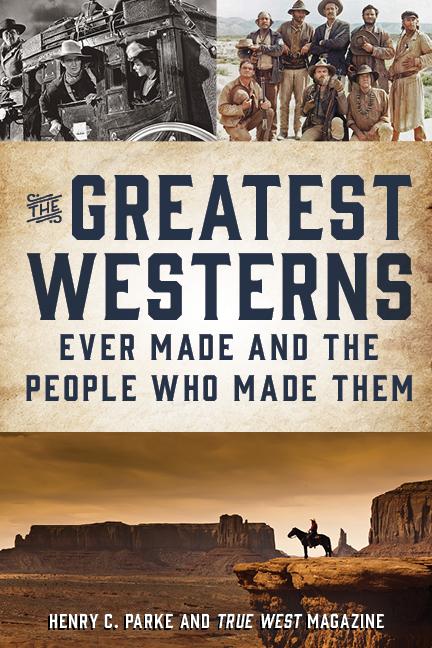
I’m in a rush to get this posted a few hours before Blue Ridge premieres tonight on INSP, so I’ll just close with this question: If you haven’t bought and read my new book, The Greatest Westerns Ever Made, and the People Who Made Them, what are you waiting for? It’s available from my publisher, TwoDot, from Amazon, and wherever mind-improving books are sold!

Happy Trails,

Henry

All Original Contents Copyright July 2024 by Henry C. Parke – All Rights Reserved


Sunday, June 30, 2024

MY INTERVIEW WITH BAT MASTERSON – INSP ‘WILD WEST CHRONICLES’ STAR JACK ELLIOT, PLUS ‘NEWS OF THE WORLD’ AT THE AUTRY JULY 13TH, ‘RIP ROARIN’ BUCKAROO’ AT LONE PINE IN OCTOBER!


MY INTERVIEW WITH BAT MASTERSON – INSP ‘WILD WEST CHRONICLES’ STAR JACK ELLIOT


On a day in January, I visited Morning Star’s studio in Acton, California, to watch a day’s shooting of two INSP series, Elkhorn, about the early formative days in Teddy Roosevelt’s life, and Wild West Chronicles.  

For three TV seasons, actor Jack Elliot has brought legendary lawman Bat Masterson to life on INSP’s Wild West Chronicles, and he’ll be returning for a fourth season starting on Wednesday, September 4th. He plays Bat engagingly, with an air of gravitas backed by a sense of humor, and an unwillingness to suffer fools and liars.

A glance at photos of the historical figure and of the actor reveals another likely reason for his casting.  “It's freakish,” Jack acknowledges with a laugh, referring to his startling resemblance to Masterson. “I assumed I looked a little bit like him.” After all, in 2015 he portrayed Masterson on an episode of Gunslingers. “But then I'll look at photos from set and compare that to the original: even down to the mustache, the nose. It's a little creepy.” Or to put a more positive spin on it, “It was meant to be.”

Jack Elliot...

...and the real Bat Masterson.

Later in life, Bat Masterson became a journalist, and wrote about his friends and acquaintances and adversaries, and his book, Famous Gunfighters of the Western Frontier, was the inspiration to have the character of Bat interviewing his contemporaries, and be the conduit for telling each episode’s story. And in another example of life imitating art, Jack Elliot has become a writer, scripting his first episode of the series.  “I have: The Hunt for John Wesley Harden. So many of the stories from the old West are bad guys, and we don't want to glorify that. We want to glorify the good guys. So it's a buddy cop drama basically, about the hunt for John Wesley Harden. We start filming today. Actually, they're filming it right now. You wouldn't think it'd be such a departure from acting, but writing is truly a departure. Realizing that every single word that goes into a script, especially a 22-minute script, is important. It has to be packed with information. You can't have any fat. And you still have to be able to make it interesting, make the characters compelling.”

Jack Elliot watches himself on playback.

HENRY PARKE: When you were chosen to play the character of Bat Masterson, were you very knowledgeable about him?

JACK ELLIOT: Not super knowledgeable, but I did my due diligence, tried to read as many biographies as I could, and watched a bit of the series, but I also didn't want to do Gene Barry's Bat Masterson. I wanted to make him my own. I didn't want a preconceived notion of who he was.

HENRY PARKE: What do you think the Gene Barry show got right, and what did they get wrong?

JACK ELLIOT: I don't want to judge his work. I think that he had a great character for the time. You know, the, the gambler, suave, debonair. Of course he didn't have a mustache. But I think he did a lot right.  Hopefully we're just kind of adding to the history of the guy. Definitely doing our own thing, but I think they got a lot right.

HENRY PARKE: In your research, were there things about Masterson that surprised you?

JACK ELLIOT: So many things. The guy was a renaissance man. A lot of these guys were renaissance men and women, that didn't just do one thing. He did so many things. And after 40 years of successful life in the Old West he decides to move to New York and become a newspaper man. And he did that successfully for 20, 30 years. And hobnobbed with all these greats. He was great friends with TR, called to the White House. Teddy made him a U.S. Marshall for the district of Manhattan.  I think he had to sit in on trials; just a really interesting cat.

I'M PRESENTING 'NEWS OF THE WORLD' SATURDAY, JULY 13TH AT THE AUTRY!


Come join me at 1:30 pm on Saturday, July 13th for a screening of the excellent 2020 Western NEWS OF THE WORLD, starring Tom Hanks and 
Helena Zengel, directed by Paul Greengrass, co-written by Greengrass and Luke Davies, based on the wonderful novel by Paulette Jiles. For more details, go to The Autry Museum website HERE


I will also be signing copies of my new book, The Greatest Westerns Ever Made, and the People Who Made Them. You may be able to buy them at the Autry Bookstore, or you can buy a copy from Amazon HERE

TOM TYLER IS A 'RIP ROARIN' BUCKAROO' AT LONE PINE!


Details are still being finalized for the annual Lone Pine Western Film Festival, October 10th through the 13th, but I've just learned that on Friday the 11th at 11 a.m., I'll be interviewing Sandra Slepski, niece of Wester star Tom Tyler, then we'll be screening his 1936 film Rip Roarin' Buckaroo, which I believe was shot in Lone Pine. I'll have a whole lot more information as the Festival gets closer.

...AND THAT'S A WRAP!


Please check out the July/August issue of True West, featuring my article celebrating the 75th anniversary of She Wore a Yellow Ribbon. 


And here's a link to my most recent article for the INSP blog, about the Joel McCrea Westerns, Stars in My Crown.


Happy Trails,

Henry

All Original Contents Copyright June 2024 by Henry C. Parke - All Rights Reserved


Friday, May 31, 2024

JOSEPH PORRO – THE MAN WHO DRESSED ‘TOMBSTONE’ INTERVIEWED! PLUS, I’M INTRODUCING ‘NEWS OF THE WORLD’ AT THE AUTRY!


I’LL BE INTRODUCING ‘NEWS OF THE WORLD’, AND SIGNING MY BOOK, AT THE AUTRY ON SATURDAY, JULY 13TH

Helena Zengel and Tom Hanks

I was delighted to be asked to introduce a film in The Autry’s long-running ‘What is a Western?’ series. I chose News of the World not only because it is an exceptional Western but, because of the pandemic, so few people had the chance to see it as it should be seen: in a theatre, on a screen. The title, which admittedly doesn’t sound particularly Western, refers to the profession of Captain Kidd, played by Tom Hanks in his first Western. He’s a former Confederate Civil War officer, now barely making a living by travelling from town-to-town with a sheaf of newspapers, reading them to the public. He meets a young girl (Helena Zengel), a former captive of the Kiowa, and is given the unwanted responsibility of returning her to her family. It’s a tale that echoes John Ford’s The Searchers, focusing not on the search, but the challenge of a long-time captive’s return to her former world. The Autry bookstore will have copies of my book, The Greatest Westerns Ever Made, and the People Who Made Them, which I will be signing after the film. The link to The Autry, with all of the particulars, is HERE.

And if you want to buy my book right now, you can get it  HERE.


JOSEPH PORRO – THE MAN WHO DRESSED ‘TOMBSTONE’


Joseph Porro

Joseph A. Porro’s costume design career is astonishing. Since 1985, beginning with no-budget films like Neon Maniacs, Porro has used his amazing design skills and style in a wide range of genres, from horror films like Fright Night Part 2 (1988) and Resident Evil: Extinction (2007), to crime thrillers like The Thirteenth Floor (1999) and The Lizzie Borden Chronicles (2015), science fiction like Stargate (1994) and Independence Day (1996). And there’s his international work. “I’ve spent three years in Hong Kong and seven years in mainland China and India. I'm probably one of the most traveled designers, because early in my career I worked with Jean-Claude Van Damme and Dolph Lungren, who didn't like to pay taxes in the United States.” His designs for the 2003 version of The Music Man, and 2020’s The Mandalorian earned him Emmy nominations.  But his most appreciated designs? “I still get fan mail from Tombstone all the time.”  He also designed costumes for the Western comedy Shanghai Noon, and even the unsold pilot for the space western Martian Law. I recently had the pleasure of chatting with Jospeh about his wide-ranging career, and especially his Westerns.

HENRY PARKE: I've just been rewatching Tombstone, and I love your work in it. It just doesn't look like any other Western; the costumes just seem to breathe authenticity. I understand that you're from Boston. Is it the movies that brought you to California?

JOSEPH PORRO: No, not at all. My mom was living out there with my uncle and my cousins, and I wasn't doing well financially in Boston. So I went out just to see if I could get some work out there. I said to myself, you have a design degree from Parsons in New York. Maybe you should look into costume design. I was making animal costumes like Bugs Bunny for Warner Brothers, actually sewing, in the factory in North Hollywood. And this lady, a designer, drove up in this brand new 450 SL Mercedes, and I was like, wait a minute. I'm on the wrong end of this business. (laughs), I quit the job that day. It was very scary, very lean years, the first years in Hollywood, but I was determined to be a designer.

HENRY PARKE: What was your first costume job? I mean designing, not Bugs Bunny.

JOSEPH PORRO: Near Dark was, probably. I did some stuff that went directly to video, but this was for Catherine Bigelow, who's won an Oscar (for The Hurt Locker). It was a modern-day western vampire kind of thing. Very unique in its day. That was my first decent movie.

HENRY PARKE: One of your earlier direct-to-video films was Neon Maniacs which was written by a high school friend, Mark Carducci.

JOSEPH PORRO: That was my first film as a designer and it was quite a disaster. We didn't get paid. They owed us four- or five-weeks salary and I was living in my car then. That was not my favorite film, but you know, whatever doesn't kill you only makes you stronger.

HENRY PARKE: Absolutely true. With Independence Day, Stargate, now The Mandalorian among so many others, you've specialized in sci-fi, fantasy, and horror. Was that your primary interest in film at that point?

JOSEPH PORRO: I liked movies where you actually designed, where you didn't go to the store to buy the outfit. You actually took a pencil and paper and did your own thing. Which I did on Tombstone, and it wasn't how I originally wanted to approach it. At the time I was hired, Kevin Costner was doing Wyatt Earp, and they were doing Geronimo. So literally every single western (rental) costume was gone. The only place that had any left was American Costume. So I go to Luster Bayless (who owned American Costume). “I've just been hired on Tombstone.” And he sits me in his office and tells me that when hell freezes over is when he will give me a costume for that movie! (laughs) Luster Bayless had interviewed with (writer/director) Kevin Jarre as a designer for Tombstone, and (not been hired).

All the big costume houses were empty, so how the hell am I going to do this movie? I said, I can get Victorian clothes in England. I think you need to put me on a plane because there's nothing here. I said, I'm from a fashion design background, so I ‘get’ manufacture. I was in New York for four years working with the designers, and we made things. So everything was manufactured, and that's why I think it had that look. There's things I would change today. I'm much more persnickety about period men's suits and coats and how they're done. Then I was just happy to get someone to make it. So we built it: we built the whole show. And Kevin (Jarre) wanted it much more Technicolor. He was very into the history. He really knew his shit. He got fired, of course, like a week into it. But he wrote the original script too. I was very sad to see that happen. And then they brought in George Cosmatos. He was a piece of work, that one. (laughs) He'd walk on this new set, he'd turn to the set dresser. He'd go, “You see that painting? You see that chair? When we're done with the scene, I want those sent over to me.” He just cleaned the place out! He said that to me with the sketches, too. He said, “I want all your sketches.” And designers were allowed to keep their sketches back then. Now everything's on a computer, but back then they were all original drawings. And in 40 films, he was the only one ever to say to me, “I want your sketches.” I gave him some, I let him think it was all of them. It was either that or be fired. He was not a nice person, but he liked me. I think he fired about 40 or 50 people. Cleaned house. I don't think he's got a devoted fan club, but he finished the film right, and it did look good.

HENRY PARKE: Did he have the kind of strong feelings that Kevin Jarre did about costumes? Or did he just go with what had been planned?

JOSEPH PORRO: He went with. He said what he'd seen in the dailies totally worked and just stay with it. He wasn't persnickety about what I did. He gave me free rein.

HENRY PARKE: Obviously the costumes for all of your characters were very different. I'm thinking particularly about characters like Curly Bill or Ike Clanton.

JOSEPH PORRO: I built all of it. What I rented from England were background, Victorian costumes for people doing crosses (background extras). I built all the chaps.  We did the hat thing with Stetson. I had a glove manufacturer downtown doing the western gloves. I had guys doing all the hand tooling on different things. Guess who it ended up with? This is the part that's great.

HENRY PARKE: Who?

JOSEPH PORRO: Well, the line producer wanted Luster (Bayless) to be on it. It was some serious kickback kind of thing going on. At the end of the show I was given two days to wrap, and it all went to American Costume. Everything. I swiped one pair of cowboy boots, and Charlton Heston's neck scarf I kept for myself because I paid for it with my own money. American took everything. That would never happen today in a studio film. But back then it was different.

HENRY PARKE: Right.

Design for Dana Delany's lilac dress

JOSEPH PORRO: But there was that interesting mix of characters there. Dana Delany was absolutely wonderful. All the ladies, the wives were all great. And Bill Paxton, that first film I did, Near Dark, Bill Paxton was in that. I loved Bill. God, it's so sad he's not with us anymore; such a great guy. Fun, enthusiastic, and he worked your costume, you know what I mean? He got into it, and it helped him become a character; he really was just a joy to be around. Really fun.

I ended up spending literally the whole year with Kurt Russell because I did Stargate with him right after Tombstone. I got to know Goldie (Hawn) pretty well because I'd see her like 20, 30 times at the house for the fittings. She was absolutely lovely. From the crew perspective, boy, Sam Elliott worked the whole room. He knew everybody's name -- the guy who was doing the coffee in the morning, and his wife's name. All the girls thought he was the most charming thing that ever walked, and I thought he was wonderful too.

Billy Zane was an absolute joy, just fun to be around. And so was Powers Booth, absolutely lovely. Stephen Lang, Jason Priestley, Thomas Hayden Church. Michael Biehn was nice, very polite, but he was kind of reserved. What's the name of the other guy who became a much bigger star? Billy Bob Thornton. Yeah, he's a great guy. And so was Charlton Heston. I was kind of in awe. It was originally going to be Robert Mitchum. He couldn't pass the medical; that's the only reason he wasn't in it. And I think it was one of Heston's last films. It was a real joy to dress the guy. Because I was a kid who saw Ben Hur, and he was such a big, big, big star for so long. Planet of the Apes and all these great films he did. He was lovely. He was with his wife every second of the time. And she was a lovely lady. She was by the camera, and as soon as they stopped, she would be with him and she'd go get him a cup of coffee. The two just were very close. You could tell he was having fun. I think it was like a bunch of overgrown kids, playing. And I saw this again when I did Shanghai Noon too. It was like, these really are a bunch of overgrown kids, they get their toy guns and they get on a horse and they get to ride over the hill and shoot the gun, and they're having a ball. It's that kind of environment when you're on a Western. There was only one real pain in the ass on (Tombstone). And you know who that was.

HENRY PARKE: No, I don't.

JOSEPH PORRO: Val Kilmer. And I think he had a lot to do with Kevin Jarre getting kicked out. He didn't think (Jarre) was up to snuff. He stole my father's watch-fob chain, which he was wearing in the movie. He took everything that he could of his (character’s) stuff. He stole the guns that were genuine pistols of the period; a big gun collector was a gun guy on the show. And he brought in the real deal and Val stole 'em. I don't know if those got back, but I called the producer and I said, he's got my grandfather's watch-chain; it's a family piece. I didn't get it back. He said, I'm going to send you a check for a thousand dollars. He had been dealing with props and everyone with Val. I'll tell you one thing he did do well. He was definitely the one who worked out (twirling) the silver cup. I'm the one that supplied the silver cup. I still have it.

HENRY PARKE: I particularly loved Dana Delany's costumes. Was it fun to design for her?

JOSEPH PORRO: It was. We used the Tucson Opera House to build the clothes for her and the other ladies. And the cutter fitter there, the head person, ended up staying with me. She was on The Mandalorian with me. We stayed together for 30 years. Her name is Maggie McFarland. Lovely, lovely lady. And she's still working in Hollywood. I'm retired, but she's still working.

My favorite day on Tombstone was the day that they all rode over the hill -- that big crowd of cowboys. Because that was a big setup, and very early on in production, the third or fourth day of shooting. I was so desperate: how am I gonna get clothes on these guys? And when I saw them all come over the hill and thought, I still haven't been fired! That was my, “I did it!” day. It was one of the toughest films I've ever worked on in my life. It was 18-hour days and a 40-minute drive to that set. The last two, three weeks of shooting Tombstone, the Stargate people wanted preliminary sketches. <laugh>. So then I was getting three to four hours of sleep, because I'd have to do drawings at night. It was a tough show.

HENRY PARKE: Did the success of Tombstone have a big effect on your career?

JOSEPH PORRO: Well, no. You would think I would get 20 westerns after that, right? It doesn't work that way in Hollywood. So many directors liked it, but they weren't Western directors. It was definitely a feather in my cap. And they would be like, oh, he did Tombstone. So it did not hurt my career at all.  And here I am now looking back; it's probably, movie-wise, the one I'm going to be known for, you know? I've done television things that were costume-wise better than Tombstone. Much better.

HENRY PARKE: What was your favorite part of doing Shanghai Noon?

JOSEPH PORRO: The barroom scene in Shanghai Noon is something that I'm incredibly proud of, because that was hysterical. It took three weeks to shoot, as it was like 40 people in the fight, and everything that they've done in every movie for a hundred years with barrooms they did in that one. And they did it with a great sense of humor.


HENRY PARKE: Was doing a comedy Western a lot different from a serious western?

JOSEPH PORRO: No, there was no difference at all. What the joy for me was to actually see Jackie Chan still in his golden years, working at a level of choreography and magic that I've never seen in my life, on anything else. I mean, I worked with Jean-Claude Van Damme and those guys, a lot of action stars early on in the eighties. And none of them could put a show on like Jackie Chan, like him in a fight. His choreography and his sense of humor -- like, I can't believe that he just did that, you know?  <laugh>  I mean, he jumped over this or tumbled -- it's like, what the hell?


A Shanghai Noon design for Jackie Chan

HENRY PARKE: When you did Shanghai Noon, did you actually get to go to China?

JOSEPH PORRO: It's the first time I was in China. It was an absolute nightmare: they forgot to get me a Chinese visa. I didn't know I needed a visa because I was just a guy from L.A. I didn't need a visa when we shot in Canada. So here I am at the airport for 18 hours, and Jackie Chan made one phone call and I was let out! <laugh>. He was that powerful. Since Charlton Heston did 55 Days at Peking (1963) the only American to do the Chinese Imperial Court was me, in Shanghai Noon. And I did the full-on court. I did 500 guards, all different levels, with generals. I did the whole royal family, I did a Chinese opera troop, and I did all the servants and the eunuchs. It was roughly 700 costumes to pull those scenes off. My God. And I had 'em all built in China.

HENRY PARKE: Amazing!

JOSEPH PORRO: That it was! It was fun!  <laugh>. And I made friends from that first trip and then, they called me for something else, and I ended up doing seven Chinese movies. I was the American in China doing Chinese movies. I'm so proud of some of them. No one's ever going to see the Chinese movies in America, some of my best work. But they paid literally double what they were paying me in Hollywood. So I took the work, which was bad because that kept me out of the loop in L.A. It kind of took me out of the picture. You need to be seen and be around. It was bad on that level, but otherwise it was great.

HENRY PARKE: We’ve talked about Jackie Chan, but how was Owen Wilson to work with?

A Shanghai Noon design for Owen Wilson

JOSEPH PORRO: Oh, dreadful, horrible. Me and my crew wanted to just slit our throats every five minutes we spent with (Kilmer and Wilson), they were that obnoxious. Owen Wilson: you're doing an 1870s western and I've done all these sketches, and we have all these materials that are authentic. I've got actual pieces from the period, to show him how the real shit looked. And lots of black and white photos from the period, and sketches. And he comes in and he goes, "Oh, I was just on Rodeo (Drive) yesterday" -- and he actually talked like this -- “I was just on Rodeo and I saw these white Gucci jeans, and I really feel that is direction we should go in." Could you hear me? 1870s western male lead wants to wear white Gucci jeans? How is he with Jackie (Chan)? Amazing. The two were perfect together. The chemistry was great. How was Val Kilmer in Tombstone? He was amazing. You watch him, and he's the perfect person for this role. Could I stand him? No. It wasn't just me; it was hair and makeup. He drove all of us crazy.

Val Kilmer would just sit in front of the mirror staring at himself like he was a Greek god, and we have five other fittings to do today, and this is a film done on a tight little budget. I’ve got to get shit done nonstop around the clock, and he is sitting there and asking you, can you get sushi in Tucson? I go, you've got 28 (costume) changes; we need to lock them in and do the alterations on them <laugh>. And we didn't know what he was wearing till 10 minutes before he was in front of camera.  Everybody has their tough times on a shoot. And if you're good at what you do, you have a vision, you fight for it. Sometimes you win, sometimes you don't. Take it for what it is, but it's a hell of an exciting business to be in. For every person that's difficult, I had 500 that were a joy. And I never had two days that were alike in 45 years.

AND THAT’S A WRAP!

Happy Trails,

Henry

All Original Contents Copyright May 2024 by Henry C. Parke – All Rights Reserved

Thursday, April 18, 2024

TCM FEST, INTERVIEW WITH ELKHORN'S TR - MASON BEALS, PLUS JOIN ME AND GREATEST WESTERNS EVER MADE AT L.A. BREAKFAST CLUB!


COME TO THE L.A. BREAKFAST CLUB ON WEDNESDAY, MAY 1, FOR ‘THE GREATEST WESTERNS EVER MADE’, WITH TRUE WEST’S HENRY C. PARKE


That’s right, my book, The Greatest Westerns Ever Made, and the People Who Made Them, has been published by TwoDot, and I’ve been asked to speak about it. If you like Westerns, and you wouldn’t be reading this blog if you didn’t, and you’re in the L.A. area, we’d love to have you join us, have a delicious breakfast, and you can purchase a book if you’d like. The Los Angeles Breakfast Club is a fascinating organization, started 99 years ago, to promote friendship, and the illustrious members over the years have included all of the studio heads, from Disney to Zanuck, not to mention Tom Mix. You can buy tickets, and learn all about the Club, here: https://www.labreakfastclub.com/event-details/greatest-westerns-ever

I’ve been the Film and TV Editor of True West magazine for nine years, and the book is based on about eighty of my articles. I don’t mean to brag, but here are a few reviews:


“Film and TV critic for True West, Parke presents a collection of his essays that will be a treat for western film fans… There’s plenty of behind-the-scenes detail and also sharp examination of the cultural impact of western films and of the social changes that affected their content… Parke’s enthusiasm is infectious.”

― Booklist


"A great read... a comprehensive, carefully curated look at the western genre on film and television. Chock full of personal anecdotes that bring humanity to its pages."

-- Patrick Wayne, Actor, The Searchers

"Honored to be featured in this new book by Henry C. Parke, film and TV editor for True West magazine. It’s an in-depth, on point, and eclectic review of the Western film and TV genre, from John Ford to Taylor Sheridan. If you love Westerns, you’ll get lost deep in this one."

-- John Fusco, Writer, Young Guns and Young Guns II


Here are links to a couple of places where my book is available:

https://www.amazon.com/Greatest-Westerns-Ever-Made/dp/1493074393?_encoding=UTF8&linkCode=sl1&tag=insptv-20&linkId=40670747d047d3241c54003bcabb179f&language=en_US&ref_=as_li_ss_tl

https://bookshop.org/p/books/the-greatest-westerns-ever-made-and-the-people-who-made-them-henry-c-%20parke-true-west-magazine/18667151?ean=9781493074396


TCM FESTIVAL BEGINS THURSDAY!

The TCM Classic Film Festival is back in Hollywood, from Thursday, April 18th, through Sunday the 21st, and as usual, they will be headquartered at the Hollywood Roosevelt Hotel. The venues where films will be screening are the Chinese Theatre IMAX, several of the Chinese Multiplex Theatres, the Egyptian – newly refurbished by Netflix, the El Capitan, and there will be poolside screenings at the Roosevelt.   Check out their website here -- https://filmfestival.tcm.com/programs/schedule/20240418/

They have, as always, a wonderful array of films that are almost never shown in theatres. While the packages are insanely expensive, if you go on the stand-by line for a movie that isn’t THAT popular, or one that’s in a HUGE theatre, you can often get in: those tickets are only $20, and with a valid student i.d., only ten!


Among the screenings that will be of particular interest to Western fans, on Friday at 9:30 a.m., at the Multiplex 4, they’re showing MIGHTY JOE YOUNG, the 1949 follow-up to SON OF KONG. A western? No, but it stars Ben Johnson, and it’s introduced by John Landis, director of not only ANIMAL HOUSE, but THE THREE AMIGOS! At 12:15 p.m. in the same theatre, Leonard Maltin is introducing the 1936 version of THREE GODFATHERS. This is not the John Ford, John Wayne 1948 Technicolor version. It’s directed by Richard Boleslawski, and stars the movies’ Boston Blackie, Chester Morris in the Wayne role, plus Walter Brennan before he was cute and folksy, and Lewis Stone, when he was playing outlaws instead of Mickey Rooney's father in the HARDY family films. Very tough, very gritty, very good.


That night at 6, still in theatre 4, it’s John Ford’s 1936 film THE PRISONER OF SHARK ISLAND, starring Warner Baxter as Dr. Mudd, who treated John Wilkes Booth after he assassinated Lincoln, and was sent to prison for it. The cruel prison guard is the great John Carradine, and his son, Keith Carradine, will introduce the film.


Robert Taylor teaches the women to shoot in
WESTWARD THE WOMEN

Saturday morning they’ll be showing a rare 35mm nitrate print of ANNIE, GET YOUR GUN at the Egyptian Theatre. At 6:15 at the Egyptian, it’s WESTWARD THE WOMEN, with Robert Taylor leading an all-female wagon train, directed by William Wellman, and written by Frank Capra – he wanted to direct it himself, but couldn’t get it set up. Its premise might sound cute, but it’s a serious film, beautifully done, and Robert Taylor does some of his best work as a man who truly doesn’t expect many of his charges to survive. If you’d like to read the article I wrote about Robert Taylor’s Westerns for the INSP channel, here’s the link: https://www.insp.com/blog/robert-taylor-hollywood-star-husband-to-barbara-stanwyck-and-cowboy/. WESTWARD is introduced by this year’s honoree for the Robert Osborn Award, Jeanine Basinger. I was not familiar with her until I interviewed Dana Delaney, who told me of her college experience, “Wesleyan is more of an academic school than a theater school. But they had a wonderful film department run by Jeanine Basinger, and that was where I really developed my love of westerns.”


Sunday at 9:30 a.m. in the Multiplex 6 they’re showing 1932’s LAW AND ORDER, the first talkie version of the Gunfight at the OK Corral, starring Walter Huston as Wyatt Earp, and Harry Carey as Doc Holliday, introduced by Brendan Connell Jr., C.O.O. of the Academy of Motion Picture Arts & Sciences.


And at 3:15 p.m. at the Egyptian Theatre, see the premiere of the 70mm restoration of John Ford’s THE SEARCHERS, introduced by the director of THE HOLDOVERS, and two-time Oscar-winner for scripting SIDEWAYS and THE DESCENDANTS, Alexander Payne.


MASON BEALS – THE MAN WHO WOULD BE TEDDY ROOSEVELT


ELKHORN, the new INSP series which airs on Thursday nights, stars Mason Beals as 25-year-old Teddy Roosevelt, a well-educated, socially prominent urban up-and-comer with a happy homelife and a growing political career, who saw his life shatter when, in one day, his mother died of Typhoid, and his wife died giving birth. Determined to rebuild his life, the frail, sickly young man abandons east coast city life and travels west, settling in the Dakota Territory.

Mason Beals, who plays Teddy has, to put it mildly, followed a non-traditional route to stardom. His self-generated career began as a reaction to desperate boredom. “For about nine months, I lived in the middle of nowhere, Idaho, in this town called Bonners Ferry. That’s because my dad had traded a Jeep for an acre and a half of property. My parents wanted to live debt free, so we built this place that looked like Noah's Ark, and lived there when the building was three-quarters finished. We were really trapped inside in the wintertime, and my younger brother and I were as bored as could be. I was just chopping and stacking firewood all winter, and I just started making YouTube videos, doing silly little vlog type things, and eventually started making stuff that was more scripted. That's where I learned how to edit and shoot.”

Mason Beals as Teddy Roosevelt

When his family moved back to his hometown of Coeur d'Alene, Idaho, the performing bug had bitten him, “but there wasn't much of an acting scene out there, so if you wanted to act, you had to make your own stuff.” He moved to Austin, “and I worked for a production company as an editor, as a shooter, sometimes producing, directing, and continued to make short films,” until his final move to Los Angeles, when he “started to do work with other people.”

Unlike many men his age, the Western genre is not foreign to Mason. “My dad’s a really big movie fan. He’s a blue-collar guy, did hardwood floors for 30 years.  I was reminiscing about how we were going to Blockbuster every week, and I remember he and I had watched 3:10 TO YUMA for the first time and I just loved it. And TRUE GRIT is great. So there were a handful of westerns, and I always enjoyed them. And now having done one, anytime I watch a Western, it's very much like, now I know how the sausage is made a little bit more. So it's very fun to watch it from that angle; they’re such a fun genre.”


He credits his father’s example in preparing to take on the responsibility of playing a lead in a series. “A hard work ethic is needed for something like this, and I definitely got that from my dad. I did hardwood floors with him for a good period of time. I mean, he's just the hardest worker that's ever graced this earth, and so learning from him, it teaches you a little bit of grit, and learning how to be a little bit rough and tumble, going with the flow of things. Keeping a positive attitude when things go wrong; he would always keep a good demeanor. That kind of psyche skill.”

In what ways was does Mason think he and Roosevelt are alike? “You know, when I was reading about his time (in Elkhorn), he talked about how scared he was when he came out here. And he said, by pretending to not be afraid, he became not afraid. I really did relate to that, because the role is intimidating in a lot of ways because he's such an icon. It's definitely an adventurous kind of a shoot. I really relate to the fish out of water element. I was bullied in school and TR was bullied.”

Teddy at his wife's deathbed

Mason brought some Western-ish skills with him, but others he’s had to learn as he goes. “Horseback riding was definitely new for me. Even though I had grown up around people who had horses, I just had never had the opportunity. But it was a pretty quick learning period; I had just a handful of lessons, and then the experience came just being on-set. I learned a lot; I feel very comfortable on horses now in a way I didn't really think I was going to. I'm kind of a coward in a lot of ways. Riding, that's probably the biggest skill that I've like taken away from this. But I grew up shooting guns, growing up in Idaho.”


AND THAT’S A WRAP!

Coming in the next Round-up, my interview with TOMBSTONE costume designer Joseph Porro!

Happy Trails!

Henry

All Original Contents Copyright April 2024 by Henry C. Parke – All Rights Reserved