Showing posts with label D.W. Griffith. Show all posts
Monday, October 17, 2016
PIERCE BROSNAN RIDES INTO ‘THE SON’! PLUS ‘BEFORE THE WHITE MAN’ DVD, ‘SHADOW OF THE HAWK’ NOVEL REVIEWED!
PIERCE BROSNAN RETURNS
TO WEST WITH AMC’S ‘THE SON’!
AMC, whose consistently
high standards in Western productions have brought us the brilliant Robert
Duvall miniseries BROKEN TRAIL (2006) and the already much-missed HELL ON
WHEELS will present a new Western series in 2017. Entitled THE SON, shot near Austin, it’s
based on the acclaimed bestselling novel of the same name by Philipp Meyer, detailing
the multigenerational rise and fall of a Texas oil family.
Former Remington Steele
and James Bond portrayer Pierce Brosnan rode the range once before, opposite
fellow Irishman Liam Neeson a decade ago in the entertaining but decidedly grim
SERAPHIM FALLS. His character here is family patriarch Eli
McCullough, a role he shares with Jacob Lofland, who plays the character as lad. Though just 20, Lofland is an accomplished
film and TV actor, debuting opposite Matthew McConaughey as Neckbone in the
excellent MUD (2012), playing Kendall Crowe in the series JUSTIFIED (2014), Colby
Pitt in the miniseries TEXAS RISING (2015), and is opposite McConaughey again
in this year’s FREE STATE OF JONES.
Jacob Lofland (right) with Matthew McConaughey
in FREE STATE OF JONES
The character Bronsnan
and Lofland share, born on the day Texas achieved statehood, thus known as ‘the
first son of Texas’, who as a child was kidnapped and raised by Comanche. He maintains their brutal worldview when he
becomes a businessman. Also in the cast
are Henry Garrett, Paola Nunez, Sydney Lucas, and Zahn McClarnon, who plays
Toshaway, the Comanche war chief who captures Eli and raises him as a son.
I’ll have much more
information soon. Below is the very
brief clip I’m allowed to show you. This
LINK will bring you to a very interesting BBC interview with THE SON author
Meyer discussing his novel.
BEFORE THE WHITE MAN
CAME - DVD Review
New from Alpha Video is the remarkable silent BEFORE
THE WHITE MAN CAME (1920). This is the
first film I can recall seeing, set in the now-American West, where white men
figure not at all, because the story takes place before they arrived. Filmed during 1918 and 1919, director John E.
Maple had previously co-directed a documentary, 1918’s INDIAN LIFE, and both
films received special permission from the U.S. Department of the Interior to
film on Crow and Cheyenne reservations in Montana, Wyoming and North
Dakota.
The cast is made up
entirely of Crow and Cheyenne Indians.
In the story, Lone Eagle loves Singing Bird, and the two Crow plan to
marry. But the Sioux chief Great Wolf
desires Singing Bird as well, and when he can’t win her fairly, he kidnaps her,
and all Hell breaks loose. Written by
the prolific William E. Wing, whose 134 silent-movie credits include fifty-nine,
mostly Westerns, for legendary producer Col. William Selig, it’s a complex
story, and in addition to the expected and exciting Western action, there are
unexpected story elements such as feigned insanity. One particularly ‘modern’ surprise is that
Singing Bird, rather than waiting to be rescued, rescues herself in a series of
audacious moves. There are also striking
scenes shot in the snow. Much of the
film has a documentary feel, which is enhanced by the obvious authenticity of
the Indians’ clothing and rituals, and the stunning locations.
Of course, not
everything is authentic: if the white man hasn’t come yet, where did the
Indians get their horses? But this was
produced, after all, as an entertainment, not a documentary, and it succeeds as
that, and as a fascinating time capsule.
The print the DVD is made from is very contrasty, but it is definitely
watchable, and it’s presumably the best copy that exists. In the 1930s the film was reissued with a
music track and narration by Jac Hoffman.
The narration can be intrusive and wrong – early on it describes braves
going through a deadly ‘purification by fire’ ritual which is clearly just a
sweat lodge. But I wouldn’t advise
watching the film without the audio track, since any inter-titles explaining
the plot have been removed.
from REDMAN'S VIEW
Also included from
eleven years earlier – more than a century ago – is the D.W. Griffith Biograph short THE REDMAN’S VIEW. Shot convincingly in Mt. Beacon, New York, it
tells the story of peaceful Indians driven from their land by gun-toting white
settlers. The settlers keep one Indian
girl captive as insurance against attack, and her betrothed brave is caught
between rescuing her, and the urgent need to care for his ailing father in a
deadly ‘Trail of Tears’ situation. Starring
Alfred Paget and Lottie Pickford – Mary’s sister and former stand-in – the
moving story garnered praise from Indian organizations at the time and,
remarkably, is currently scheduled to be remade as a feature. The print quality is excellent. BEFORE THE WHITE MAN
CAME is available from Alpha Video
HERE.
SHADOW OF THE HAWK – by
Ron Honthaner – a Book Review
SHADOW OF THE HAWK is a
handsomely written Western novel whose classical style disguises its unusual
structure. A farmboy is callously
murdered. An aging mountain man recalls,
in his youth, being sold by his father as an indentured servant. A disparate group of individuals share a
stagecoach heading west. Each piece of
the story is beautifully told, and the sequence may at first seem random, but
it is hardly that. What emerges is the
story of three lifelong friends, the mountain man, a lawman, and a freedman who
was once a runaway slave, on a collision course with bad men, and a stagecoach
full of men who will become a posse.
Two of the friends must
reluctantly go against the third, and the blood will spill. And rather than being the generic, faceless pack
that posses are usually portrayed as, here each member is a flesh-and-blood
individual with personal reasons to take part.
It should come as no surprise
that Ron Honthaner should know how to tell a good story: he wrote a couple of
episodes of GUNSMOKE, and soon became Associate Producer on the final five
seasons of that classic series. In fact,
I can’t help thinking that the lives of the characters might have gone a lot
better if Matt Dillon had been around.
But it wouldn’t have been nearly as good a story if he had been. You can buy SHADOW OF THE HAWK, in Kindle or
real book editions, from Amazon HERE.
THAT’S A WRAP!
I apologize for being
over a month behind in my Round-up postings.
I’m happy to say the reason is that True
West has been keeping me so busy, assigning me more stories. I’ll try to not fall so far behind in the
future!
Happy Trails,
Henry
All Original Contents
Copyright October 2016 by Henry C. Parke – All Rights Reserved
Thursday, May 1, 2014
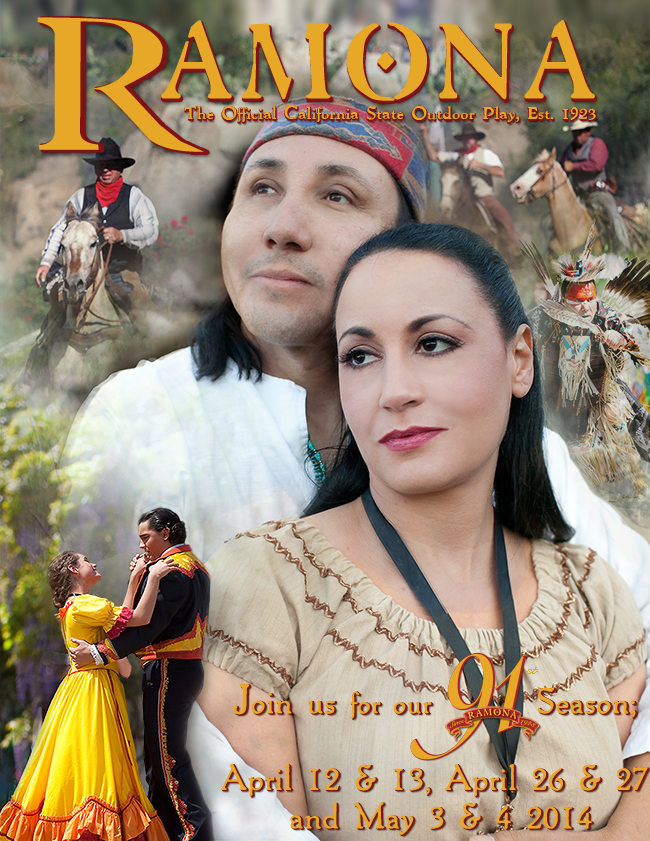
‘RAMONA’ 91ST SEASON CLOSES THIS WEEKEND!
Synergy is everywhere! If I hadn’t been at the Santa Clarita Cowboy Festival at Melody Ranch this past weekend, I
wouldn’t have chatted with Maria Christopher, who was man-ing (woman-ing?) a
booth for the Rancho Camulos Museum near Piru, and I wouldn’t have learned that
this weekend, Saturday and Sunday, May 3rd and 4th, is
your last chance to see RAMONA this year!
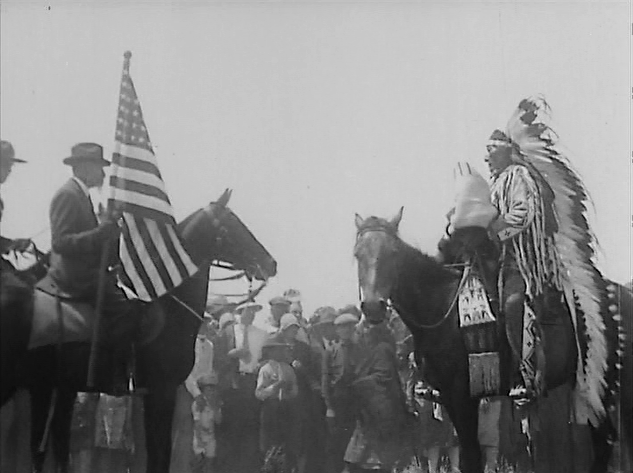
Just as it has been since 1923,
RAMONA, California ’s official outdoor
play, will be presented at the Ramona
Bowl Amphitheatre in Hemet ,California . Now in its 91ST season, RAMONA is a grand
tradition, based on the novel written by Helen Hunt Jackson in 1884. Her intention was to draw attention to the plight of
California Indians in the same way that Harriet Beecher Stowe exposed the evils
of slavery with UNCLE TOM’S CABIN. A work
of fiction, but set in real locations, RAMONA was a publishing phenomenon, and
it was decided to present a play based on the book, in a natural outdoor
setting, in the area where the story takes place.
It’s a remarkably colorful presentation, with about 350 participants, and
only the two leads are usually professional actors. Some locals have
taken part, in various roles and positions onstage and behind the scenes, for
decades. Among the famous actors who have taken part are GONE WITH
THE WIND villain Victor Jory, who played the lead early in his career, and was
associated with the show for years, and Raquel Welch, who played Ramona in
1959. To learn more, and buy tickets, call 800-645-4465, or go
HERE.
It was not by chance that Maria Christopher was up on RAMONA, as there is a
link between the spectacle and Rancho Camulos.
Author Jackson was in the early stages of writing her novel when a
friend encouraged her to visit the Rancho as a possible setting for her
story. On January 23rd, 1882,
Jackson took a train out, stayed for a couple of hours, then took a train
back. That brief visit was enough: she
set the story there, and when RAMONA took on a life of its own, the Rancho
became known as THE HOME OF RAMONA, and has been a hugely popular pilgrimage
spot for lovers of the romance ever since.
You can see the Rancho and read about my visit for Ramona Days HERE.
Ms. Christopher also told me that there was
considerable Ramona news on the
cinematic front. While the best-known
screen telling of the tale is undoubtedly the 1936 Technicolor film directed by
Henry King, scripted by 20th
Century Fox’s master storyteller Lamar Trotti, and starring Loretta Young
and Don Ameche, this was actually the 4th version of the story. The first, a one-reeler filmed in 1910,
directed by D.W. Griffith and starring America’s Canadian Sweetheart Mary
Pickford, was actually filmed at the original setting, Rancho Camulos. The film has recently been restored, and
screened at the Rancho.
Mary Pickford
The other two versions, the 1916 version starring Adda
Gleason, and the 1928 version starring Dolores del Rio, are lost. Only they’re
not! A copy of the del Rio version was recently found in an archive in Czechoslovakia! It’s been preserved, and I’m keeping my eyes
peeled for a time when this late silent version, which co-stars Warner Baxter, will
be available to see.
Dolores del Rio
And remarkably enough, a single reel of the 1916
version has just been located at the Library of Congress. As the original was ten reels, it’s only a small
portion of the story. As the
preservation was being done, copies of a few frames were sent to the Rancho,
where folks were surprised to find that this 2nd version of the
movie was also shot on location at
the Rancho! And it was directed by
character actor Donald Crisp, who won the Best Supporting Actor Oscar in 1941
for HOW GREEN WAS MY VALLEY.
THAT’S A WRAP!
I know this is a tiny version of the Round-up. The fact is, I have an embarrassment of
riches to report on, and not the time between the events to do the
writing. In the past couple of weeks I’ve
attended the TCM Festival, the WILD
BUNCH LUNCH at the Autry, the Santa
Clarita Cowboy Festival at Melody Ranch, and The Cable Show at the L.A. Convention Center. Late as this is, I would have skipped the
Round-up entirely this week, and left it all for the next few reports, but I
wanted to get the word out on the final performances of RAMONA before it was
too late to be of use.
I’ve never managed to get there and see it! If you do, please let me know how it
was! Until Sunday,
Happy Trails,
Henry
All Original Contents Copyright May 1, 2014 by Henry
C. Parke – All Rights Reserved
Wednesday, December 4, 2013
BEST OF THE WEST 1898-1938 FROM NAT. FILM PRES. FOUNDATION!
TREASURES 5 – THE WEST, 1898-1938 – Video Review
Cavalry & Indians at Little Big Horn
The wonderful, dedicated folks at the National Film
Preservation Foundation, who brought you LOST & FOUND – AMERICAN TREASURES
FROM THE NEW ZEALAND FILM ARCHIVES (if you missed my review, HERE is the link . ) have outdone themselves for Western fans, and
just in time for Christmas.
TREASURES 5 – THE WEST, a three disk set, plus a 110
page book, runs for more than ten hours, and contains forty films, from
one-minute newsreel clips to several full-length features. From slapstick to melodrama, from documentary
to real drama, they offer a kaleidoscopic view of the American West from a vast
range of perspectives. Additionally,
each film has an optional audio commentary, from experts in Western history,
filmmaking, and film preservation. It’s
wonderfully entertaining, highly informative, and I cannot recommend it highly
enough.
Nearly every important film company of the era is
represented – Biograph, Selig, Nestor,
Kalem, Essanay, Vitagraph, Thomas Ince, Famous Players – Lasky (later
Paramount). The stars featured include
Tom Mix, Clara Bow, Richard Dix, Bronco Billy Anderson and Mabel Normand. The directors include D.W. Griffith, Victor
Fleming, Gregory La Cava, Mack Sennett and W. S. Van Dyke. The story sources include authors Bret Harte
and Sinclair Lewis.
Among the unexpected delights are every-day events
filmmakers recorded nearly a century ago. HOW THE COWBOY MAKES HIS LARIAT
(1917), though only three minutes, shows the entire process, starting with
culling the hair from his horse’s tail; it’s probably the only in-depth
recording of the all-but-lost process ever made. LIFE ON THE CIRCLE RANCH (1912), presents
typical daily ranch work convincingly.
But wait until you watch it again with the commentary, and realize how
much of it was staged for the camera, and all of the rules of ranching that
were broken in the process!
from OVER SILENT PATHS
On D. W. Griffith’s very first trip to make films
out west, in 1910, he filmed OVER SILENT PATHS: A STORY OF THE AMERICAN
DESERT. Starring Marion Leonard and Dell
Henderson, the barren desert also stars; it was an unusual film locale at such
a time, when most Westerns were shot in and around lush East-coast
forests. Marion and her prospector father
W. Chrystie Miller are a set to pack it in and go to civilization, when her
father gets robbed and killed by unsuccessful prospector Henderson. When she, desperate, meets up with Henderson,
she has no idea he killed her father.
Can you see the romance coming? Shot
by the great Billy Bitzer, using the then-ruined and abandoned San Fernando
Mission as a location, it’s as emotionally affecting as you expect with
Griffith. And fast? It was shot in two days the first week in
April, and released in May. And the
previous week he’d shot RAMONA, with Mary Pickford, at the ranch where Helen
Hunt Jackson had set her story.
from THE TOURISTS
TOURISTS (1912) was also shot by the Biograph
Company, by a small ‘B’ unit following the bigger Griffith unit. Slight but fast and amusing, this one’s
directed by Mack Sennett shortly before he left Biograph to start his Keystone
company. Shot entirely in the Santa Fe
Train Station in Albuquerque, using the exteriors of Fred Harvey’s (as in THE
HARVEY GIRL) Indian Building, and clearly improvised, it stars Mabel Normand as
a tourist who gets in trouble with local Indians when she and her friends miss
their train, and the chief takes a liking to Mabel. And going against the not-yet-established
Hollywood tradition, many Indians are played by Indians. Speaking of Fred Harvey, also included is the
1926 film THE INDIAN DETOUR, a how-to film as well as a travelogue, featuring
the wonders of ancient New Mexico as seen from modern Harvey trains and
buses. This film helped Harvey introduce
and popularize the concept of cultural tourism.
Some sponsored films are more subtle than others. SUNSHINE GATHERERS (1921), in often stunning
color, shows and tells the story of Father Serra bringing Christianity to the
beautiful new world of California. Only
gradually do we realize that the ultimate master plan is to make the riches of
California available to the world through Del Monte canned fruit. I felt positively noble eating my canned
peaches while watching this with breakfast!
Many of the fictional films make great use of their
exotic locations. A prime example is THE
SERGEANT: TOLD IN THE YOSEMITE VALLEY (1910).
Part of the great treasure-trove of American films discovered in the New
Zealand Film Archive, SERGEANT is a Selig-Polyscope film, starring one of the
screen’s first great leading men Hobart Bosworth as the title character, trying
to rescue his kidnapped beloved. Taking full advantage of Yosemite’s
remarkable features, the film’s inter-titles both advance the story, and
identify where each sequence is shot.
Similarly, SALOMY JANE, A STORY OF THE DAYS OF ’49, PRODUCED IN THE CALIFORNIA
REDWOODS (1914), opens with the title gal emerging from a cut in a
redwood. Made by the once-thriving California Motion Picture Corporation of
Northern California, it’s the only one of their films known to survive.
Clara Bow
Among the more unexpected pleasures of this set are
a pair of sophisticated comedy features with western settings, MANTRAP (1926),
starring Clara Bow, directed by Victor Fleming and lensed by James Wong Howe;
and WOMANHANDLED (1925), starring Richard Dix and Esther Ralston, and directed
by Gregory La Cava. When New Yorkers
Dix and Ralston meet, she tells him she’s tired of prissy city-men –
metrosexuals before the term was coined – and Dix sets out to become the
westerner she wants. Not only does he
remodel himself to please her, finding the West she longs for to be gone, his
does his best to recreate it. In
MANTRAP, big-city manicurist Clara Bow marries backwoodsman Ernest Torrence,
but devoted as they are she soon becomes bored with his life, and falls for his
unlikely friend, big-city divorce lawyer Percy Marmont. It’s set in Canada, but shot around Lake
Arrowhead. And Clara Bow is an absolute
delight, playing a woman so independent and naughty and lacking in guilt that
she could only exist in Hollywood in the pre-Code days.
BRONCO BILLY AND THE SCHOOLMISTRESS
In fact, one notable feature of many of these
westerns is that the women are so plucky and strong. In BRONCO BILLY AND THE SCHOOLMISTRESS
(1912), Billy’s romantic pursuit of the new teacher puts him at odds with every
other man in town. His judgment is so clouded
that he nearly gets himself killed – and guess rescues the cowboy hero? In the similar LEGAL ADVICE (1916), Tom Mix,
who wrote, directed and starred in the film, tries to get himself into legal
trouble in order to make time with the new lady lawyer!
THE BETTER MAN
Of course, it’s not all hijinks and hilarity. In THE
BETTER MAN (1912), a Vitagraph film shot in Santa Monica, the heroine and her
sick child are alone as the worthless husband goes off to drink and
gamble. An Mexican outlaw with a price
on his head comes to the house to get food, and is about to make his escape
when the plight of the mother and child touches his heart, and he goes out
seeking the doctor, not guessing that the erring husband is looking for the
outlaw, and a quick reward.
LADY OF THE DUGOUT - Al & Frank Jennings
question a lawman
Made six years later, the feature THE LADY OF THE
DUGOUT (1918) has a similar plot to THE BETTER MAN, but with a remarkable
twist: some of the actors are playing themselves! Ten years earlier, former U.S. Marshal Bill
Tilghman, whom, with fellow Marshals Chris Madsen and Heck Thomas rode for
Judge Parker, and were known as The Three Guardsmen, decided to make a western
movie. Called THE BANK ROBBERY (not a
part of this set), it starred himself, Heck Thomas, Quanah Parker, and bank and
train robber Al Jennings. Jennings found
he loved the movie business, at least in part because he could rewrite his own history. His film BEATING BACK (1904), which is
considered lost, set the pattern for films about outlaw do-gooders.
Al robs the bank
Produced and co-written by Jennings, and starring himself
and his brother Frank, and Corinne Grant, LADY OF THE DUGOUT is directed by the
great W.S. ‘One-take-Woody’ Van Dyke, and is one of the greatest treasures of
this collection. The plot is much like
that of BETTER MAN; a pair of outlaws robs a bank, and when they run short of
food, they come upon a woman living in a dugout house on the prairie, she and
her child starving as they wait for worthless dad to come home with some
food. The outlaws are so moved that they
get provisions and bring them back, endangering themselves. Director Van Dyke, who would go on to direct
TARZAN OF THE APES, the THIN MAN MOVIES, and so many more, is a wonderful
visual storyteller, and his use of reflections and night-for-night photography
is memorable. But it’s his collaboration
with Jennings that shows off the startling authenticity of the criminal
behavior. There’s a chilling naturalness
to a gunman’s stance while shooting away; removing a bullet from a shoulder
room is shown unflinchingly by the camera, born indifferently by the wounded
man. Incidentally, the little starving
boy grew up to be Ben Alexander, Jack Webb’s first DRAGNET partner.
Lawman in the dust, Al & Frank
make their getaway
Of course, Jennings spins the story his own
way. The criminals are so noble, and the
law so venal that when a train is reported robbed, it’s assumed that the sheriff is behind the crime. Poor real lawman Bill Tilghman must have
concluded that he’d created a monster, and he produced and starred in PASSING
OF THE OKLAHOMA OUTLAW (1915) as a response to the glorification of the bad guy. Though not complete, it’s a satisfying chunk
of film detailing the apprehension of many of the Oklahoma Territory’s most
infamous bandits, and the lawmen are in many cases played by the very men who did
the deed: again Bill Tilghman and Heck Thomas, as well as Arkansas Tom Jones.
The travelogues are stunning, some going as far back
as 1898, and featuring railroads, Yosemite, Yellowstone, and Hot Springs,
Arizona. Among the remarkable finds is
an 8 minutes segment from the feature-length FROM THE GOLDEN WEST, an amateur
film made by an unknown Easterner for club screenings. It’s ‘L.A. as seen from a blimp’ footage is
delightful.
Soundstages seen from a blimp in
THE GOLDEN WEST
Newsreel clips are included, some celebrating the
American Indian, others patronizing him, and one sequence features 7th
Cavalrymen and Lakota and Cheyenne warriors ‘burying the hatchet’ at The Little
Big Horn fifty years to the day after the event.
In DESCHUTES DRIFTWOOD (1918) we get a travelogue of
Oregon trains and waterways from the point-of-view of a hobo who’s been sprung
from jail to do the honors. Eighteen
years later, in a Hearst newsreel, we see THE PROMISED LAND BARRED TO HOBOES
(1936), showing roadblocks set up in California to keep the unemployed out.
Made during the Mexican Revolution, MEXICAN
FILIBUSTERS (1911) is a romantic tale about gun-smuggling. AMMUNITION SMUGGLING ON THE MEXICAN BORDER
(1914), is also about gun-smuggling, but stars a sheriff re-enacting his own
kidnapping and his deputy’s murder, just weeks after it had actually
happened.
The Los Angeles Department of Water and Power
produced ROMANCE OF WATER (1931), about getting water from the Owens
Valley. It’s followed by a Hearst
newsreel clip, A NEW MIRACLE IN THE DESERT (1935), and no matter how loudly you
turn up the sound on these two, you can still hear John Huston and Jack
Nicholson talking in the back of your head.
I know that I’ve just brushed the surface of this
terrific collection – I haven’t even mentioned a great Thomas H. Ince feature,
THE LAST OF THE LINE, but hopefully I’ve given you a sense of the wonders to be
found in this set. And I should mention
that each of the forty films has an original music score. I heartily recommend it as a gift for anyone on
your list with a love of Western movies or Western history, or American history
in general. At more than ten hours –
twice that with the commentary – this is not a set to be consumed at a sitting,
but to be savored over days or weeks or months.
Then again, if you’re a binge watcher, have at it!
Although it lists for $59, you can buy it from
Amazon for $32 HERE.
THAT’S A WRAP!
I apologize again, for the Round-up being several
days late again. I’m still getting over
this bug I’ve had for nearly two weeks.
I’m very touched by all the get-well wishes I’ve received. I don’t want to give the impression that
something serious is wrong – it’s just an upper respiratory infection; not even
the real flu!
Anyway, I’d better
get well soon, as I’ve got a bunch of book and movie reviews coming up, and
some very cool giveaways just in time for
Christmas!
Happy Trails,
Henry
All Original Contents Copyright December 2013 by
Henry C. Parke – All Rights Reserved
Monday, April 2, 2012
BATTLE TO SAVE PICKFAIR STUDIOS!
Today,
Sunday, April 1st, at one p.m., a mob filmmakers and filmgoers
gathered outside ‘The Lot’, on Santa
Monica Boulevard in West
Hollywood , to try and save Pickfair, the oldest functioning movie
studio in the world. Built in 1919 by
producer/director Jesse D. Hampton, he soon sold it to America ’s
sweetheart, Mary Pickford, and her sweetheart,
Douglas Fairbanks. It was here that she
made, among many others, MISS ANNIE ROONIE and TESS OF THE STORM COUNTRY; he
did great swashbucklers like MARK OF ZORRO and THIEF OF BAGDAD, and they made
their one film together, the early talkie THE TAMING OF THE SHREW.
When
they united with Charlie Chaplin and D. W. Griffith to have greater control of
their movies, and formed UNITED ARTISTS – prompting Metro Pictures president
Richard Rowland to quip, “The lunatics have taken over the asylum!” -- it
became United Artists Studios.
Griffith, Pickford, Chaplin and Fairbanks
They
all produced successfully there, and were soon joined by independent producers
like Howard Hughes and Samuel Goldwyn.
The fortunes of Goldwyn in particular grew as, with the coming of sound,
the careers of the original four shrank, and the lot became Goldwyn Studios,
where for decades, some of Hollywood ’s
finest films were produced, from DEAD END to BEST YEARS OF OUR LIVES. Billy Wilder located his offices at the lot.
Goldwyn
Studios was Sam Peckinpah’s home base from MAJOR DUNDEE through THE WILD BUNCH
and beyond – the scuttlebutt is that he actually lived in his offices for some
time. In the 1990s Warner Brothers
bought it, and changed the name to Warner Hollywood Studios. It has been a busy lot right from the start,
and has continued with feature and TV production – currently several of its
seven soundstages are in use for HBO’s TRUE BLOOD.
Studio seen from the air
But
since 1974, when a bubble-machine on the set of SIGMUND AND THE SEAMONSTERS
overheated and burned down a sound-stage, the studio has never been under a
serious threat until about a week ago.
That’s when The Lot’s new owners, The CIM Group, announced a six step
plan for the ‘renovation’ of the studio that would call for the destruction of
the Pickford Building ,
the Goldwyn Building , the Fairbanks Gym, and many
others.
The
greater Los Angeles area – whether talking about
L.A. proper, Burbank ,
West Hollywood or the San Fernando Valley – is
notorious for its disinterest in its own history. Over the past dozen or so years, Warner
Brothers, Walt Disney Studios and Paramount Pictures destroyed most or all of
their western streets and other standing sets to make room for multi-level
garages and office buildings. The doomed
structures at Pickfair would be replaced by glass towers.
In
spite of the fact that the threatened buildings all deserve landmark status, the
West Hollywood City Council quietly approved these plans, and CIM Group intends
to begin bulldozing in a couple of weeks.
Rumor is that they may start sooner, to make the protests moot. One interesting aspect of the situation is
the The Lot straddles the Los Angeles/West Hollywood border, and some of the
structures the West Hollywood City Council has signed off on aren’t even in
their city.
Joe Dante speaks with the press
And
who are the CIM Group? The developers
of, among many other projects, the heavily taxpayer-underwritten Hollywood & Highland . On their websites they describe themselves
as, “…a transformational urban real estate and infrastructure investment firm
founded in 1994 with over $9.5 billion in assets under management.” To find out more about the CIM Group, you can visit their site, which includes contact info, here: http://www.cimgroup.com/. You can read an LA WEEKLY article about them,
called CIM GROUP, HOLLYWOOD ’S
RICHEST SLUMLORD, here: http://www.laweekly.com/2009-09-03/news/cim-group-hollywood-39-s-richest-slumlord/.
Director
Allison Anders (FOOD, GAS, LODGING) has spearheaded the protests, and was
present, along with familiar faces like director Joe Dante (GREMLINS) and
special effects wizard Greg Kimble (INDEPENDENCE
DAY). Director Michael Donahue, whose upcoming THE
EXTRA stars Tyrone Power Jr., John Saxon and 103 year-old Carla Laemmle, niece
of Universal Pictures founder Carl Laemmle, puts it this way: “I have worked in
studio management for twenty-five years.
And there has been an unspoken agreement between management, film
preservationists, and people who love tourism, that they would leave old Hollywood alone. (When CIM bought the lot) they promised to
preserve it. They are instead…tearing
everything down and building it new.”
That’s the problem with unspoken agreements, and buildings that are of
landmark status, but haven’t been officially named landmarks.
If
you’d like to learn more, and sign the petition, go HERE. On
Monday at 6:30 p.m., the West Hollywood City Council will be meeting. If you would like to attend, and need more
information, go HERE. The
phone number for the City Council is (323)
848-6460. Their email is ccouncil@weho.org.
UPDATE MONDAY 4/2/2012 3:46 PM. Just wanted you readers to know that I heard from the media contact for the folks trying to save Pickfair Studios. They're very happy with the coverage, and wanted me to encourage you to contact the West Hollywood City Council and CIM Group to let them know you want Hollywood history to be preserved. I KNOW WE HAVE MANY INTERNATIONAL READERS, AND I ENCOURAGE THEM TO MAKE THEIR FEELINGS KNOWN. THIS AFFECTS THE INTERNATIONAL MOVIE COMMUNITY, NOT JUST US LOCALS.
EDUARDO FAJARDO TO BE HONORED ON
The
event will be held at 6:00 p.m. on Friday April 13, when the actor will place
the first star, with his name inscribed in bronze.
ROY
ROGERS IN ‘KING OF THE COWBOYS’ on RFD TUESDAY
My
personal favorite of the ‘War Effort Westerns’,
Tuesday at 2 pm Eastern time, Roy battles Nazi saboteurs in KING OF THE
COWBOYS (1943), directed by the great Joe Kane.
On
Wednesday, April 4th, the Cinemateque at the Aero in Santa Monica will show
Robert Altman’s MCCABE & MRS. MILLER, starring Warren Beatty and Julie
Christie.
As they do on the first Saturday
of every month, the Autry
Center will show a free
(with Museum admission) Gene Autry double feature in the Imagination
Gallery’s Western Legacy Theater. This
time it’s BACK IN THE SADDLE (1941 Republic) and HILLS OF UTAH (1951 Columbia ). The movies start at noon.
DON SIEGEL – CLINT EASTWOOD DOUBLE
BILL SUNDAY, MONDAY
April 8th and 9th,
the New Beverly Cinema
will play a great pair of Siegel/Eastwood collaborations: COOGAN’S BLUFF and
TWO MULES FOR SISTER SARA. Listen for
the excellent but rarely heard Morricone score in the latter!
TWO MORE WESTERNS FROM FINDERS
KEEPERS VIDEO
One of a dozen or so Zane Grey novel adaptations that
Paramount turned out in the 1930s, DRIFT FENCE (1936) is well done, and the DVD
from Finders Keepers Video is particularly handsome, taken from a print with
few scratches, no noticeable splices, and a complete range of greys. Though presented as starring Buster Crabbe,
he’s actually the second lead, and a villain at that – a nice novelty for an
actor who was almost always the hero.
And for those of us who have been numbed by watching the virtually
indistinguishable Billy The Kid films Crabbe made for PRC soon after, it’s nice
to see him given a chance to act.
The star of the tale in Tom Keene, westerner friend of
wealthy dude Benny Baker. When Baker’s
dad wants him to go west and take over the family’s ranch, he convinces Tom
Keene to take his place, and Keene
is soon up to his neck in rustlers, led by Stanley Andrews and his henchman,
Slinger Dunn (Crabbe). There’s a nice
mix of humor and the stoicism Grey’s stories were known for, and an interesting
cast. The lady in the story is Katherine
DeMille, C.B.’s adopted daughter.
There’s a nice bit with Walter Long, one of the screen’s great heavies,
from BIRTH OF A NATION to Laurel
and Hardy comedies. One young, handsome
cowboy is Glenn Erickson, who later changed his first name to Leif. And speaking of changing names, star Keene , perhaps wanting to
shed his B-western association, changed his name in 1944 to Richard Powers, and
had a busy action career for another fifteen years. Like all the Finders Keepers Videos, this one
is $7.00
Colonel Tim McCoy’s best pictures were behind him by the
time he got to PRC, but that’s not to say there is nothing to recommend TEXAS
RENEGADES. It has an amusing premise:
the folks of Rawhide are tiring of cattle rustling, and Nora Lane sends for Marshall ‘Silent’ Tim Smith to take the
situation in hand. Tim is on his way,
and sees another man mistaken for him and gunned down. Tim plants his own i.d. on the dead man, and
uses a known outlaw’s named to infiltrate the gang – where he is asked to impersonate himself! Tim has to cope with people who know who he
and those who don’t, with the outlaw gang and a pack of vigilantes – who are
secretly being run by the same leader.
While it’s a big step down from the Colonel’s Columbia
Pictures days, it has its moments, and it doesn’t look as impoverished as most
PRC westerns – at times there are a dozen men on horses in the frame. And there’s a nice cattle stampede through
the town. I wonder what bigger-budget
movie it originally came from. It’s
directed by Sam Newfield, the first of fourteen movies he directed in 1940, and
is a step above his rather low standards.
This title was long unavailable, and the film print it’s taken from is
filled with vertical black-line scratches throughout, but the grey-range of the
print is very good. It’s not great, but
as a fan of the Colonel, I consider it well worth seeing. Happily, a year later, after seven PRC pics
Tim moved to Monogram for his last western series, THE ROUGH RIDERS, teaming
him with Buck Jones and Raymond Hatton, the best work he did after leaving Columbia . This one is $7 from Finders Keepers Classics. You can find them HERE.
Happy Trails,
Henry
All Original Contents Copyright April 2012 by Henry C. Parke
– All Rights Reserved
Sunday, November 21, 2010
OLD TUCSON GAINS MUCH-NEEDED 'STARDUST'


Stardust and The Bandit, the western-themed comedy pilot recently shot at the historic Old Tucson Studios, was co-written and co-directed by Dick Fisher and Sarah Sher. Its broad comedy and western background is quite a departure from the very Eastern movie Fisher made his reputation with: he produced, photographed and edited The Brothers McMullen. That film, about three Irish brothers in New York, won the Grand Jury Prize at Sundance, and was a career-maker for both Fisher and writer/director/star Edward Burns. “It was actually Fox Searchlight’s first release, when they started that specialty division at Fox. They’ve just done a magnificent job in marketing it (over the years). I’m hoping they’ll be having a Blu-Ray re-release of it.”
But Fisher started out not in independent features, but on local news in Utica, New York. “Upstate was beautiful. I went to visit my sister, who went to Hamilton College, in Clinton, and I just fell in love with the area. I was an undergraduate, working in construction, building the world’s largest brewery. One day, driving along, I just pulled off the highway at the Newhouse School and said, ‘What do I have to do here to get a Masters degree, because I’m on the wrong track, and I really want to be a filmmaker.’ I got a Masters Degree there, and through connections I had in Syracuse, I got a job at the local television station in Utica in 1978, shooting newsreels. You’d come to work, they’d give you a 400’ can of 16mm film (about ten minutes worth), you’d shoot a few stories, and they had a (film) processor in a garage by the television station. And I got to process my own film, edit my own film, and put it on the air. It was a fantastic experience with the full range of work in film.”
After several years there, he moved to New York City, started his own production company, Technical Services, and began working in the burgeoning tabloid TV field as a location cameraman. Over the next several years, his many clients included HARD COPY, CURRENT AFFAIR, LIFESTYLES OF THE RICH AND FAMOUS, P.M. MAGAZINE, and ENTERTAINMENT TONIGHT. “Entertainment Tonight was one of my early clients, and Ed Burns was my production assistant -- that’s how we got to know each other. And we discovered that we both had a love for film, and an ambition to make film. He engaged me to shoot an earlier film he’d written, called Brandy, and we had a great time, but we couldn’t sell it. So we decided to do it again – we had a very specific idea of why we couldn’t sell it, and how go make a film that we could sell.”
The result was The Brothers McMullen. Unless it’s a one-man movie, it’s unusual for one person to be both cinematographer and editor on a feature. And it’s just about unheard of for someone to be producer as well – generally producers are not at all technical. “Photography is my first love, cinematography, but the fact that I understand editing has certainly made me a very effective cinematographer. Because no matter how beautiful a shot is, if it doesn’t cut into your sequence, you’re just spinning your wheels.
“Working on those (tabloid) shows -- shooting every day, for years and years -- gives you a level of professionalism, gives you the chops to be able to shoot something that’s going to be acceptable to distributers. And it gave me the level of success that allowed me to work on independent films, because I was prepared to finance them. Steven Spielberg, working with his parents’ 8MM camera probably did a great job, but you couldn’t sell them. (It’s not like) now, when you have films like Paranormal Activity – with equipment like the DSLR cameras -- where you can create high definition, high quality images (for so little money). Blair Witch is another example – until Blair Witch, The Brothers McMullen was the most profitable independent – not highest gross, but most profitable. Our delivery cost was between four hundred and five hundred thousand, and they made fourteen or fifteen million in domestic gross. But the Blair Witch people don’t have the same happy story that Eddy and I do. We own The Brothers McMullen and share the profits with Fox Searchlight, and it’s still making money. Blair Witch grossed over a hundred million at the box office, but the guy who made it certainly didn’t get any fraction of that.”
What brought him from New York to Arizona in the mid-90s was an ailing relative, and the conviction that, with his track record as a writer and producer, he could live and work anywhere. And he was looking forward to working there, “…because I was aware of the incredibly rich history of filming in Tucson.” Built in 1939 for Arizona, Old Tucson Studios had been the location of over 300 movie and TV shoots, including Broken Arrow (1950), 3:10 to Yuma (1957), Gunfight At The O.K. Corral (1957), Peckinpah’s first -- The Deadly Companions (1961), Joe Kidd (1972), Outlaw Josey Wales (1976), Tom Horn (1980), Tombstone (1993), and a slew of John Waynes – Rio Bravo (1959), McClintock (1963), El Dorado (1966) and Rio Lobo (1970). What Fisher could not anticipate was that in 1995, an arson fire would devastate the studio, destroying sets, the soundstage, and all of the costumes and props for Little House on the Prairie. Most of the destroyed sets were re-built, but, “…they decided not to rebuild their soundstage. At the same time, the American dollar was strong and the Canadian dollar was weak, and Canada came up with the brilliant plan of tax rebates, which moved so much of the work to Canada.
“Losing the soundstage really killed the film business in Tucson, and Arizona in general. New Mexico started giving no-interest loans to stimulate the film business, but Arizona never got their act together about joining that party. Old Tucson’s (situation) is unusual. It’s inside a County Park, which is good, because it means that the vistas in all directions are protected from development: when you’re in the town square, you point the camera in any direction and you see mountains and deserts, you don’t seen houses and buildings. The downside of that for investors is you cannot buy the land – you can only lease it for however many years. So people were reluctant to make a large investment in a new soundstage. The people that own it now have not developed it as an active studio. It’s sort of a roadside attraction.
“A little over a year ago, Sarah Sher said to me, ‘I’m sick of complaining that we don’t have work. Let’s do something. Let’s make a television pilot that has several purposes, one of which is to demonstrate to the world what a great motion picture location this is. To show people that we have the talent here in Tucson to make motion pictures and television. And maybe inspire somebody to spend some money and make another soundstage here and get some work.’”
“If nothing else, I’m pragmatic, so we decided to get the most out of what already exists at Old Tucson. (We wrote) a fish out of water story: an accountant for the mob (Scott Thomas) is put into the Witness Protection Program, and the job that they give him is bookkeeper at Old Tucson, as it exists now – a roadside attraction. He’s a ‘Mr. Bean’ sort of character, in a suit with glasses and a briefcase, supposed to work in a back room, keep his head down. Then, when a performer in their stunt show gets dragged away by a horse, a beautiful chorus line dancer (Shanna Brock) pulls him up on stage; they put him into a cowboy outfit – he ends up being in the show. And of course the mobster he’s supposed to testify against shows up with his family on vacation.
“We wrote the script, and Pete Mangelsdorf, CEO at Old Tucson, liked it, and he signed on as executive producer, and Old Tucson Studios itself as a co-producer. Everyone in the film community jumped on, worked for deferred pay, and we were able to use everything they have at Old Tucson – the stunt performers, the locations. They fed us and picked up the insurance, and did all of the technical things you need even if you’re making a no-budget production. I have the credentials, if you will, for making a successful no-budget production.
“We shot for two weeks and this was just the most fun I’ve had on a set. When we got to the last shot of the last day, I called ‘cut! Any problems?’ And the crew said, ‘Let’s not stop! Let’s do more!’ They all wanted to keep working. Even working deferred it was a joy, just so much fun to be out there, working at Old Tucson – to be directing a Western at Old Tucson – the hairs were standing up on the back of my neck at times just thinking, now I’m part of the history. I’m an Eastern guy, I was born in Brooklyn. But what American boy is not in some way affected by the cowboys? Being an American, for better or worse, there’s the poetry of being a cowboy. If it’s not in our DNA, it’s in our rearing: we’re all cowboys.
“We’re just finishing the rough-cut now, and we have a few technical sound issues, and I want to get some music written. And we’re looking to get it into the marketplace and have people get interested in it.
“And of course, what we would like -- the genesis of the whole idea -- would be to have this create something like HIGH CHAPARRAL, one of the shows that was really part of the fabric of Tucson before. We want to weave ourselves back into the fabric of filmmaking in Southern Arizona, and hopefully that’s what we’ll be able to do.”
Meanwhile, Dick’s next assignment is very different. “I was just engaged to be director of photography on a project that’s being financed and filmed up on the Gila River Indian Community. It’s written and directed by a Native American up there. It’s a contemporary coming-of-age (story) called Second Circle, about a young Indian who has to deal with the gang-bangers and the taggers and drug dealers, and whether he can live more to the traditional ideals of his community, or whether he’ll get drawn to that dark side of American society. It’s a very interesting script. The Gila River tribe runs one of the casinos up there, and the producer, Tony Estrada, who is a Navajo, pitched to them the idea that they would create and own this film, but at the same time have this training (program) for the film industry, for their community members.”
To learn more about Stardust and The Bandit, visit their Facebook page HERE.
FIRST TRAILER FOR ‘COWBOYS AND ALIENS’ RELEASED
CLICK HERE to check it out! The Jon Favreau - directed Sci-Fi Western, starring Daniel Craig, Harrison Ford and Olivia Wilde is set for a July 29th, 2011 release.
REEL INJUN WINS THREE GEMINI AWARDS
At the star-studded 25th Annual Gemini Awards, the Canadian Oscars, the documentary Reel Injun, see my review HERE, won three awards. The entertaining and informative look at the Indian’s image in Hollywood westerns won Best Direction For a Documentary, Best Visual Research, and the prestigious Canada Award, which recognizes work that explores racial and cultural diversity in Canada. To learn when and where you can see this film, visit the official website HERE.
INDIAN CHIEF CIGARETTE INSERT CARDS
Doing some much-needed office cleaning I came upon a set of cards which my father gave me more than thirty years ago. These are cigarette insert cards, the forerunner of bubble-gum cards, and measure 1 ½” by 2 ¾ ”. They are the ‘Celebrated American Indian Chiefs’ collection, from Allen & Ginter of Richmond, Virginia, and if my on-line research is correct, they date from 1888. The cards are so beautiful that I’ve decided to share the fifty-card set with the Round-up readers, two at a time. I hope you enjoy them.
‘DEATH VALLEY DAYS’ CREATOR’S BIRTHDAY
Sources disagree by ten days, but either last Tuesday the 16th or next Friday the 26th would be the birthday of Ruth Woodman. Born in New York State in 1894, the Vassar graduate, mother of two and wife of an investment banker, was a copywriter for an advertising agency when, in 1930, she was asked to create a radio show for the Pacific Coast Borax Company. The result was the fact-and-folklore-based anthology series, DEATH VALLEY DAYS, which ran on radio from 1930 until 1945. It then moved to television, and ran from 1952 to 1975, producing 558 TV episodes. Woodman wrote the entire first five TV seasons herself, adapting her radio scripts.
Woodman frequently visited Death Valley for inspiration, and on her first trip there ran into Death Valley Scotty. She contributed to other TV series as well, and wrote one feature, Last of The Pony Riders (1953) for Gene Autry. She served as story editor her retirement in 1959, but still contributed scripts until her death in 1970, at the age of 75. You can find every single episode of the TV series for sale if you search on-line. I suspect they’re bootlegs, but I’m no lawman. If you’d like to listen to a couple of the radio shows, CLICK HERE.
D. W. GRIFFITH UPDATE
I was happy to receive some positive feedback about my criticism last week of the Directors Guild of America’s decision, a decade ago, to strip Griffith’s name from an award because of the racially offensive Birth of a Nation – for details, see last week’s entry. To my surprise, I learned there is an on-line petition to get his name put back on. I don’t know anything about who is running the campaign, but if you’re interested in learning more, and signing the petition, CLICK HERE. For those who would like to see some of Griffith’s work, on Monday, November 29th, the Academy will present GRIFFITH IN CALIFORNIA – HOLLYWOOD’S EARLIEST FILMS FROM A CENTURY AGO at the Linwood Dunn Theatre. The bad news is that the show is sold out, but the good news is that there are always some no-shows, and people who show up early usually get in. For more details, CLICK HERE.
THE AUTRY NATIONAL CENTER
Built by cowboy actor, singer, baseball and TV entrepeneur Gene Autry, and designed by the Disney Imagineering team, the Autry is a world-class museum housing a fascinating collection of items related to the fact, fiction, film, history and art of the American West. In addition to their permenant galleries (to which new items are frequently added), they have temporary shows. The Autry has many special programs every week -- sometimes several in a day. To check their daily calendar, CLICK HERE. And they always have gold panning for kids every weekend. For directions, hours, admission prices, and all other information, CLICK HERE.
SUNDAY, NOVEMBER 21ST LOS ENCINOS LIVING HISTORY DAY
On this day, and the third Sunday of every month, Los Encinos State Historic Park, located at 16756 Moorpark St. in Encino,91436, has a Living History Day. From one to three p.m. enjoy music, period crafts, a blacksmith, docents in 1870s attire, tours of the historic buildings, and traditional children’s games.
HOLLYWOOD HERITAGE MUSEUM
Across the street from the Hollywood Bowl, this building, once the headquarters of Lasky-Famous Players (later Paramount Pictures) was the original DeMille Barn, where Cecil B. DeMille made the first Hollywood western, The Squaw Man. They have a permanent display of movie props, documents and other items related to early, especially silent, film production. They also have occasional special programs. 2100 Highland Ave., L.A. CA 323-874-2276. Thursday – Sunday 12 p.m. to 4 p.m. $5 for adults, $3 for senior, $1 for children.
WELLS FARGO HISTORY MUSEUM
This small but entertaining museum gives a detailed history of Wells Fargo when the name suggested stage-coaches rather than ATMS. There’s a historically accurate reproduction of an agent’s office, an original Concord Coach, and other historical displays. Open Monday through Friday, from 9:00 a.m. to 5:00 a.m. Admission is free. 213-253-7166. 333 S. Grand Street, L.A. CA.
FREE WESTERNS ON YOUR COMPUTER AT HULU
A staggering number of western TV episodes and movies are available, entirely free, for viewing on your computer at HULU. You do have to sit through the commercials, but that seems like a small price to pay. The series available -- often several entire seasons to choose from -- include THE RIFLEMAN, THE CISCO KID, THE LONE RANGER, BAT MASTERSON, THE BIG VALLEY, ALIAS SMITH AND JONES, and one I missed from 2003 called PEACEMAKERS starring Tom Berenger. Because they are linked up with the TV LAND website, you can also see BONANZA and GUNSMOKE episodes, but only the ones that are running on the network that week.
The features include a dozen Zane Grey adaptations, and many or most of the others are public domain features. To visit HULU on their western page, CLICK HERE.
TV LAND - BONANZA and GUNSMOKE
Every weekday, TV LAND airs a three-hour block of BONANZA episodes from 11:00 a.m. to 2:00 p.m. They run a GUNSMOKE Monday through Thursday at 10:00 a.m., and on Friday they show two, from 6:00 to 8:00 a.m.. They're not currently running either series on weekends, but that could change at any time.
NEED YOUR BLACK & WHITE TV FIX?
Check out your cable system for WHT, which stands for World Harvest Television. It's a religious network that runs a lot of good western programming. Your times may vary, depending on where you live, but weekdays in Los Angeles they run DANIEL BOONE at 1:00 p.m., and two episodes of THE RIFLEMAN from 2:00 to 3:00 p.m.. On Saturdays at 2:00 p.m. it's THE RIFLEMAN again, followed at 2:30 by BAT MASTERSON. And unlike many stations in the re-run business, they run the shows in the original airing order. There's an afternoon movie on weekdays at noon, often a western, and they show western films on the weekend, but the schedule is sporadic.
Keep those e-mails and cimments comin', and have a great Thanksgiving!
Adios, Pilgrim
Henry
All Contents Copyright November 2010 by Henry C Parke -- All Rights Reserved
Subscribe to:
Comments (Atom)