


SHANE TV REVIEW

Many of David Carradine’s fans might be surprised to
learn that the tremendously popular KUNG-FU (1972-1975) was not his first
Western series. In 1966 he starred in
the short-lived but entertaining and commendable SHANE.
Based on the much-loved film SHANE (1953), which was
itself based on the much-loved novel SHANE (1949) by Jack Schaeffer, it only
lasted for seventeen episodes, but in today’s terms that would be nearly two
full seasons. TIMELESS MEDIA GROUP has
released the series in a three DVD set, and it is well worth watching.
The movie SHANE is a classic among American films of
any genre. The story of a mysterious
drifter who allies himself with a family of sodbusters trying to stand up to a
wealthy, violent and unscrupulous cattleman, it appeals to the very core of
American belief, that one person with courage and skill can make a
difference. Director George Stevens,
screenwriter A.B. Guthrie Jr., and actors Jack Palance and Brandon DeWilde were
all nominated for Oscars, and cinematographer Loyal Griggs won for Best Color
Cinematography. SHANE was also nominated
for Best Picture.
So the folks who made SHANE into a TV series had
some mighty big boots to fill. The movie
starred Alan Ladd as Shane, Jean Arthur and Van Heflin as the sodbusters, the
Starretts, and Brandon DeWilde as their young son who idolizes the gunman
Shane. Wisely, the series cast newcomers
David Carradine as Shane and Jill Ireland as Marion Starrett, who were much
closer to the vision in Schaeffer’s book.
While there is no fault to be found in the film’s actors, Ladd was 43
and Jean Arthur was 53, noticeably older than their characters, while Carradine
and Ireland were both 30. The TV writers
wisely killed off the Van Heflin character, making an honorable romance between
Shane and Marion possible; in the feature, Shane and Marion were clearly
thinking about it, but too decent to act on it.
Filling in for Van Heflin was Tom Tully, Oscar-nominated for THE CAINE
MUTINY (1954) as Ireland’s father-in-law, with 8-year-old Christopher Shea in
the Brandon DeWilde role of Joey Starrett.
As Ryker, the villainous cattleman, the movie featured one of the
coarsest and most intimidating of screen bad-men, Emile Meyer. The TV producers did surprisingly well with
the menacing Bert Freed in the Ryker role.

Bert Freed (l) as Ryker
One of the strengths of the series, continued from
the feature, is an ever-present sense of danger. With most Western series, there’s a sense
that once you get to the Ponderosa or the Barkley Ranch, you’re safe. But the Starretts are no Cartwrights –
they’re very small-time farmers trying to carve out an existence. Ryker despises the Starretts and all of the
other ‘nesters’, doesn’t recognize their rights to their land, and will stop at
nothing to run them off. Though it’s
never addressed directly, we suspect he’s the reason Marion is a widow. In the opening episode, a teacher played by
Diane Ladd arrives to start a school for the local children. When Ryker learns that classes will be taught
in a barn, he has no qualms about burning them out.
Another unusual element is the growing, mature,
largely unspoken romance. Marion isn’t
the sort of fantasy girl a Cartwright will date for one episode, until he
learns she’s a con-woman. She’s very
real, with responsibilities, and baggage.
The acting ensemble, not just the family, but Shane and Ryker, and Sam
Gilman as Sam Grafton, who runs the saloon and store, are a cut above many of
the TV actors of their time. While Ladd
played Shane with a wistful toughness, Carradine has a burning rage just below
the surface, and you sense the shame he feels for his life, and for loving a
woman whom he feels he has nothing to offer.
As with the movie, you sense the his hope for salvation lives at least
as much in the love of the boy as it does in the love for his mother.
The plotting and the guest casting is often very
strong. In one episode, Warren Oates and
his brood come to town to kill Shane for killing a family member – it looks
like they’ve got the wrong man, but no one wants to listen. In another, a young Robert Duvall plays a
family man and farmer whose failures are gradually driving him insane. In one of my favorites, the marvelous
character actor John Qualen plays nearly a ghost of a man seeking out Shane,
who killed his son.

After the series’ brief run, the stars went their
separate ways, the leads to great success.
Carradine was a popular and respected actor until his death in
2009. Jill Ireland went on to a long
film career here and in Europe, frequently co-starring with husband Charles
Bronson. She joked that, “I’m in so many
Charles Bronson films because no other actress will work with him.” Sadly, she died at the age of 54 of breast
cancer. Tom Tully would continue to work
in character roles, frequently for his friend Don Siegel, but had serious
medical problems. While traveling with
Bob Hope, entertaining troops in Vietnam, he contracted a worm parasite, which
would eventually lead to the loss of hearing, and the amputation of a leg. He died in 1982, at the age of 73. Christopher Shea’s face may not be that
familiar, but his voice is, and no wonder: he provides the voice of Linus is
all of the classic PEANUTS perennials.
He also died young, at 52, in 2010.
SHANE is available on DVD from TIMELESS MEDIA GROUP,
and can be purchased from Amazon HERE.
AN INTERVIEW WITH ‘SHANE’ STORY EDITOR WILLIAM BLINN

William Blinn at a book signing
William Blinn has had a career that any screenwriter
would envy. Among the series he created
were THE INTERNS, THE ROOKIES, EIGHT IS ENOUGH, PENSACOLA: WINGS OF GOLD and
STARSKY AND HUTCH. He won EMMYS for
writing BRIAN’S SONG and co-writing ROOTS.
Of late he’s been writing Western novels. He wrote A COLD PLACE IN HELL, and when I
tracked him down, he was working on the sequel.
When I asked him about an interview on SHANE, he said, “I’ll be happy
to, but I can’t do it now. I’m in the
middle of a scene, and I can’t get my characters to do what I want them
to.” A couple of days later, he’d
whipped those characters into shape, and had time to talk.
HENRY: You’ve had, and continue to have, a very
impressive career; you won Emmys, you created STARSKY AND HUTCH, you wrote the
Prince movie PURPLE RAIN. But you began
your career in Westerns, and after writing a RAWHIDE, a LARAMIE, and four
BONANZAS, it was still very early in your career – 1966 – when you did
SHANE. How did you get involved with
SHANE?
BLINN: I did
two BONANZAS, and during the third one I said, “I’ll do the rewrite from New
York,” and they said, “No, you’ll do the rewrite from out here.” Which was there way of getting me out here,
to see if I wanted to be on staff. I
came out; they offered me the staff job, which was just about the best thing
that could ever happen to a young writer, in terms of education and
experience. The guy who was the story
editor was Denne Bart Petitclerc. Denne
had been a reporter in San Francisco, on The
Examiner, and we were about the same age.
I started out to be an actor, and had worked as a stage manager, and so
I had more of an awareness of the nuts and bolts of how you put a show
together. He did not know actors; he did
not know the nomenclature. We were like
a jigsaw puzzle: we fit together very
well. I brought something to the table
that he didn’t, he brought something to the table that I didn’t. He was a wonderful writer, wrote a terrific
Western novel called RAGE OF HONOUR, and did the screenplay for ISLANDS IN THE
STREAM. Terrific guy. He and I hit it off wonderfully because we
didn’t know what we didn’t know. We were
trying stuff that BONANZA hadn’t done before.
It was the first season without Pernell Roberts. The other three actors didn’t like Pernell;
they didn’t know how (his leaving) would affect the show. They tended probably to trust us more than
they should have. And Denne and I were
complimentary parts of a jigsaw puzzle.
Got along very well, with our wives we saw each other socially. And he was just a more experienced writer in
terms of knowing the literature of the craft.
He was a good friend, a little bit of a protégé of Ernest Hemingway.
HENRY: No
wonder he wrote ISLANDS IN THE STREAM.

BLINN: And
he’s got a picture – well he’s gone, we lost him about a year and a half
ago. But there’s a picture coming out in
about a year called PAPA that Denne wrote.
I read the screenplay and I think it was brilliant. And it dealt with Hemingway’s days in Cuba
after Castro came to power. Denne and I
were young rebels, but we probably didn’t deserve the term. After that season was over, Denne was offered
the job of producing SHANE. He offered
me the job of story editor. As I said,
BONANZA was a lot of inexperience in the office. The same was true of SHANE. Denne had never produced a show; I had never
been a story editor. The executive
producer, a dear and talented man named David Shaw, had been the head writer on
THE DEFENDERS. And Ernie Kinoy, who I
would go on to share an Emmy with on ROOTS, Ernie and David were probably the
writing mavens on that show. But David
had never written a Western in his life.
And there are things you do in a Western that you don’t do in other
shows. Maybe that’s a kind of limited
focus, but stuff that works in a contemporary, kind of casual cop show becomes
more tightly focused in a Western.
There’s a reason why Westerns were called horse operas; because the
passions were larger, the motivations were larger. The feuds went back for decades and decades,
which would seem silly for the twenties and thirties, forties and fifties. But back in the 1860s and 50s, no, not at
all; that’s how we rolled. So there were
times when David would write a good script, and it just wasn’t a Western. Ernie had the most offbeat and wonderful
ideas in the world, and I just used to almost sit at his feet when he came in
the office. Because hearing him talk
about dramaturgy, and the nature of conflict, and what a character could or
could not do or should or should not do – not that he lived by rules, but he
had wonderful, insightful instincts. I
was 26, 27, 28, and hearing him talk about what could and could not work, and
the stories that he came up with – it was a great education, and I got it for
free, and probably got to buy a lunch or two.
Denne and I, as we were on BONANZA, we wrote some really, really
interesting scripts, and the actors were game.
We got along well with David and Jill, and Tom Tully and Bert Freed, who
was the resident heavy, Ryker. And they
were all game – let’s try this, let’s try that.
And David was…David’s always been out there, on a limb of his own
construction. But he was always
professional. And there were just some
times when you just had to say, I’m not quite sure what he just said, but I
think we’re going to trust him and see how it works, and usually it
worked. He was just heading into some
pretty heavy chemical abuse, and there are times when it did get in the way. Good guy, I liked him. I must say that the mode of his death did not
totally surprise me. It was a very
pleasant experience in terms of SHANE.
We got along well with the directors, Bob Butler and
a bunch of really good people. The only
problem we had was being caught between the Production Company, TITUS, and
(ABC). Herb Brodkin was the owner and
the executive producer (of TITUS). One
of his rules was that you made the show for exactly what the network would pay
you, and not a penny more. So when it
came to going into deficit, the network would say we need some more
action. And the budget people would say,
that will cost a little more money.
We’re going to be a little short this week because we’re going to have
this big gunfight they want. Brodkin
wouldn’t pay for it. Absolutely not;
we’ll do it for the money ABC pays us. (Note: In television, deficit spending has
long been a given. The idea is that the
network would pay a licensing fee to show the program in first run. That fee would often not cover the whole cost
of making the show, but the producer would own the show, and make his profit in
syndication.) He did have rules. He
didn’t like the title of the show. That
didn’t make any sense, since we were coming off of this big mega-movie
hit. His thing was, if you title the
show the name of the lead character, you can’t fire him. (laughs)
HENRY:
Plot-wise, what would you have if you fired him?

Jill Ireland as Marion
BLINN: He
didn’t care. He was a dollar and cents
guy, very nice man, but that was his bottom line. We think Paramount
said, well, you’re going to call it SHANE because that’s all we’ve got to
sell. Nobody knows who David is, and
Jill’s very pretty, but nobody knows who she is, either.
HENRY: Looking back, do you have favorite, and least
favorite episodes?
BLINN: There
was one show, it embarrasses me to think of it.
It was a script both Denne and I disliked intensely; we got kind of
backed into it by budget problems. We
thought we’ll have this terrible script, but the director will come in and say,
I can’t shoot this, and then we can make the director the heavy, and rewrite
the script. Well, the director was a
very nice man named John Brahm, who was German, born in Hamburg. A good director, directed a wonderful picture
called THE LODGER (1944) and HANGOVER SQUARE (1945), both wonderful suspense
pictures. But again, not a bit of
experience or insight into Westerns. He
directed the show, and after the first cut, the editor said, are you aware of
the fact that we are five minutes short?
So we extended scenes endlessly.
And there’s one point where Shane, David Carradine, says, “I’m going to
ride go into town and talk to Ryker.”
Well, I mean to tell you, it was the longest ride probably ever put on
television. We covered every mile of the
route between the cabin and the town.
God, it was an awful show. We did
some very good shows. There’s one I
remember I liked a lot called THE HIGH ROAD TO VIATOR (SPOILER ALERT!) David and Jill end up in an abandoned saloon,
making believe they are at a dance.
Denne and I, it was a great school to go to. The dollar and cents producer was a very
gifted man named Buzz Burger. And Buzz
had to make some very difficult decisions.
I can recall watching him, at one point we had to fire a set designer,
and somebody said you ought to pick up the phone and call him. And I remember him saying no, that’s not how
you a fire a person. You go to him and
look him in the eye, and tell him, this is why we’re letting you go. I remember at the time thinking, so that’s
what a producer does. That’s the
difference between a so-so guy, and someone who has all his ducks in a row and
both oars in the water.
HENRY: Did you consider the series an adaptation of
the novel, the movie, or both?
BLINN: Almost totally the movie. At one point they were in the process of
hiring composers to do the pilot. And
for reasons that to this day I do not comprehend, I was the only person in the
office who could remember the theme song.
So I’d be rewriting a scene, and I’d be called down to David Shaw’s
office, and there would be Lalo Schifrin or Jerry Fielding, and Bill would say,
tell him the theme. And I would go,
“Dad-da-DA! Dad-da-DA-da….” We didn’t have enough cassettes around.

Tom Tully, left
HENRY: When the movie SHANE was made, Alan Ladd was
43, Jean Arthur was 53; in the TV version, David Carradine and Jill Ireland
were both 30. How did having actors so
much closer to the characters’ intended ages effect the show?
BLINN: I
think it helped the mother-son relationship.
Jill had a pretty nice acting relationship with Chris Shea, the
boy. And obviously it helped the
romantic charisma between Jill and David.
And of course at that time she was Charlie Bronson’s girl.
HENRY: I was
wondering if she was still married to David McCallum.
BLINN: No,
she’d just come off of being David McCallum’s lady and was now Charlie Bronson’s. And if you wanted to watch thirty guys just
disappear, occasionally Bronson would stop down on the set to see her. And people would just look at him and say, oh
I see, that’s a man, and I’m just a
little piece of fluff over here. But he
was very nice.
HENRY: One of
the big differences going from the feature to the series is that Tom Starrett,
the Van Heflin character, was gone, replaced by her father-in-law, Tom
Tully. She’s a widow, but it’s never
quite said. Did Ryker kill her husband?
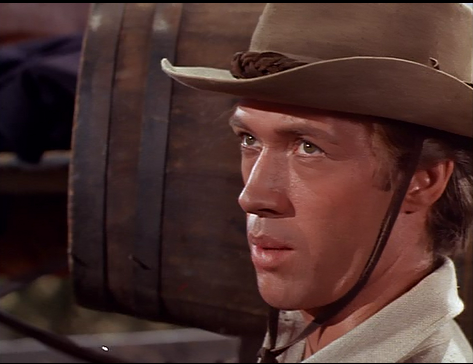
BLINN: That
was something that was never quite said.
We wanted to get into it, had we got more episodes. We thought it would be interesting to open up
half-way, for David to find out that Ryker possibly was the guy, but there was
no absolute proof. And as long as it was
left open, he would still have to find ways to compromise with Ryker even
though this dark shadow was hanging off in the wings. We never got there. We hinted at it a little bit, and Denne and I
wanted to go there, but we wanted the network to sign off on it first, and the
network was gone by the time the question was there to be asked.
HENRY: When SHANE came on-air in 1966, it was in the
midst of some long-running hits and hot newcomers – GUNSMOKE, BONANZA, THE BIG
VALLEY, HIGH CHAPARREL – all of which you eventually wrote for. How did SHANE distinguish itself from the
pack?
BLINN: Well,
it didn’t. Our ratings were always
frail. We had a very small cult
following, people
who said, well, that’s a pretty good show. Largely based on David, who was developing a
following. He’d just come off a Broadway
show that was highly thought of, ROYAL HUNT OF THE SUN. He got great reviews, and he was a wonderful
actor. I think it was a shame that he
opted to stick totally to film after that.
Because he could be a big actor; he had the intensity to go big. He loved acting. At one point we had written a thing that I
thought his father would be very good for this.
I went to him and I said, how do you and your dad get along? Would there be a problem if we wanted to hire
him? He said, I’d be the happiest guy in
the world. I love my old man – he’s a
great guy. And we tried to, and his
father was not available. But it was
kind of nice to hear that there wasn’t some dark undercurrent we had to deal
with, especially from David. There were
intimations of trouble in that guy’s soul.
HENRY:
Unfortunately you didn’t get John Carradine, but you did get some very
interesting people, old Hollywood people like John Qualen –
BLINN: Yes, in an Ernie Kinoy script that was one of
the most imaginative and offbeat kind of things I ever read in my life.
HENRY: I loved that one, and I loved the Robert
Duvall episode. Who was your favorite
guest star?
BLINN: Probably John Qualen. He was sweet as he could be. And the fact that I was sitting, talking
with
someone who was one of the minor leads of the John Ford stock company, I just
couldn’t believe my good luck. And Bert
Freed; we’d have to talk him into things, but once you talked him into it, he
gave you full measure.
HENRY: One of
the things that I think is so unusual about SHANE as a series, and due to Bert
Freed and the writing, is that there is a tangible sense of menace at all
times. There was never a sense that you
were safe at any time with SHANE.
BLINN: I
would agree, and Denne and I worked hard to accomplish that, and to try and get
the reality of the west, not the fictional legend, but the reality, that Bert
could kill Shane and probably get away with it.
And the only thing that stopped him from killing him from time to time
was the fact that he knew he wasn’t physically capable of it. And they were both very good with that. Bert and David certainly did not compete off-camera,
but they enjoyed the competition on-camera.
HENRY: Tom
Tully was Oscar-nominated for THE CAINE MUTINY.
What was he like to work with?
BLINN: Very
sweet; probably too sweet. By that I
mean, if you wanted him to say, “You sonovabitch, I’ll kill you!” He’d say it, but coming out of him, the words
just didn’t click. A very dear man, very
pleasant to work with. When Herb Brodkin
saw the first day’s dailies, and he saw Tom wearing a pair of half-glasses, he
immediately sent a telegram saying, take off those half-glasses – he’ll be
looking over those glasses, being cute, for the next forty years. And he was right.
HENRY: Joey
Starrett, the Brandon DeWilde character, was played by Chris Shea, and I
believe that was the start of that kid’s career. What was he like?
BLINN: He was
brand new, out of the box; it’s hard to know what to think of him other than he
did what we wanted him to do. He was a
happy kid. When I saw that he was signed
on to do the voice in the Charlie Brown films, I said that was probably a real
good thing for a child actor. Because
you’re not on camera, but you’re never-the-less the center of attention, and
you have a chance to learn without exploding in front of everyone in the
world. When I was doing FAME, we had a
chubby girl in the running cast, very sweet, and she went on to be Bart Simpson,
and she can now buy and sell half of Calabasas and all of the San Fernando
Valley, Nancy Cartwright. A very nice
young woman.
HENRY: The
town, which is really little more than Grafton’s store and saloon, is a close
match for the movie. Was it shot in the
same place?
BLINN: No,
didn’t get to Jackson Hole, which is where the Grafton’s and the town were
shot. So we never got the majesty of the
Grand Tetons. But the saloon exterior
and interior were damn near to what they were in the feature.
HENRY: Where
were they shot?
BLINN: Exteriors were in the San Fernando Valley; we
had a road out in front of Grafton’s that was on a soundstage, very well done
and, I think, hard to tell.
HENRY: It was
a much more convincing green set than most of the ones you see.
BLINN: Well,
that and GUNSMOKE I think were the best ones of the era. It saves you a fortune to be able to stay in
the soundstage, but it does something to the morale of the crew, I think. But that’s the best we could do with Brodkin
saying no, ‘too expensive, too expensive, too expensive.’
HENRY: When
you say it does something to the morale of the crew, do you mean in a positive
or a negative way?
BLINN: Well,
they like to get out. At that time there
were no women on the crew; it was a rough and tumble teamster attitude group of
guys. You’d say, we’re going out to Lake
Sherwood, and they’d say, great! I’ll
bring my fishing rod! But that wasn’t
available on SHANE.
HENRY: How
did your experience on SHANE compare with other later Western shows, such as
HERE COME THE BRIDES? And Robert Brown,
who played Jason Bolt on BRIDES, was a romantic lead in an episode SHANE.
BLINN: Yes,
absolutely. Robert’s a good guy – I saw
him four or five years ago at a reunion dinner for HERE COME THE BRIDES. It was very interesting, because the guys who
were doing HERE COME THE BRIDES, the producers and executive producer, had been
sitcom guys. Very Pleasant, very
intelligent, very funny – all good things.
But because I did some westerns, there were times when the executive
producer would say, ‘And then Jason will say I’m going to do so and so, and we
cut to the saloon.’ And I would say no,
Jason says I’m going to do so-and-so, and he slams out of the office, and he
stomps down the stairs, and he stomps across the street. You do it just like a John Wayne picture,
like ‘here comes trouble!’ And they’d be
oh, yeah, we can do it that way. Because
on a sitcom it was like I DREAM OF JEANNIE – dissolve to kitchen. But they were fine with it.
HENRY: In the last episode, Shane and Marion finally
kiss. Where was the relationship going
if you got to a second season?
BLINN: I
don’t think we knew. It was just, we
can’t just keep teasing, teasing, teasing – at some point this has to pay
off. Now, the accepted wisdom for that
kind of thing was, the two sweethearts should not kiss, could certainly never
sleep together. Because if you did that,
all of the tension of the relationship would go away. And I think that’s accurate. So I don’t think we took it that far. We just said we’ve gone this far, we’ve got
to have them kiss. I know Jill was very
pleased about it, not because she liked David – she liked David, but not
because of some romantic interest, but because this is what the very sexy
womanly woman I am playing needs.
HENRY: It’s
interesting comparing David Carradine’s and Alan Ladd’s performances. Alan Ladd’s character was wistful. Carradine’s Shane seemed much more bitter.
BLINN: He
absolutely had an edge.
HENRY: Was a lot of that the fact that Ladd had the
advantage in a way that his love would have to be unrequited because Jean
Arthur was married to Van Heflin?
BLINN: I
think that’s true. I also think – I’m
mindreading now, because I wasn’t on the set of the motion picture. But when George Stevens did the picture, his
first choice for Shane was Montgomery Clift.
Now wouldn’t that have been interesting?
HENRY: Oh yeah; a lot more like David Carradine.
BLINN:
Absolutely. And Clift in RED
RIVER was wonderful; just brilliant. And
also in THE MISFITS, which I think is a horribly underrated picture. But they didn’t have Montgomery Clift. Alan Ladd had a presence and a sound and a
look. He was not the most facile actor
to ever come down the pike. He had a
safe place he could go to, and it was very effective. But David was looking to stretch, always.
HENRY: In the
novel and the film, Shane’s background was mysterious. Did you invent a whole backstory for Shane?

"I love you, Shane!"
BLINN: The only time we went there, there was an
episode where one of the bad guys, in the first act, said, you and I met
before. And Shane says no, I never saw
you before. And in the second act the
guy says, no we did. Was it in
Houston? No, I’ve never been to
Houston. And finally, at the very end of
the show, when there’s been a gunfight, and people dying left and right, Shane
walks by him and says, Galveston. And
that’s all there is to it. And the Ernie
Kinoy script with John Qualen where Shane had killed someone, and forgot it.
HENRY: I
found that one of the truly remarkable stories, because it made so much sense,
and yet I’d never seen it done.
BLINN: Nor
have I, up till then, and not since then.
And he was so spiritually appalled by the fact, not that he killed
someone – he knew who he was and what he had done. But that apparently he had killed with such
regularity that he had actually forgotten one death. And the horror that that brought to him was
really wonderfully done.
HENRY: You
wrote many Western episodes for different shows, and when we first met five you
were writing western novels. What keeps
you coming back to the genre? And are
you still writing Western novels?
BLINN: I’m
waiting to hear about an extension of the first Western novel I did, which is
called A COLD PLACE IN HELL. No one is
committed to it, but I hope to hear from people in the next three months. I write Westerns just because I like to
write Westerns. Again, the story-telling
is bigger than life. It’s realistic in a
way, and in a way not realistic. It’s
large and more muscular emotionally, and it makes sense because my favorite
fiction author is John O’Hara, who writes so close to the vest. Almost nothing but dialogue and no
description. I don’t think he ever wrote
a Western. It just talks to me, and I
can’t tell you why.
HENRY: Who are your favorite Western authors?
BLINN: E. L.
Doctorow wrote one called WELCOME TO HARD TIMES, which was an interesting,
offbeat, dark picture. My friend Denne
Petitclerc wrote RANGE OF HONOUR, which is to this day one of my favorite
novels. Then I go back to the Zane Grey
people.
HENRY: Any
last thoughts on the series?
BLINN: SHANE
was a very pleasant experience with some very good people.
‘MAN, PRIDE, & VENGEANCE’ REVIEWED IN DVD-TALK –
I’M THRILLED!

On May 26, Blue Underground releases their beautiful
Blu-Ray version of MAN, PRIDE & VENGEANCE.
I’m frankly overwhelmed by Adam Tyner’s review of Courtney Joyner’s and
my commentary. “Audio Commentary: The
commentary track for Man,
Pride, and Vengeance is
easily overlooked as it's not listed alongside the rest of the extras, but it's
worth the additional couple of button presses over to the 'Setup' menu.
Spaghetti western scholars C. Courtney Joyner and Henry C. Parke -- who'd
previously provided commentary for Compañeros, The Grand Duel,
and The Big Gundown -- contribute a tremendous discussion
here. Joyner and Parke have forgotten more about Eurowesterns than I'll ever
know, and although their familiarity with the genre and this film in particular
is beyond encyclopedic, their commentary never once comes across as dry or
dull. Their expertise is matched only by their enthusiasm, and Joyner and Parke
excitedly tackle most everything you'd hope to hear: the film's clean and
almost episodic structure, its editing, the Bazzoni brothers' direction and
cinematography, the uncredited score, the course the lead actors' careers took
both before and after this film, and what sets Man, Pride, and Vengeance so far apart from the traditional
Spaghetti western. A staggering amount of insight and analysis are offered
here, and from Django Zhivago to tales of opium being smuggled into
Italy inside little Buddha figurines, it's a hell of a lot of fun too.”
Here’s the link to the whole review: http://www.dvdtalk.com/reviews/67619/man-pride-and-vengeance/
If you'd like to buy MAN, PRIDE AND VENGEANCE from Blue Underground , go HERE.
If you'd like to buy MAN, PRIDE AND VENGEANCE from Blue Underground , go HERE.
‘WORD ON WESTERNS’ RETURNS TO THE AUTRY WEDNESDAY, MAY 20TH!
As noted here a
couple of weeks ago, Rob Word’s fun and fact-filled A WORD ON WESTERNS luncheon programs
will be returning to the Autry starting on Wednesday, May 20th,
with A Salute to Duke.
They’re going to be every other month, so the next one will be in July.
No word from Word on guests yet, but I’m posting the clip below as a teaser,
with Rob interviewing Mariette Hartley about RIDE THE HIGH COUNTRY.
‘TEXAS RISING’
PREMIERES MEMORIAL DAY ON HISTORY
A tremendous cast
is featured in this ten hour telling of the Texas Revolution and the creation
of the Texas Rangers. From the folks who
brought you the HATFIELDS & MCCOYS mini-series, it’s directed by Roland
Joffe, director of THE MISSION and THE KILLING FIELDS, here is a glimpse of
what’s coming. Hold onto your hats!
THAT’S A WRAP!
I’ve just
finished my first movie column for True
West, which will be in the July issue, and am deep into August. Have a great week!
Happy Trails,
Henry
All Original
Contents Copyright May 2015 by Henry C. Parke – All Rights Reserved


