Showing posts with label Gunsmoke. Show all posts

Saturday, November 23, 2024

KEVIN COSTNER ON HOPES FOR ‘HORIZON 1-4’, CRAIG ‘LONGMIRE’ JOHNSON ON HIS NEWEST NOVELLA, 'GUNSMOKE' AUCTION, PLUS AUSSIE WESTERN SERIES ‘TERRITORY’, UPCOMING ‘FRONTIER CRUCIBLE’!


KEVIN COSTNER ON ‘HORIZON’


“I love what I do. I feel privileged to be able to do it. It has been a struggle, but it was a struggle for my crew too. Just to give you an example, I shot Dances with Wolves in 106 days. And Horizon, the first one, is arguably as big as that, if not bigger. We shot it in 52 days. No one stopped working. No one was late. [Everyone] was ready.” -- Kevin Costner


On Tuesday night, November 12th, at the Angelika Theatre in New York’s West Village, Horizon, an American Saga, Chapter One, was screened for an audience of mostly members of various film guilds. Afterwards, star, director and co-writer Kevin Costner took to the stage with actress Ella Hunt, and Mara Webster of In Creative Company. Mara interviewed Kevin and Ella about making Horizon, and the following quotes from Kevin Costner are in answer to Mara’s questions.

Ella Hunt, Kevin Costner, Mara Webster

For those who have not yet seen Horizon, Chapter One, the title is the name of a town-to-be which an unscrupulous and thus-far unseen businessman has promoted as heaven-on-Earth to many would-be pioneers. Costner, who doesn’t appear for the first hour, plays Hayes Ellison, a horse trader who inadvertently gets thrust into a feud. Ella Hunt plays Juliette Chesney, a privileged Englishwoman travelling by wagon-train with her artist husband, both of them woefully unprepared for the trip, and clueless as to what’s expected of them. Costner’s and Hunt’s characters do not meet in Chapter One, but doubtless will in Chapter Two.

Mara Webster began by pointing out that Costner had been trying to put together Horizon since 1988, and wondered how having a 35-year gestation period affected the project. (Note: I spoke to Kevin Costner in 2019 for True West – here’s the link: https://truewestmagazine.com/article/kevin-costner/ -- an updated version of my interview is in my book, The Greatest Westerns Ever Made and the People Who Made Them -- and we had discussed Horizon, a project that he wanted to make: “I have a Western that I really want to make; I just can’t find the rich guys that want to make it—an epic Western.”)
“Well, I was certainly ready to make it. I wasn't sure I'd find somebody like Ella. And I'm not sure Ella was born when I started thinking about this thing (note: Ella Hunt was born in 1998). It's an unusual story about Ella. It hasn't happened to me very often -- it happened to me once in Dances with Wolves. Robert Pastorelli (note: Candice Bergen’s useless apartment maintenance man from Murphy Brown) came in to read a part. And he came in spats, he had his bowling shirt on, and his gold ‘goomba’ stuff. And the part I had picked out for him -- I just looked at him -- he started reading and I said, ‘Robert, just stop for a second.’ I took his sides out of his hand. There was another (role), this dirty teamster, and I handed him those sides, and he made history with it. He was such an incredible actor. (Note: Pastorelli died in 2004, at age 49.) And when I first met Ella, she was going to read for the daughter (of a pioneer family), and I didn't take the sides out of her hand, but I made a switch right there, that she would play this incredible character, that we would be asking to do so much. She just has this incredible beauty and youngness about her. But there's some incredible maturity about her too.”

Tom Payne and Ella Hunt

“I thought he was joking,” Hunt responded. “And then was incredibly flattered, and daunted, as Juliette is a character who is very tested over the course of these films… I think one of the very special things about Kevin as a director is…the belief that he invests in all of the people around him. I'm so grateful that you looked at me and thought that I could do that. And now, because of Juliette, I've gone on to do things that I wouldn't have allowed myself to. I've just played Gilda Radner (note: in the new film, Saturday Night).”

In answer to Webster’s question about how Costner chooses when to shoot closely, intimately, and when to “see the impact of the landscape,” he replied, “Well, we did go to places that still exist in America. It's if you're willing to get out of chasing a rebate. For me, that was important, to have these landscapes that went on forever. But you know, we're not making a travelogue. And eventually it boils down to what is the story, and it shrinks down. And when someone can dominate the horizon, this giant landscape, you have to find scenes that are so intimate to set against it. And so we created scenes where my actors swallow this horizon. They're so strong that you forget about how far the country goes. You realize the pain and what they're going through. I like to think of the Western as our Shakespeare. This is not a series of ‘yeps’ and ‘nopes’. It was a Victorian age and people did have the ability to express themselves really beautifully. You have Danny Houston giving us a speech, which I equate to James Earl Jones' speech in Field of Dreams, Danny explaining Manifest Destiny. And you get someone like Ella, who shows the most intimate moment of a woman who is just tired of being dirty, and just the feel of water. And when you watch her perform that moment, and look in that mirror, (you) also understand how cold that night was. You know, that scene has as much place for me in a Western as a gunfight. It had to be there.”

Asked how he gave familiar genre elements a deeper context, Costner replied, “Well, I tried to break with Westerns because I don't like a lot of Westerns; most of them aren't very good. And the black-and-whites that we grew up with, they were so simple, they were a mainstay of our televisions, our theater. But they often were too simple for me. The black hat, the white hat, the way people dressed. But the thing that stood out for me, what had been missing almost in every way -- and it took a while for it to dawn on me -- is every western has a town. But they're not like mushrooms: they didn't just come up. There was a terrible struggle that took place. And it took place from sea to shining sea. Every inch of that land was fought for, was contested. Where our great cities exist, (there) were (already) people. They know where the good places were to live. And we did too, and we kind of wiped them out. But that was not ever talked about in any Westerns: the towns always exist. And I started wondering, what would it be like to see the beginning of something? There was nothing there, there was a (new) group of people that had found a level of equilibrium that made peace with the (native) people to such a degree that they were getting along. [As the film begins,] the first image is a surveyor stick that goes into an ant hill. And we disrupted their way of life. And what you'll see when you see all four -- and I hope that you do -- is you'll see the struggle: this town burns and is rebuilt and burns and rebuilt, and finally there's a tipping point in the West. And it was just simply numbers. They (the natives) never stood a chance. But I also don't want to be embarrassed about the ingenuity and the bravery and the spontaneity and the courage that it took for people to cross that Mississippi and go there. It's not a land in Disneyland; it was contested, it was real. The country was founded in the East, but its character was really formed in the West with this constant battle.

Tom Payne, Ella Hunt, Kevin Costner 

“I think we've had enough of heroes having buffoons to knock down. When you face formidable people, it makes for a more interesting movie. When you believe in the behavior -- it's not really possible for one guy to beat up everybody in the bar. Everybody assumes that everybody could ride a horse, or fix a wagon, or make a fire. If you stick with the reality, there can be a lot of drama in the West, and a lot of danger. Something that I gravitated to when I was little, was when I saw children in a movie being able to survive in an adult world; I leaned into the movie more. But when children were stupid in movies, where directors or writing made them stupid, I leaned away. And I think that with all our CGI, with all our great effects that we have to build our movies up, when we don't invest in character, in behavior, those things aren't any good to us. When we see ourselves is when our greatest joy happens in the theater.

“I do like to make these movies, and when I started writing this with Jon (Baird) in 1988, it's safe to say that no one really wanted to make it. And in 2003, the studio wouldn't make it for 5 million more dollars. And I was distressed about that. I went on to make other movies, but I couldn't leave this one behind. And I was so mad that they didn't understand the first one, that I decided to write four more. (The audience laughs.) And everybody goes, oh yeah, that's Kevin! Jon and I, we started writing, and again, I wasn't writing to please anybody, I was trying to please myself because I think that's my best chance at pleasing you.


“I do love horses running fast. I do love the mountains and rivers that never end. And I do love the gunfight if it's orchestrated correctly. But what surprised me was when I looked up or looked down, with Jon Baird, who I am completely indebted to, was that every story had women running right down the middle. So here I had these Big Four Cowboy Movies, and women almost dominate -- and Ella dominates Chapter Two.  I just found that I couldn't tell the story that I was trying to, without making women dominant. It was a surprise to me. I don't know if fate was just moving my hand. I go, ‘Not another woman! Come on! Where's the gun fight?’ But I loved how their struggle fit so perfectly in the West. I'm proudest of the script, that Jon Baird allowed these actors to feast on with myself.”

An audience member asked if all four parts of Horizon are written. “They're all written, so this is not a case of ‘we don't know where it's going.’ We know exactly where it's going. I don't know why four movies is what's in my head, but that's what it is. And so I will push the rock uphill to find the money to do this. So that one day you'll have these four, and I hope this is a Treasure Island on your bookshelf of electronic films. I hope you have it to show your friends, to revisit it and see the details, see the nuances and choices that these actors made because it was really extraordinary acting going on in an American Western. There's a notion that things are easy for me. I guess maybe they are, if I do the things that people want me to do, and it's not that I am a contrary person. I'm not even an avant garde person for crying out loud. I make movies with horses and campfires, but I do it with an edge. It's not always in vogue. But I'm so happy to be able to do it. And I won't rest until I'm done. And I will figure it out. If I can't find that billionaire, I will look to myself like I did on One and Two. But there will be four.”

An audience member asked Costner how he made period films seem so contemporary. “Well, I think that in every generation we have abusive people. We have peeping toms -- we had them on the wagon train. So I can blend the same difficulties that we have in life and bring them right into the frontier. We have the sociopath; we have acts of kindness. There were guns and there was alcohol and a lot of times there weren't very many women. People were angry. And you run into a person that's just killed somebody and there's a bloodlust. (Note: the following refers to a scene where he’s going up a hill to see the prostitute Marigold, played by Abbey Lee, and is stalked and goaded by gunman Jamie Bower playing Caleb Sykes.) Jamie Bower, who walked up that hill with me – that actor's amazing. So we have a gun fight -- I’m not trying to reinvent the Western. But what I was really interested in was the walk up the hill; that this was a bully, and we've all encountered them in school and at work. And this was somebody that was coming out of a blood lust. He had just killed someone. He'd just been humiliated by his brother. And that was just as interesting to me. A studio might say, ‘Just get to the gunfight for crying out loud, Kevin!’ And I'm in love with the walk. I think I'm always going to be in love with the walk.”
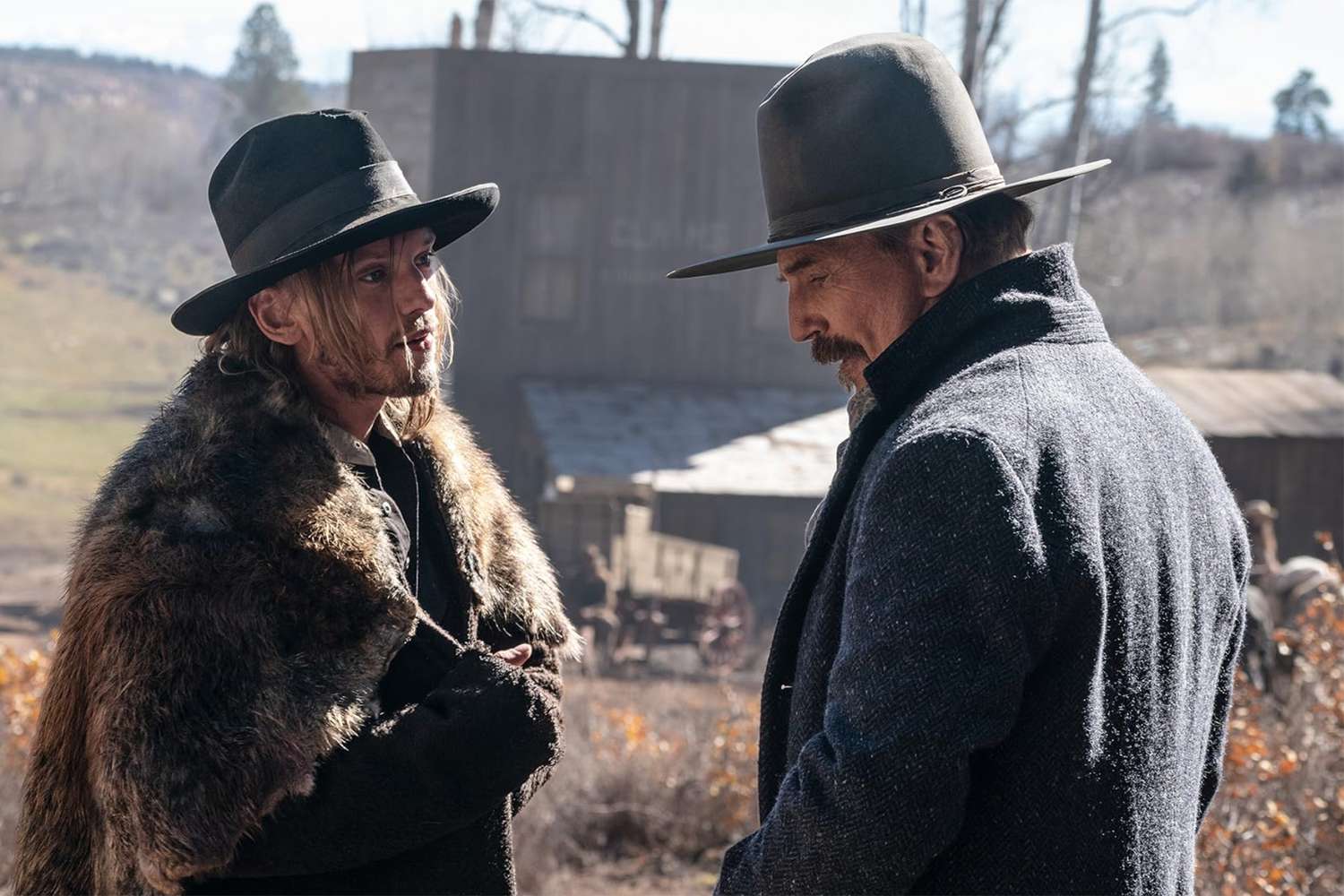
Jamie Bower and Kevin Costner

An audience member notes the industry’s lack of interest in passion projects, and asks Costner where his wellspring of determination and hope comes from. “I just believe. I believe in story so much. I believe I have a secret in my pocket, and I just can't wait to share it). The only thing that's disappointing to me is I can't be you, and see this for the very first time like you just saw it: I wanted people to make a movie like this for me. But I can't lose my enthusiasm. No one can break me, break my spirit. I do get down, do wonder how I'm going to go on, but I love my actors. I just love that I found my Yellow Brick Road a long time ago, when I didn't figure to have any future. I got D’s and F’s in high school, where you're supposed to at least be kind of good.


“I found myself. And to be here in front of you, to be able to share what I love with people who share and have a passion that runs so deep, it's so personal, every detail. And I hope that you see them, (the Horizon films) and you revisit them the same way. When I watched Wizard of Oz, I didn't know the horses change color. I should have, because there's the line, ‘A horse of a different color.’ Every time I watch that, I see something new. And that's what I want from my movies. My movies. They have to be more than just an opening weekend. They have to be a lifetime.”


CRAIG ‘LONGMIRE’ JOHNSON JOINS ‘RENDEZVOUS WITH A WRITER’ TO DISCUSS HIS NEWEST NOVELLA, ‘TOOTH AND CLAW’


On the first Thursday of every month, I have the pleasure of being ‘in the limelight,’ joining hosts Bobbi Jean and Jim Bell on their weekly Rendezvous with a Writer podcast, where I present the month’s news in the world of film and TV Westerns, and take part in their interview with a guest writer. On November 7th, that guest was Longmire creator Craig Johnson, who was announcing the publication of his newest novella, Tooth and Claw. This story takes Longmire and Henry Standing Bear back to the Vietnam War years, and their adventures in Alaska among polar bears and bad men. The link below will bring you to the podcast: 

https://www.facebook.com/bobbi.j.bell/videos/8753051584737954


AUSSIE WESTERN SERIES ‘TERRITORY’ ON NETFLIX

Robert Taylor, Sam Corlett

Actor Robert Taylor, who starred as the title character on the phenomenally popular Longmire, has two series this year. He plays Jackson Gibbs, a continuing character on NCIS: Origins, and for Netflix, he stars as Colin Lawson, the patriarch of the Lawson family, who are 5th generation owners of the largest cattle-station in Australia. (Note: what Americans call ranches, Australians call stations.) It’s stated in the first of six episodes that it’s the size of Belgium, which I suspect is roughly the size of Yellowstone. In the opener, the son that Colin has been grooming to take over the family business meets an ugly fate, and the others scramble to take his position. I found the first episode gripping, and will definitely watch more.    

JANET ARNESS DISCUSSES JULIEN’S ‘GUNSMOKE’ AUCTION

On November 15th, Julien’s held a Western-themed, largely Gunsmoke auction in the Hollywood Museum, former home of Max Factor glamour empire. There were 568 lots up for bids, 230 from the estate of TV’s Matt Dillon, James Arness. I had the pleasure of discussing the auction before the fact with Jim’s widow, Janet Arness, for an article for the INSP blog. Here is the link: https://www.insp.com/blog/what-janet-arness-thinks-of-the-gunsmoke-auction/

Incidentally, I’m writing another INSP follow-up article on how the auction turned out.


THOMAS JANE, ARMIE HAMMER TO STAR IN ‘FRONTIER CRUCIBLE’

Thomas Jane from Murder at Yellowstone City


Johnny Depp and an un-masked Lone Ranger, Armie Hammer

Shooting in Monument Valley and Prescott, Arizona beginning this month, Frontier Crucible will be rolling camera under the direction of Travis Mills, who gained attention when he made good on his audacious pledge to make 12 Westerns in 12 months – during Covid, no less! In the post-Civil War drama set in Arizona Territory, Myles Clohessy is an ex-soldier who throws in with outlaws lead by Jane, and a couple, Mary Stickley and Ed Brown, to fight against common enemies. The role for Hammer, the screen’s most recent Lone Ranger, was not specified. Also in the cast is Eddie Spears. Producer Dallas Sonnier pitched the project as Reservoir Dogs meets Bone Tomahawk, and he in fact produced Bone Tomahawk, as well as 2022’s Terror on the Prairie. (Click HERE to read about my visit to the Bone Tomahawk set, and my interview with Dallas Sonnier https://henryswesternroundup.blogspot.com/2015/10/bone-tomahawk-review-interviews-plus.html )

…AND THAT’S A WRAP!


Please check out the new November/December issue of True West Magazine, featuring my article celebrating the 50th anniversary of Sam Peckinpah’s classic, Pat Garrett and Billy the Kid – I was fortunate enough to interview Peckinpah’s assistant Katy Haber, film editor and historian Paul Seydor, and one of the movie’s last living stars – although he’s the first one killed onscreen – Charles Martin Smith. And the next Round-up will feature my interview with Michael Feifer on the eve of directing his 8th Western!

Much obliged,

Henry C. Parke

All Original Contents Copyright November 2024 by Parke – All Rights Reserved


Monday, April 10, 2023

Richard Dreyfuss Goes West to Yellowstone City!


His thoughts on Murder at Yellowstone City, his other Westerns, American Films in General, and Mr. Smith Goes to Washington in Particular

By Henry C. Parke

Richard Dreyfuss, an Oscar winner for The Goodbye Girl, beloved for Jaws, American Graffiti, Close Encounters and so many more, has finally made a Western movie.  It’s about time: after all, the American history enthusiast is a Civil War reenactor.  “Why wouldn't I be? When you realize how heavy their packs were, and what they did with all that weight on them, it's astounding. We made America to build a different and better country than any other country had ever tried. I have a great deal of pride, however badly we might have done it. I call it an imperfect miracle.”

Isaiah Mustafa and Richard Dreyfuss

In Murder at Yellowstone City, a forlorn former goldrush town in Montana gets a sudden influx of hope when a man dynamites the old mine, and creates a new gold strike!  Then a freed slave (Isaiah Mustafa) arrives in town just as the gold striker turns up dead.  Gabriel Byrne is the law, Thomas Jane is the pastor, and Anna Camp is his wife. Richard Dreyfuss is the Shakespeare-quoting saloon proprietor. Produced by RLJE Films, distributed by AMC, Murder at Yellowstone City is available on AMC+, for rent or sale through Prime, and on DVD and Bluray.  “What appealed to me about the film was that it was a kind of metaphor for America,” Dreyfuss explains. “About people who had come to America, who were being given a second chance.”  It’s actually Dreyfuss’ third chance at a Western; the first two were for television.


Svetlana and Richard Dreyfuss on the red carpet

The Big Valley episode, Boy into Man, was a star-turn for young Dreyfuss as a boy trying to protect his younger siblings when his mother disappears.  And in addition to the Big Valley stars, his mother was Diane Ladd, and he was directed by Casablanca star Paul Henreid.  “I worked with Barbara Stanwyck, and that's no small thing: she's part of my innermost fantasy of what it's like to be a movie star. And when I got to work the first morning, she had been there since 4:00 AM, and the crew made it crystal clear to me that they were Missy's crew and they were proud of it. And they didn't want to hear any criticism of Missy. And I had seen every film she'd ever made. So my tongue cloved to the roof of my mouth for most of the time that I was on that show.”

Richard Dreyfuss, Lee Majors, Darby Hinton 
and Margot Jane on The Big Valley

“I walked in and there was Paul Henreid, and I said, ‘Oh my God, it's an honor to meet you, Mr. Henreid.’ And he then asked the question, which is always answered with the actor's oath. The question was, do you know how to ride a horse? And I said, ‘I was raised on a ranch outside of Las Vegas: of course I do!’” Actually, he grew up in Brooklyn. 

There was a scene where Dreyfuss had to drive away in a buckboard with his younger brother and sister beside him.  On the day of the shoot, Dreyfuss pulled the wrangler aside, “And I said, ‘Excuse me, how do you do it?’ And he went, ‘Oh my God, this is really hard, and you've got two little kids sitting next to you on this wagon.’  So I was terrified, and I put the two kids on the buckboard and they yelled, Action!”

Darby Hinton, the boy in the wagon, remembers, “He only had to go three or four feet, pull up, and stop.  But when they said action, he did the only thing he’d seen in the Westerns.  He yelled “Yee-haw!” and they took off!” 

Dreyfuss recalls ruefully, “And away they ran!  Cut! Cut! Cut! I was out of control,” he remembers with a laugh.  “They were afraid that I was gonna kill these kids.”  The wranglers eventually caught up with the wagon, got control of the horse, and brought them back.” Henreid was furious with me. And he said, ‘Do you know why you got this part from me?’ I said, ‘I did a good reading?’ And he said, ‘No!  It is because you said it is an honor to meet you Mr. Henreid!’”

Dreyfuss got through the show somehow, “And at the end of the show, Barbara Stanwyck came up to me and she said, "You know, you're the best actor that's ever guested on this show." And walked away. And I believed her, and I did something I'd never done before, or since. I invited my family and my friends to watch it with me. And I realized, as we all were watching, that what Barbara Stanwyck had done was to say to herself, ‘If I don't say something nice to this kid, he's gonna blow his brains out because he's such a terrible actor.’ So she said this nice thing, and I watched that performance, and I wanted to chop my tongue off. But it certainly did provoke me into being better.

“I did the first Jewish Gunsmoke.” “This Golden Land” won the Mass Media Award from The National Conference of Christians and Jews.  Hal Sitowitz’ script was nominated for a Writers Guild award for Best Episodic Drama. Dreyfuss plays a Russian-born Jewish son who is furious with his father for refusing to bring charges against the three cowboys who killed his brother. Here he gets to ride horses and fire shotguns. It felt good to play a Jewish character in a western, “in the sense that, yeah, I'm Jewish and I like being Jewish. And so it was an opportunity to kind of flaunt my being Jewish. But I didn't think it was a particularly subtle, well-written script.”

Growing up, Westerns were not Richard Dreyfuss’ primary focus. “I was a fan of movies, sound American films. What my daughter disdainfully calls ‘black and whites’. I had probably seen every movie ever made by an American studio between 1931 and ’60, I knew everything about everyone. I used to set my alarm for three o'clock in the morning and watch A Guy Named Joe with Spencer Tracy. And I would sit this close to the TV so I could keep it quiet, but my mother would inevitably wake up and come down the hall looking very much like the Wreck of the Hesperus. She would say, ‘What are you doing?’ And I would say, ‘Spencer Tracy.’ And she said, ‘I'll get some cheese.’ And we would sit there together and watch Tracy, and [Charles] Laughton movies, and wow: they do not make them the way they used to.

“You know the story about when the Germans occupied Paris? They said to the film theater owners, we’ll give you a week to play anything you want. And then the German films will come in. And every theater in Paris played Mr. Smith Goes to Washington. And at the end of the occupation, every theater in Paris again played Mr. Smith. You know why and I know why.  I once was the keynote speaker to a room of about a thousand people, and Jimmy Stewart. And I described Jimmy Stewart as a metaphor for America, that he was the perfectly innocent American before the war. And I was specific about saying, in Mr. Smith, there's this scene when he meets Claude Rain's daughter. And he's so nervous, he keeps dropping his hat. It's hysterical. And then he went to war, a very real war. His war was from the sky. And when he came back, he never made another innocent American film again. And he never made a film that blamed the Indians for everything. He was a complicated guy. At the end of that luncheon, I was on my way out, and his daughters ran up to me and said, our dad can't talk to you right now because he's crying. But he wanted you to know that he never knew that anyone had ever watched him that closely. And I thought, God, this guy's been a star since 1934. And he didn't know that people watched him that closely.”

AND THAT'S A WRAP!

I hope to see many of you good folks starting this Thursday at the TCM Classic Film Festival in Hollywood! It has the best Western representation in years, beginning at Grauman's Chinese Theatre, with the premiere of the restoration of Howard Hawks' Rio Bravo! And yes, the lovely star Angie Dickinson will be there! They'll also be showing the great noir Western Blood on the Moon, the great musical Western 7 Brides for 7 Brothers -- Russ Tamblyn will be there (!), plus the great silent Western Clash of the Wolves, plus The Wild Bunch, and Treasure of the Sierra Madre!

And the following weekend, it's the Santa Clarita Cowboy Festival! It's a wonderful free event -- if you'd like to attend, go HERE for the official website. And be sure to visit the Buckaroo Book Shop at the Festival, where you can meet your favorite Western authors, and hear their presentations.  Click the  Rendezvous with a Writer Facebook Page link to get the details!

Happy Trails,

Henry

All Original Contents Copyright April 2023 by Henry C. Parke. All Rights Reserved


Friday, June 5, 2020

‘WARRANT’ STAR NEAL MCDONOUGH INTERVIEW, SCORSESE WESTERN FINDS NEW HOME, ‘GUNSMOKE’ 20-SEASON SET, TOUR THE ‘RED RYDER’ MUSEUM, AND MORE!


SCORSESE’S ‘KILLERS OF THE FLOWER MOON’ BITES THE APPLE!


Martin Scorsese is no stranger to making Westerns – back in 1998 he produced the Stephen Frears-directed film of Max Evans’ The Hi-Lo Country.   But he’s finally set to direct his first Western, based on David Grann’s book, Killers of the Flower Moon: The Osage Murders and the Birth of the F.B.I.  It’s non-fiction, set in the 1920s, and centers around a series of mysterious killing of Osage tribe members. 


Marty & Leo in the library (with a candlestick)

Set to star Leonardo Di Caprio and Robert DeNiro, the book was the center of a bidding war, and when the dust cleared, Grann had pocketed $5 million, and the deal was set up at Paramount.  But word is that when Marty and Leo came back with a new draft that that had Leo switch characters, from a hero to, to put it kindly, an anti-hero, Paramount froze: this is what they’ve committed $180 million to?  The word went out that they wanted to spread the risk by taking on a partner, and now Apple as stepped up.  Apple will make the film, and Paramount will handle the worldwide distribution.  By the way, Scorsese has another film planned that will also be of interest to Western fans: a biopic of Teddy Roosevelt, starring Leo Di Caprio.

I UNBOX THE ENTIRE RUN OF ‘GUNSMOKE’ IN ONE SET!


As you collectors know, CBS and Paramount have been putting out DVD sets of Gunsmoke, season by season, for about fourteen years.  They just released the final one, season twenty, and they’ve issued a giant mega set -- easily the biggest Western series set ever, with all twenty seasons of Gunsmoke!  That’s 143 disks!   They sent it to me, and all they asked in return is that I binge-watch them!  Thankfully they haven’t given me a deadline, but I’ve promised to watch them all, and post about them as I go along. 


And I decided to begin by making an unboxing video of myself checking it out – unboxing videos have been dominated by little kids opening toys, and nerds unwrapping phones long enough!

AIN’T YOU COMIN’ BACK, RED RYDER? A VISIT TO THE FRED HARMAN ART MUSEUM


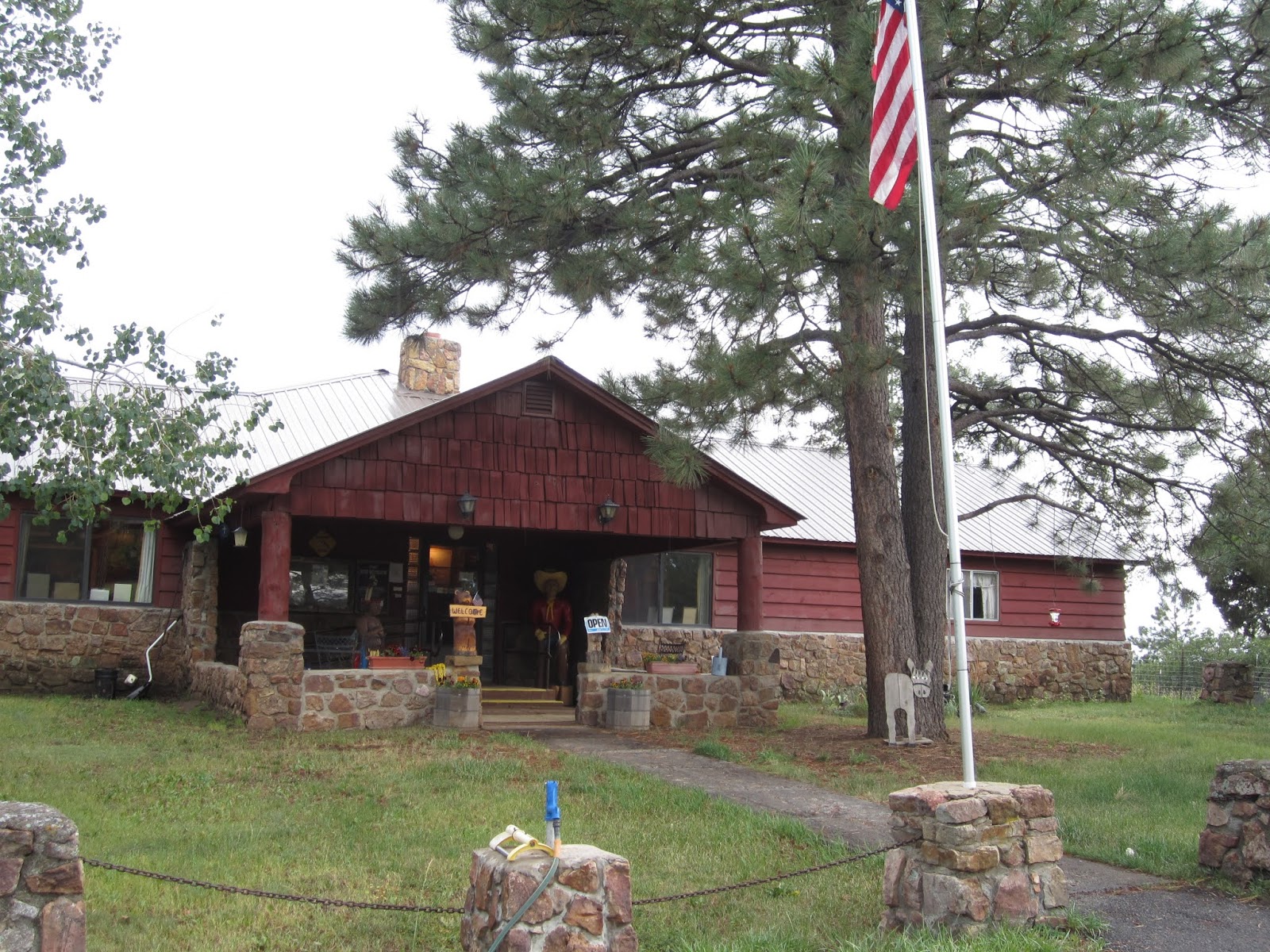
Since hardly any of us are going anywhere lately, wouldn’t it be nice to take a little trip?  How about a stroll through The Fred Harman Art Museum in Pagosa Springs, Colorado?  Frankly, this article has been delayed for years.  


Back in 2014, my daughter and her now husband were in Pagosa Springs, where they visited the museum of Fred Harman, the cowboy-turned self-trained western painter, who reached his greatest fame writing and drawing the hugely popular comic strip, The Adventures of Red Ryder, which featured not only Red, but his Navajo sidekick, Little Beaver. 


Red Ryder...


...and Little Beaver welcome you!

Knowing it would make a good piece for The Round-up, Sabrina took all of the photos you see, and brought me back a Red Ryder t-shirt as well.  The timing was perfect – I had just read a new book on the history of Red Ryder, and would run the review and the photo-tour together.  Then the publisher pulled the book – some problem with Red Ryder Enterprises Inc., who owns the rights to the character.  So I cancelled the review, postponed the article, and forgot about it, until a week ago, when I found the pictures again, and thought this would be a perfect time to run them.   


Artist's studio


Another view

But when I Googled the Museum, to make sure I had the address and hours correct, I was shocked to find this notice: Permanently Closed.  Was it a Coronavirus matter, or was it really closed? I knew that Fred Harman, a founder of The Cowboy Artists of America, had died at age 79 in 1982, and his son, Fred Harman III ran the Museum with his wife, Norma.  


The Dutchess was the third major character in the strip.

I got the full story from Bill Hudson, editor of the Pagosa Daily Post, an online community magazine. “Fred and Norma had been running the museum in memory of his dad. (They) were struggling to keep it financially viable, because those of us who remember Red Ryder are fewer and fewer. Fred passed away a few years ago, and Norma passed in 2019. Shortly after Norma passed away, the house-and-museum were sold to the Archuleta County government, and they’re currently in the midst of building a justice center that is not fully funded yet.”


The Ranch in its glory days!


If you look close, you can spot the screen's first Red, Don 'Red' Barry, 'Wild 
Bill' Elliot, and Bobby Blake as Little Beaver.
Norma had donated five adjacent acres of land for the justice center project, which was expected to include a jail, Sheriff’s office and courthouse, with the understanding that the project will be called The Fred Harman III Law Enforcement Center, in honor of her husband, who was very involved in volunteering and fundraising for the Sheriffs department.


What most people know of Red Ryder today:
"You'll shoot your eye out!"


Zoom in close to see hundreds of
beautifully drawn horses.

Bill Hudson remembers that in the Museum, a replica of Fred Harman’s art studio had been built. “It had his drawing table and his inks, set out as if he had just left the room.”  When the Sheriffs Office opens, somewhere inside, available to the public, will be a room, about 16’ by 30’, which will be that studio, holding a mini-museum of the art of Fred Harman.  When I first reached Bill, I suggested wistfully that my travel piece had become an obituary.  He thought, perhaps not.  “Maybe it's just a downsizing.” 


In addition to the photos, I’m including a 5-minute video tour of The Fred Harman Art Museum, and a link to the still-standing Museum website.  Enjoy, but don’t try to order anything, because I don’t think anyone’s monitoring the site. 


NEAL MCDONOUGH SERVES ‘THE WARRANT’


On Saturday, June 20th, the INSP network will premiere their newest original Western movie, The Warrant.  During the Civil War, Union soldiers John Breaker (Neal McDonough) and Virgil a.k.a. The Saint (Casper Van Dien) are friends, both fighting with their sons by their sides. Breaker, a lawman in civilian life, is tough as nails, but would rather wound an enemy than kill him. The Saint has an abiding hatred for Southerners, who he considers traitors: he’d rather kill an enemy, and is not above going through the corpse’s pockets.  When The Saint’s son is killed by a Rebel’s bullet, The Saint deserts, looking for revenge.

Four years after the war’s end, Breaker is a town Sheriff, and his son Cal (Steven R. McQueen), now a Federal Marshal, is on The Saint’s trail: leading a small but vicious pack, The Saint’s depredations against reconstructing Southerners are so brutal that unnamed men have placed a price on The Saint’s head, and the woods are full of dangerous bounty hunters. As John has no legal authority outside his town, son Cal deputizes his father – awkward! – to help bring The Saint to trial before the bounty hunters can shoot him down.

Writer Shea Sizemore, and director and cinematographer Brent Cristy are clearly aware that some story elements are well-traveled ground, and have found clever ways to vary them and make them fresh. There’s many a Western about a Confederate who won’t accept defeat, and keeps fighting a finished war, but a Northerner who can’t accept his victory is new. The fact that so much trouble comes out of John Breaker’s kindness, is original. As he says, “When you show a man mercy, he becomes your responsibility.”

One of the most intriguing surprises is the casting of the protagonists: from Justified to Yellowstone, Neal McDonough has made his mark as icy, heartless villains. Here he is the hero, and a deeply moral man. Casper Van Dien has long been the hero, from Starship Troopers  to Tarzan and the Lost City, but here he’s the sinister Saint. He’s a bad man, but not totally lacking in humanity, and his portrayal of a father who’s just lost his son is startling raw and moving.

I had the pleasure of interviewing both stars, Neal McDonough, and Casper Van Dien, about this movie, and about their other films, especially Westerns.  Here is my interview with Neal; my interview with Casper will be in the very next Round-up.

When I spoke to Neal, it was April 22nd, more than a month into our quarantine, mine in Los Angeles, his in Vancouver, B.C., Canada.  We started out discussing the weather, which had been good in both places.

NEAL MCDONOUGH: It's been blue skies and 55 degrees every day. It's been just dry and beautiful. And then today, rain.

HENRY PARKE: Are you in Vancouver to film something?

NEAL MCDONOUGH: Well, no.  My wife, Ruve, and I for years were trying to figure out a way how to get out of Los Angeles, because it was a difficult place to bring up five children on so many levels. Just the sheer amount of people, just getting through the traffic, getting to any practices or games or school. That was challenge enough. But I also wanted it a little more like how I grew up, back in the 70s; a more wholesome, less distractions type of place. We live 40 minutes south of Vancouver, right on the ocean. And it's just beautiful. It's a small town; feels like small town America. Small town Canada. It's nice people, earnest people here in Canada. I really enjoy it up here.  The other reason is there's so much darn work up here. I was brought up here by Greg Berlanti to do Arrow. And then Arrow turned to Legends, and Legends turned to The Flash, and Flash led to five other television series: Rogue to Van Helsing, to Altered Carbon to Project Blue Book to The 100, and a couple of movies. So it's been a very busy four years since I've been up here, and it's been a blessing upon blessing.

HENRY PARKE: Now I've been enjoying your work since way before Minority Report. And I go in expecting to be scared and unnerved by you. You scared the heck out of me in Justified.  


Neal in Justified

NEAL MCDONOUGH: Two years before that, I was fired from a show, for not doing a sex scene. They knew I wouldn't do it; it was in my contract that I wouldn't. And finally they say, if you can't do it we're going to fire you. I said I'm not going to do it, so go ahead. So they fired me, and for about two years I couldn't get a job. (Editor’s note: the ABC comedy/drama Scoundrels lasted eight episodes.) It was a really hard time for us. We lost our house, we lost cars, we lost all the material things that we thought were really important.  I thought, I don't know how are we going to get through this. I prayed so hard, and all of a sudden the phone rang. And it was (Writer/Producer) Graham Yost. And Graham said, "Hey, you want to be the bad guy for a couple episodes on Justified? I said, “Yeah, absolutely!” And it was my comeback. It was like my shot at the title again, and I was so revved up to crush this role that literally, after the first take of the first scene, Graham says, “I think you're going to be around for the rest of the season.” I'm like, good: that was my plan.  (Previously) Graham has written for me, for Boomtown and Band of Brothers, them to Justified.  He knows how to write to my strengths, and we just had a heck of a time. It's when I fell in love with acting again. You take a lot of things for granted in life, and sometimes you need a good swift kick in the butt to make you realize, Hey buddy, you got it good. Don't take it for granted. And the ten years since I was in Justified, (my) career has been so fantastic. God has given me so much. I wouldn't be speaking to you right now if it wasn't for Graham Yost and Justified.

HENRY PARKE:  I've got to say how much I enjoyed you in Yellowstone.

NEAL MCDONOUGH:  Paramount submitted me for the best supporting actor Emmy Award, which was pretty flattering. I don't do this for awards; I do this to entertain people. But every once in a while, it sure is nice when someone says, hey, you did a really great job; I want people to notice that. I was blessed that God gave me a great talent; God gives us all talents and sometimes we don't find them; sometimes we don't look hard enough. But just because you get that cool talent, that doesn't make you special.  You have to work hard at being a great human being. I was blessed to find out early that I was really good at getting in front of people and making them laugh or cry or make them angry or in some instances make them really frightened.

HENRY PARKE:  Speaking of making people really frightened, which you're really good at, after so many heavies, what's it like to play a hero in The Warrant?

NEAL MCDONOUGH:  I’ve got to tell you, when they sent the script to The Warrant, my agents -- I don't want to say passed on it -- but they said this is a really independent small film, and I'm not sure it's the right thing for you. I said, just let me read it. And after two pages I'm like, are you kidding me? Did you guys read this? This is gold! You know, the reason I play so many villains is because I won't do sex scenes. So, I have to figure out ways to keep working, to make money for my family. So when I have an opportunity to play a good guy who doesn't have to have those types of scenes, that doesn't happen often, because usually you're kissing a woman or you're doing whatever, and I'll only kiss one woman; that's my wife Ruve, and that's it.  So when I read the script, I was like, this is literally another gift from God, because this is the character that I always love playing. Like from Tin Men or Band of Brothers, those heroic guys that are tough as nails, but that also have their heart on their sleeves and are driven for the good. But that don't mind getting their hands dirty, to do a few things to get the law correct. To play this character, John Breaker, it’s right up my alley. I'm playing my dad, and it's such an honor for me to do that. And the people at INSP, (Senior VP of Programming) Doug Butts and (Senior VP of Original movies) Gary Wheeler and everybody else, these guys have been so good to me.  Gary was telling me the other day that The Warrant was (number one) watched new Western for six weeks in a row on Amazon, and at Walmart we sold out: they have to keep restocking it. I had no idea this would be successful for INSP. But I love what INSP does. They're faith friendly. They're telling stories of heroes, and in a time where people generally don't do stories about heroes anymore. There aren't many films you get to sit and watch with the whole family. I had the five kids about a week ago and I said, all right guys, let's sit down and let's watch The Warrant. And they didn't get up for a bathroom break once! I love, love, love The Warrant. I want to do part two, part three, part four, and part five!


Gregory Cruz, Neal, Annabeth Gish

HENRY PARKE: You said you were playing your father. In what sense?

NEAL MCDONOUGH:  My father was a Sergeant in the Army; came over from Ireland.  Immediately landed in Boston, walked into the Army office and said, "Make me an American." They said, "Okay, we'll ship you overseas for five years." That's fine. When he came back, my dad was a very driven, hardworking, do-the-right-thing kind of man. And he instilled that into all of us, I being the youngest of six. My dad my mom really (taught) me what was right and what was wrong and, my relationship with God. I was really fortunate to have my dad be such an integral part of my life. And this last couple of years I did Project Blue Book; there I am dressed up in military outfits and looking just like my father, and trying to tap into my dad. John Breaker is very much like my and like myself. So it was kind of easy for me to play Breaker.

HENRY PARKE:  Is The Warrant your first period Western?

NEAL MCDONOUGH: It is my first period Western. I always wanted to do one. I did the mini series for Syfi called Tin Man, which was kind of a Scifl take on the Wizard of Oz, with Zoe Deschanel and Alan Cumming. I play the Tin Man (in) cowboy hat, duster, six-shooter. A law enforcement man back in the late 1800s was the take on my character. It was a lot of fun to play that guy. But an actual, true Western? This is the first one I've ever done, and boy, I can't wait to get back in the saddle again and do it again.


From Tin Man, Alan Cumming, Raoul Max Trujillo, Neal
as Tin Man, aka Wyatt Cain

HENRY PARKE:  Did you grow up with Westerns?

NEAL MCDONOUGH: My favorite as a kid was The Rifleman. I couldn't get enough of it. I loved that and The Big Valley. My brothers loved Big Valley and I would watch it with them. And anything that John Wayne did, from The Cowboys to The Shootist; the movies that were later in his career, those were the John Wayne films that I cut my teeth on. I love watching INSP because they've always had The Big Valley.

HENRY PARKE:  As a kid, do you identify with a particular brother on The Big Valley?

NEAL MCDONOUGH:  Lee Majors to me was just like the coolest cat. My brothers were always, "I'm Heath," or "I'm Nick," For me it was more like, wow, those guys are just the dudes, more that than me trying to be any of them, because my older brothers say, no, no, no. We're these guys: you're too young. And they were right. My brother John says the reason I'm so successful as an actor is I get to steal from my brothers and my sister all the time, and he is absolutely spot on: the music I listened to was the music they listened to, the shows that I gravitated towards were the shows that they watched.  The Rifleman and My Three Sons or The Big Valley -- those are the ones I want to make. And I think that Hollywood has really gotten away from making those kinds of shows because everybody wants to see crazy, on your edge, dark stuff. That's the landscape of television nowadays. And it's really too bad. I mean, when I was a kid, Sunday nights, the whole family, we'd sit around and watch The Wonderful World of Disney. They don't have that anymore.   You know, for the last five weeks of this quarantine, my wife Ruve has been unbelievable in so many ways.  When six o'clock comes, she's sitting us down around the TV and we're all gonna watch a family movie. And we've watched a family movie every single night for the last five weeks. And it's been kind of awesome. What's going on (Covid-19) is heartbreaking. But again, with every curse, you've to find the blessing and the blessing in this is that Ruve and I've gotten to spend an extraordinary amount of time home with our children.  We're hunkered down here at home, and it's great for networks like INSP to be there for us.

HENRY PARKE: Doing a period story does have its own challenges. Were there any surprises for you?

NEAL MCDONOUGH:  I didn't realize I was that good with a Winchester. (Laughs) No, I'm kidding. But it was fun. They said, what (kind of gun) do you want? I'm like, The Rifleman's my favorite show of all time. You’ve got to get me a Winchester. That one shot where I take off on the horse, I crank it with one hand, like Rooster Cogburn, I'm firing a guy off the roof. You know, just to be on a horse, firing that Winchester! I knew I was going to enjoy it. I didn't realize I'd enjoy it that much, being on a horse and filming. My dad grew up with horses in Ireland.  On Sundays, after church, we'd go down to a place called Milford Farms. And as a young boy I'd be riding the smaller horses. My brothers would ride the bigger horses, but there I was pretending that I was John Wayne, riding around on my little pony, and it was so much fun. I'm not sure if anything really surprised me so much, except that I didn't realize how much I loved playing the good guy. I want to keep doing those, because when my family is sitting around watching movies, I want them to be able to watch my movies.  A lot of the things that I do, they can't really see, but this they can, or a Project Blue Book, the kinds of characters I'm doing now.  And I love that. I really do.

HENRY PARKE:  In The Warrant, do you have a particular favorite scene or moment?

NEAL MCDONOUGH:  I really like anything I do with Greg (Gregory Cruz), who played Bugle. We just had a ball.  He's such a talented actor and he's such a great guy; to have him as my sidekick -- or me as his, like sometimes it felt like in the scenes -- was great.  Originally the beginning of the film was supposed to be my voice doing the voiceover; talking about my daddy and the war and blah blah blah. And I told (Producer) Gary Wheeler, I think it might work better if Greg’s character, Bugle, does the voiceover. He's got that great voice, and it just seems more heroic opening it that way, instead of me kind of talking over myself.  And it works so well;, he's so dialed in, and he's great on a horse, great with weapons, and his comic timing. I love the fight scenes. I loved riding the horses. I love the scenes with Steven McQueen, talking about life when we're holed up in that barn and then coming up firing. I love the action of that. That to me, harkens back to this great old Western sense of alright, it's you and me against a bunch of people who've got a lot more guns and ammunition than we do, but what the heck? We'll just go for it. And boy, that was just fun to play.

HENRY PARKE:  One thing I found a really clever touch was that Stephen McQueen is playing your son, but you’re a sheriff, he’s a Federal Marshall, so for this particular job, he's your superior.

NEAL MCDONOUGH: That was a great moment. It wasn't the situation between me and Steven that made it so funny. It was the look on Greg's face that made it so funny. Again, you have that sidekick to work the humor; you need to infuse humor into these movies or else it just becomes kind of dry and forced. But that levity allows the drama to be that much higher staked.  Brent Christy did a fantastic job directing, with the time that we had to do it, which wasn't a ton of time. We went so fast, but he wouldn't go to the next scene until he got exactly what he wanted. Luckily with Greg and myself and Steven, we were so prepared that a lot of times it's the first take.  

HENRY PARKE: Casper van Dien –


Neal with Casper


NEAL MCDONOUGH:  What a performance he did!  We were talking about (casting) the bad guy, and (Producer) Gary Wheeler mentioned what about Casper? I knew he was such a great actor but I hadn't seen Casper in a while. And he's aged so well; he's such a striking-looking guy, that to have him play the villain, when you’ve seen him playing the good guys for so long.  It was such a breath of fresh air. And from the first time we shook hands, there was a bond s between the two of us.  It was interesting because this wasn't a film about the stereotypical good guy, stereotypical bad guy. These guys were kind of friends, and what he did was kind of justified because he was there to revenge the death of his son. But then he goes off the rails.

HENRY PARKE: If you'd been offered the role of The Saint instead of Breaker, if you guys traded roles, would you do it?

NEAL MCDONOUGH: Absolutely. The last 10, 15 years I've played so many villains that The Saint would have been easy. It's a lot harder for me to play Breaker because I had to tap into me. When I play villains, it's tapping into, okay, what's a fun thing here to scare people, and what's a moment that I can lift that eyebrow at the right time?  But you don't have those bags of tricks when you're the good guy; it's your heart on your sleeve, and you're just letting it out. It’s, well what's my life really about? Am I doing the right thing? If I go out and get shot and killed, what happens to my son and my wife?  There's a lot more at stake for the good guy, because the bad guy, if you shoot me, it's all over. What the heck: I'm going down with guns blazing.  It's not the same thing as a good guy. Ruve and I met the very first day doing Band of Brothers. I was at home with my work every night, not just reading the lines, but living the character as the method actor that I am. After two to three months of dating, she's like, look: when you're done with work, you've got to punch that card and (be) done until you punch in the next day. Because if you're going to be like this 24 – 7, you're going to drive yourself, myself and everybody else nuts.  I thought, are you crazy? I'm a method actor! But that may have been the greatest acting lesson I've ever had in my life. Because if you're not enjoying your life and living your life, you can't draw from anything.


HENRY PARKE:  Are there any particular memories or anything funny that happened on the set?

NEAL MCDONOUGH:  They said, we need to get someone for The Saint's son. My nephew Michael, had just graduated from college and is very artistic but also very athletic. I called Mike, I said, put yourself on tape, read the lines, and send them to me. I sent it to the producer, who said, wow, he did really good. And yes, he doesn't do much; he says a line and just gets shot.  But he has such an expressive face, and it really worked.  And my brother Bob came down, and we're all there to see him do what he did. Because it's hard for me to be away for five or six days. I'd fly back, be home in Vancouver for seven or eight hours, and fly back to Atlanta. When I'm away from Ruve and the kids, it really takes a toll on me. If it weren't for my brother Bob being there and my nephew Michael, it probably would've been a little bit more of The Saint in my performance than it would have been Breaker.

...AND THAT'S A WRAP!


If you haven't yet, please check out the June 2020 True West, which features my article celebrating Clayton Moore, and the 70th anniversary of the first Western TV series, The Lone Ranger! 

Hiyo-Silver, Away!
Henry

All Original Contents Copyright June 2020 by Henry C. Parke -- All Rights Reserved