Monday, July 16, 2012

INTERVIEW WITH PRODUCER BARRY BARNHOLTZ


Today there are quite a few working producers who have made a Western, a very few who have made two, but none have shown the commitment to the genre that Barry Barnholtz has in the past few years.  After producing TRIGGER FAST and GUNS OF HONOR back-to-back in 1994, he came back to the form with a vengeance: since 2009 he’s produced ALL HELL BROKE LOOSE, A COLD DAY IN HELL, AMERICAN BANDITS: FRANK AND JESSE JAMES, COLE YOUNGER & THE BLACK TRAIN, and just this year two more back-to-back releases, WYATT EARP’S REVENGE, and BAD BLOOD: HATFIELDS AND MCCOYS.  We talked about his start in the entertainment business, his personal feelings about Westerns, and his five-year-plan for the future.  


Barry Barnholtz at BAD BLOOD: HATFIELDS AND MCCOYS preview


H: Let me tell you first off, how much I enjoyed BAD BLOOD: HATFIELDS AND MCCOYS.  It was really solid storytelling and entertainment.  I also watched the Kevin Costner mini-series, and they did a very nice job, but I’ve got to say, I liked yours better.  I think your decision to compress the historical events into a shorter time period, rather than drawing it out, was crucial.


BARRY:  Thank you so much. I haven’t seen the other one, but I’ve been told that it had very limited action.  You know, LIONSGATE released ours, it was very well received, and I think everyone on the crew gave it 1,500%, not 100%.  I thought that the talent went over and beyond, and gave it their very very very best.  The writer-director, Fred Olen Ray, this was close to his heart, this was a passion.  He’s from that part of our nation.  He had a personal involvement in it, and really wanted to provide more than 1500%, and I think that he certainly delivered that.


H: I think his personal involvement comes through in that, and in AMERICAN BANDITS.


B: Right; exactly.  He delivered on HATFIELDS.  And the locations were outstanding; we couldn’t have shot this on the west coast.  This had to be shot showing Kentucky locations, where it happened, you know?  To be as real to the story as possible.  It was very cold when we were shooting there.  And they put up with the cold, with the rain.   This not the most pleasant thing to shoot, so you can see how over and beyond everyone went.  The director’s like the captain of the ship.  And when it’s rainy and cold outside, and the director’s willing to stand outside, in the rain, and be a part of that scenario, the talent will follow.  And Fred really proved himself to be the great director that he is.  A lot of research was done on the story.  Fred put a lot of detail into it.  The opening scene, the (Civil War) battle scenes with almost a hundred extras, really added to the production value.  And the film really delivers.


H: Let me back up a bit.  I hear a trace of a not-California accent.  Where were you born?


B: I was actually born in the Midwest, but I spent a lot of time in Europe.  Had an apartment in Cannes, France.  Spent some time in England.  I travelled a lot.


H: When did you decide you wanted to make movies?


B: I came out of the music industry.  Been there ever since I was in high school.  I knew I wanted to be involved in the entertainment industry.  I began actually, booking fraternity parties.  And then moving up to promoting occasional dance concerts, to then promoting larger concerts, like the Earl Warren Showgrounds in Santa Barbara, Old Spanish Days up there, Swing Auditorium in San Bernardino and larger venues.  Then I went on to producing records.  I guess I was semi- responsible for three platinum and fifteen or sixteen gold records.  What I did, when disco was hot, was I located all of these African-American tracks down at Muscle Shoals (note: the legendary Alabama recording studio).  Put Japanese lyrics to them, French lyrics, Italian lyrics, distributed worldwide.  I had a nightclub on Sunset Boulevard that became world-renowned, called Rodney Bingenheimer’s English Disco.  And it was responsible for breaking MOTT THE HOOPLE and SLADE.  We were responsible for that whole glitter sensation.  David Bowie was the chairman of the board.  We made the centerfold of PEOPLE.  We were in NEWSWEEK twice in a month; about 320 different publications.  Then I went on to booking films on TV; SPOTLIGHT, HBO, SHOWTIME.  TV in greater Washington, and handling independent films.  Then I started a (video) company called VIDMARK in ‘83.  And turned it into TRIMARK in 1985, so I was co-cofounder of TRIMARK.  We took it public, and it was a real success story.  And I was there for 14 ½ years.  The company was sold to LIONSGATE, and currently I’ve had almost a sixteen year relationship with LIONSGATE, in releasing films.  They have over 200 films that I’ve been involved with.  I teamed up with a fellow named Jeff Schenck almost four years ago, and with him started a company called HYBRID.  Jeff and I have made almost twenty films in that short period of time.  Mostly things for television; LIFETIME, SYFY, HALLMARK, ABC FAMILY.


MOTT THE HOOPLE


H: As you know, my focus with the Round-up is Westerns.  Were you a western fan as a kid?


B: I think everyone is a western fan as a kid.  With the lack of Westerns in the market place, if you ask any director, or any talent, if they’d like to be involved with a western, they all jump in immediately, and are very excited about the project.  If the script is very good, it really isn’t a problem attracting talent, because it’s something they grew up with as well. 


H: I was just watching what I think is one of your first westerns, TRIGGER FAST, this afternoon.  You made that and GUNS OF HONOR in ’94.  Were they your first westerns?


B: I believe so.  They were shot in South Africa. 


H: They’re both based on ‘The Floating Outfit’ stories by English western writer J.T. Edson, and I notice they both have the same very strong cast; Martin Sheen, Corbin Bernsen, Christopher Atkins.  Are they different ‘cuts’ of the same story?


B: Each one is a stand-alone.  (One is a continuation of the other) but each can stand alone. 


H: How did they come about?


B: I was at TRIMARK when I was approached by someone that I thought was very capable of producing films, in London.  And their vision was to go to South Africa, and to make these films. 


H: TRIGGER FAST is a beautiful looking picture; South Africa works very well as the west.


B: It’s amazing, because of all the horses – it was less expensive to buy the horses and then resell them than to lease the horses. 


H: For the next several years you produced a wide range of movies: thrillers, horror films, Christmas pictures, family pictures.  But it wasn’t until 2009 that you made another Western.


B: I’m always looking at opportunities; and the opportunity didn’t come about until then.  Sure, a lot of scripts are introduced to me; I read a lot of scripts every week.  But I just didn’t feel that any were well-enough written, or they could not be negotiated, or I didn’t think the idea was strong enough to turn into a film. 


H: Well, in 2009 you returned to the western with ALL HELL BROKE LOOSE, which I understand is one of the last films of David Carradine. 


B: It was his last western anyway. 


H: Was that a project someone brought to you?


B: Yes; the project was brought to us, but we were instrumental in casting.  And I thought that David Carradine was a good choice. 


H: I’ve never seen when David Carradine was not a good choice.  I notice your company’s logo features a horse’s face. 


B: Yuh; I’ve had horses in my life now for twenty-five years.  That’s actually my first horse that I had.  I’ve retired him; he lives up in Ojai.  He was a cutting horse; grandson of Peppy San, a very famous cutting horse. (Note: Peppy San is the first National Cutting Horse Association World Champion to sire an NCHA World Champion.)   Sure made me a better rider, to get such a unique, spirited horse as my first horse.  I’ve always ridden in the past, even as a teenager.  Always had a passion to ride horses, and now I have four, right in my backyard.


H: In 2010 you and Jeffrey Schenck produced AMERICAN BANDITS: FRANK AND JESSE JAMES.  Since then, among the thrillers and Christmas movies and comedies, you’ve produced two more westerns back to-back: WYATT EARP’S REVENGE and BAD BLOOD: HATFIELDS & MCCOYS.  And that’s not even counting your other two westerns of the same period, COLD DAY IN HELL and COLE YOUNGER AND THE BLACK TRAIN.  Why have you decided that this is the right time for westerns?


B: Well, I think that there is a real lack of westerns in the marketplace.  In my library of films, I have HIGH NOON; I have STAGECOACH, THE LAST DAYS OF FRANK AND JESSE JAMES with Kris Kristofferson, Willie Nelson, Johnny Cash.  I had an opportunity to meet the ‘Highwaymen’ when they were around.  I also have ANOTHER PAIR OF ACES with Willie Nelson and Kris Kristofferson.  And a movie with Travis Tritt, THE LONG KILL, that we shot in Spain.  I’ve released nearly 900 films.


H: Most of your westerns of the past few years are based on historical figures: the James Brothers, Wyatt Earp, Hatfields & McCoys, Cole Younger.  Does this reflect your personal interest in Western history?


B: You know, if you make a film about an icon, people can identify it easier.  If you make a film about Billy the Kid, if you make a film about Wyatt Earp, they’re iconic, and people can relate to them.  So it’s easier to get that into the marketplace, than if you just make a western with a created character.  If you have Wyatt Earp or Billy the Kid in the title, it’s almost like having ‘A Stephen King Film,’ above the title.  It makes it a lot more desirable in the marketplace. 


H: Speaking of the marketplace, what is the worldwide market for westerns like?  What countries want to see them?


B: There’s a little bit in Canada, because of Calgary.  There’s Australia; there’s a little bit in the U.K., couple other territories.  Italy, because of the spaghetti westerns.  In Spain, somewhat.  But it’s really limited outside North America.


H: How about Germany?  I know they used to be huge,


B: It’s limited; it’s hit and miss.  And DVD has certainly changed the marketplace.  Video’s disappearing in the international marketplace.  So you have to have it in some form that people are willing and able to see. VOD and SVOD -- video on demand and subscription video on demand -- and things of that nature; it hasn’t taken off in the States yet.  It’s starting to take hold in the UK and France; slowly it’s expanding.  There’s a lot of piracy in a lot of the territories, international distribution.  Once it’s out there, it’s pretty difficult to stop it, because downloading entities are sprouting up on a daily basis.


H: I don’t think the audience has a very clear understanding of the executive producer’s role in filmmaking.  How would you explain your role?


B: I’m involved with raising or putting up the financing.   I’m involved with hiring the director, the producer, and a big part of the crew.  I make the decisions on the casting, because I have a distribution background, and that really helps in figuring out what names really mean something for all the different ancillaries, whether it be theatrical, video, VOD, television.  And of course I depend upon Jeff, who has a high degree of knowledge in the TV marketplace as well.  What we don’t know we have no shame in asking.  International sales companies, how they feel about certain talent, in order to be able to make intelligent decisions.  We’re not interested in making an art house film.  We’re not interested in making a film that has to go on a film festival circuit to find distribution.  With the contacts that we have, we’re making it with distribution in mind. 


H: How involved are you with script development?


B: Jeff has more of a handle on that than I do.  He has a better idea of what makes a good script than I do.  I’m better with the timing of the script.


H: I had an email from a woman who said she didn’t consider a movie to be a western if it didn’t have a barroom fight.  What things do you think a western must have?


B: It has to have a barroom fight.  People want to see gunshots, and they want pacing.  They don’t want to see too much before there’s a certain amount of action, to be able to keep their level of interest.  I certainly believe in starting out films with a ‘bang,’ whether it’s a western or a thriller; in most genres, except for a comedy or a romantic comedy.   It’s got to have a shootout; multiple shootouts.  They want to hear loud gunshots, they want to hear ricochets; they want to hear the guns sound real, not cap guns.  They want to see that the acting is good.  They want to see that the wardrobe is pretty authentic.  And the locations as well mean a tremendous amount.  They want to see talent that knows how to ride horses.  We had trouble with some of the people riding in a couple of the westerns, even though the actors said they were experienced riders.  We saw them bouncing on the saddle.  So we had to dress them in longer jackets so you didn’t see them bouncing.  You need people who know how to ride; audiences know the difference. 


H: It seems to me, just looking at your westerns, that there is a steady progression from AMERICAN BANDITS to WYATT EARP to THE HATFIELDS.


B: The movies have been increasing in size.  And they’re going to continue to.   And we’re stepping up, and trying to go for bigger and better talent all the time.    That’s our five-year plan.  It’s within our future, yes.


H: I had the pleasure of being on your WYATT EARP set, so I know how efficiently your sets run.  I was fascinated to see director Michael Feiffer finish a shot and, without cutting, literally pick up the camera and change the setup.  I thought, that could only be with digital; you couldn’t do that with film.  How has the move from film to digital affected your movies? 


B: Well, all the broadcasters now want HD.  And listen, it’s so much easier to shoot on HD now, where, if you made a mistake, you can see right away, instead of having to print dailies.  The future is right now, it’s here.  And the cameras are changing all the time.  You buy a new camera now, and in two years it’s outdated, because the progression of new cameras are coming out more than just yearly.


H: I know that Michael Feiffer has directed more than twenty projects for you.  What keeps you coming back to him? 


B: I started out with Michael doing the serial killer films.  And he has a long history of producing and directing.  He’s someone that I have faith with.  But we are diversifying, and at this point constantly seeking new directors to work with.  And new producers as well. 


H: Do you have a group of people in front of and behind the camera, a kind of stock company that you like to use again and again? 


B: We use some of the same crew on different projects – obviously it depends upon availability.  But having the luxury of shooting many of our films in and around Southern California, there’s a huge pool to be able to pull from.


H: Are you looking to get into theatrical releases, as opposed to home video?


B: We’ve been releasing things theatrically at BARNHOLTZ ENTERTAINMENT now for a long time.  Jeff and I, through HYBRID, we’re very secure in making TV-type of movies.   But our direction, within our five year plan, and with the type of elements that we’re bringing in, will certainly command theatrical opening and theatrical success, for the amount of money that we’re spending on them.  And the talent that we’re working with.


H: Where are you within your five year plan?


B: We just made a decision within the last year to make this five year plan.  And that’s why you see the natural progression of making bigger and bigger films. 


H: Have you chosen what your next Western project is?


B: No.  Not as yet. 


H: Have you considered doing sequels or follow-ups to any of the westerns you’ve done before?


B: I haven’t really thought about it.  We’re in negotiations on one; I can’t divulge the title yet. 


H: What are your favorite western movies?


B: I love STAGECOACH; I love HIGH NOON.  I like the movies I’ve been involved with in the past.  It was such a pleasure to be able to work with the elements on FRANK AND JESSE JAMES, and very exciting to be able to work with talented actors.  I’m noticing that there are a lot of country and western singers who would love to be given the opportunity to be in westerns as well. 


WYATT EARP’S REVENGE – a film review


WYATT EARP’S REVENGE, the new Western directed by Michael Feifer from Darren Benjamin Shepherd’s script, rewinds history to the very beginning of the Wyatt Earp legend and in addition to entertaining, to a surprising degree, it gives an accurate history lesson.  In 1878, a rich, spoiled, sociopathic thug named Spike Kenedy (Daniel Booko), angry at the Dodge City mayor, Dog Kelly, fires several shots through Kelly’s door, then rides away, thinking he’s killed the mayor.  In fact, Kelly is not home, and has let a couple of actresses sleep in his house.  One of them, Dora Hand (AMERICAN IDOL finalist Diana DeGarmo), takes a bullet meant for Dog Kelly, and dies.   


To see the cast of famous lawman characters that populate the tale, you might think screenwriter Shepherd was fantasizing – everyone but Wild Bill Hickock and Hopalong Cassidy are in the posse --  but that’s the honest truth.  When Wyatt Earp (Shawn Roberts) takes off after Spike, he’s accompanied by Bat Masterson (Matt Dallas), Charlie Bassett (Scott Whyte), and they’re soon joined by expert tracker Bill Tilghman (Levi Fiehler).  Granted, they do toss in Doc Holliday (HART OF DIXIE star Wilson Bethel), but it’s an amusing cameo that doesn’t really re-write history, and brings some much-appreciated levity to a very grim story.


Earp and his men are in a race against time to catch Spike and his brother Sam Kenedy (Steven Grayhm) before they can reach the property of their influential politico-father Mifflin Kenedy (singer Trace Adkins), at which point Spike will be all but untouchable.


Shawn Roberts as Wyatt Earp - 1878


There is a second, parallel story as well, where Wyatt Earp, in a San Francisco hotel in 1907, is being interviewed by a reporter about the events of 1878.  Here, Earp is Val Kilmer, old and dignified, and his thoughtful, introspective narration, heard at intervals throughout the story, adds a welcome gravitas to the proceedings.  Kilmer’s performance as a man haunted by his life-choices is quietly powerful. His dignity is all the more effective when faced with the arrogant questions of the callow reporter (David O’Donnell). 


Val Kilmer as Wyatt Earp - 1907


Shawn Roberts as Earp gives a sincere but understated performance, understated by necessity since Kilmer is frequently voicing his thoughts, and one can easily see the younger man growing into the older one.  Dora Hand is dead before we meet her, but in a series of flashbacks we learn that she was Earp’s woman, and on the way to being his wife, and while this is all invention, it gives important impetus to Earp’s hunt for Spike. 


Trace Adkins looks like he stepped right out of a Matthew Brady photograph, and although his role is brief, his fatherly quiet fury is moving and effective, complimented by Caia Coley as his wife, the too-indulgent mother of Spike and Sam. 


Trace Adkins as Mifflin Kenedy

While the members of Wyatt's posse are all familiar characters, the script doesn't give the actors  much chance to make an impression in their individual roles. Matt Dallas as Bat Masterson comes off the best, introduced with an elaborate fist-fight at the beginning of the story, before the chase is on, and later is effective as Wyatt’s best friend. 


Matt Dallas as Bat Masterson


Interestingly, the best role, and most memorable performance is by Daniel Booko as the villain of the piece, Spike Kenedy, whose treatment of people he meets along the way is the stuff of nightmares.  Spike may have a screw loose, or he may simply be a sadist, but Booko plays him with an smooth charm that chills, because you can easily see yourself making the mistake of trusting him. 


Daniel Booko as Spike Kenedy


There’s plenty of action, between the posse’s pursuit of Spike and company, the trigger-happy lowlifes Spike travels with, and Spike’s almost arbitrary homicidal tendencies.  An extended shootout between the posse and Spike’s gang, in a field with no cover except tall grass, is particularly exciting.


Michael Feifer’s direction is effective without distracting artifice.  Working with cinematographer Roberto Schein, the lighting and shot composition is always effective and frequently striking, as in the ‘forensic’ sequence at the crime scene.  Subtle use of a crane gives some scenes a considerable power-boost.  Christian Ramirez’s art direction gives a consistent sense of time and place, and Nikki Pelley’s costumes are correct, yet unusually varied, giving each character their own style.


IT’S NOT TOO LATE TO ENTER INSP’S SADDLE-UP SATURDAY SWEEPSTAKES! 


SADDLE-UP SATURDAY, featuring episodes of BONANZA, THE BIG VALLEY, DR. QUINN, MEDICINE WOMAN, and sometimes movies, now starts at 1 p.m. ET, 10 a.m. PT, and runs all day and all night! You can learn more about the line-up HERE. To celebrate the expansion, INSP is sponsoring a sweepstakes that will win some lucky viewer an all-expenses-paid four-day Dude Ranch getaway for two worth $5000! The second prize is a Weber Barbecue, Omaha Steaks and groceries worth more than $1300! Third prize – these are worth $300, and there are a dozen of them – are BIG VALLEY and BONANZA DVDs, plus a new pair of Levis and a Fisher Gold Mining Kit! To find out more, click under the banner below, and good luck! This contest started last Monday, and it’s only running for five more days, so quit putting it off – enter now! 


.


RIDE LONESOME: THE FILMS OF BUDD BOETTICHER – THE CURATOR’S PERSPECTIVE


Paul Malcolm, who has been a programmer at the UCLA Archive since 2007, has a wide range of film interests, and describes himself as a ‘generalist.’  But as he proved with last year’s TRACKING THE CAT: ROBERT MITCHUM IN THE WEST, he has a taste for cinema-sagebrush.  “I think Robert Mitchum’s western films had been overlooked, overwhelmed by his noir and urban personality.  And I love his westerns because there’s so much of that noir element in them.  The Mitchum series did really well for us; the audience was really responsive.  I’m a huge fan of westerns, and I just wanted to do another western series.


“I met Budd Boetticher back in 2000 or 2001, when I was getting my masters degree at UCLA, and Professor Janet Bergstrom arranged a meeting with Budd and Mary at his home down in San Diego, for herself and three teaching assistants.  She was teaching a noir class, and she had screened THE KILLER IS LOOSE in the class.  I just found him to be the most gracious and engaging and amazing guy.  And he was just an incredible host to give us an afternoon.  He showed us his horses, and the ring where he did the bullfighting recreations.  I’d just always loved his films, so when I got the job here in 2007, it was always in the back of my mind, doing a Budd Boetticher series.  Because his films, both the crime films like THE KILLER IS LOOSE and THE RISE AND FALL OF LEGS DIAMOND, and the Ranown Westerns, I haven’t seen play around in Los Angeles, and I think they deserve to be shown.  THE TALL T, RIDE LONESOME, I think all of these films should be part of the regular classic circulating titles out there, in the way that the Howard Hawks, the John Ford films get circulated.  He’s had these peaks of attention, but he’s never really quite gotten into the regular pantheon, and I think he deserves to be there.  His films are pretty amazing.”   


On hand for the July 22nd screening of BULLFIGHTER AND THE LADY will be Mary Boetticher, and Robert Gitt, UCLA Preservation Officer, who did the restoration on BULLFIGHTER.


Just a side note; on Friday evening, as SEVEN MEN FROM NOW began, with applause for various credits, a man in his late teens, and his father, sitting beside me, applauded vigorously for composer Henry Vars.  After the movie, I learned that they were the grandson and great-grandson of the prolific and talented composer, far better known in his homeland of Poland, and most famous here for his music for FLIPPER.  SEVEN MEN was produced by Andrew V. McLaglen, and they told me that McLaglen used Vars frequently.  In fact, Vars composed the scores for five films that McLaglen directed: FRECKLES, THE LITTLE SHERHERD OF KINGDON COME, MAN IN THE VAULT, GUN THE MAN DOWN, and Vars’ final score, FOOL’S PARADE.  (You never know who you’ll meet at a screening in L.A.)


ANYONE KNOW THE HUDKINS BROTHERS?


This week I received a message from Kristine Sader: “I am writing a book about my uncles, the Hudkins, and also my cousin Rich Brehm, who were stuntmen, and wranglers in many westerns.  If you know anyone who knew them, I would like to talk with them.  Thanks so much.”


John ‘Bear’ Hudkins, Ace Hudkins, Clyde Hudkins, and Dick Hudkins (I think they were all brothers) were legendary stuntmen, who owned a stable and Hudkins Brothers Movie Ranch in Burbank, across the road from Warner Brothers Studios – the movie ranch is now Forest Lawn Cemetery.  They’re said to have owned both Trigger and Hi-Yo Silver when they were rental horses. 

Thanks to Boyd Mager for this image


As Neil Summers writes, “When you watch classic action filled westerns and see a ferocious wagon wreck, or turnover as they are called in the business, chances are real good you’re seeing the expertise of Bear Hudkins, one of the best wagon men ever to perform in films.”


If you have knowledge of the Hudkins, or Rich Brehm, e-mail her at SADERWWJD@AOL.COM.  And please let the Round-up know, as well.

Well, that's it for tonight.  Have a great week!

Happy trails,

Henry

All Original Contents Copyright July 2012 by Henry C. Parke -- All Rights Reserved

Monday, July 9, 2012

REMEMBERING ERNEST BORGNINE


Ernest Borgnine, who earned his Oscar as MARTY, and was unforgettable as Dutch Engstrom in THE WILD BUNCH, has died at 95.  From FROM HERE TO ETERNITY to JOHNNY GUITAR, VERA CRUZ, BAD DAY AT BLACK ROCK, THE DIRTY DOZEN, Borgnine was unique, not only switching deftly between drama and comedy, but also between hero and villain.  Never idle, over the past few years he gained a new children’s audience voicing Mermaidman in SPONGEBOB SQUAREPANTS. 


Having written his autobiography, ERNIE, over the past several years he’d been travelling the country doing book-signings and personal appearances at venues big and small, even appearing at the North Hollywood Public Library for a MARTY screening.  He never seemed to be in anything but a great mood, and I’ve never heard a bad word about him from anyone who worked with him.  And he never stopped working.  When I asked him last July when he was going to do another Western, he laughed, “I'm doing one right now! It's called THE MAN WHO SHOOK THE HAND OF VINCENTE FERNANDEZ. It's a Western, but it takes place in a nursing home.”  I understand the film has been completed, and Borgnine won the Outstanding Achievement in Acting Award at this year’s Newport Beach Film Festival.


INSP CELEBRATES EXPANSION OF SADDLE-UP SATURDAY WITH CONTEST


SADDLE-UP SATURDAY, featuring episodes of BONANZA, THE BIG VALLEY, DR. QUINN, MEDICINE WOMAN,and sometimes movies, now starts at 1 p.m. ET, 10 a.m. PT, and runs all day and all night!  You can learn more about the line-up HERE.   To celebrate the expansion, INSP is sponsoring a sweepstakes that will win some lucky viewer an all-expenses-paid four-day Dude Ranch getaway for two worth $5000! The second prize is a Weber Barbecue, Omaha Steaks and groceries worth more than $1300! Third prize – these are worth $300, and there are a dozen of them – are BIG VALLEY and BONANZA DVDs, plus a new pair of Levis and a Fisher Gold Mining Kit! To find out more, click under the banner below, and good luck!  Let's make sure these prizes are won by Round-up readers, and not someone less deserving! 


CALIFORNIA PERMANENTLY RECOGNIZES ‘THE NATIONAL DAY OF THE COWBOY’


Only Wyoming has beaten California to the punch!  On Monday, July 2nd, California became the 2nd state in the Union to recognize the National Day of the Cowboy and Cowgirl as July 28th, in perpetuity.  Other states that are currently on board for this year, either by State Senate resolution, or Governor’s proclamation, are Alabama, Arizona, Colorado, Idaho, Indiana, Kansas, Missouri, and Texas.  If you’d like to watch the proclamation pass in California, featuring politicians and NDOC National Director Bethany Braley, go to the video here: https://vimeo.com/45099474


Speaking of the National Day of the Cowboy, events are happening all around the country, and as we get closer I’ll have more and more details, but to start, author J.R. Sanders, the man who created the READ ‘EM COWBOY Barnes and Noble Bookfair last year in Redlands, is at it again, and there are at least 8 READ ‘EM COWBOY events this year, including Redlands, Santa Clarita, and Valencia, California.  If you make a copy of the voucher below, when you make a purchase at any Barnes and Noble, in-store or on-line, from July 28th through August 2nd, a percentage will be contributed to organizations who encourage kids to read.  J. R.’s planned a week-long series of events, starting on July 22nd with a 50th Anniversary screening of THE MAN WHO SHOT LIBERTY VALANCE at the Fox Theatre in Old Town Redlands.  www.foxeventcenter.com.  There will be all manner of related music, writing and reading events for kids and adults all week long.

(I'm having technical difficulties getting the voucher to appear -- I'll have it in place as soon as I can)


All manner of celebrations are to be held in Sedona, Arizona; the North Dakota Cowboy Hall of Fame; Sullivan, Missouri; Slippoff Hollow, Alabama; and Jefferson, Amarillo and El Paso, Texas.  You can find out details at the NDOC website here: http://nationaldayofthecowboy.com/wordpress/?post_type=tribe_events&eventDisplay=month


The Autry plans a day packed with activities including gun-slinger Joey Dillon, trick-ropers, square dancing, music, arts and crafts, gold-panning, screening of GENE AUTRY SHOW episodes and so much more.  Learn more here: http://theautry.org/programs/music-festivals/national-day-of-the-cowboy-and-cowgirl-2012


If you have an event related to the Nation Day Of The Cowboy planned, please share it with the Round-up, so we can share it with the Round-up Rounders (our readers)!


HENRY FONDA and THE DEPUTY -- a book review


It’s hard to say what kind of roles the public thinks of when they think of Henry Fonda, because he was so damned good at all of them.  This may come off as blasphemy in the Round-up, but I usually think of him first in comedy, especially Preston Sturges’ THE LADY EVE; then as Tom Joad in the GRAPES OF WRATH; and third as Wyatt Earp in MY DARLING CLEMENTINE, and all those other great Western roles, both comic and dramatic.


We don’t think of him as the star of a Western television series, but that’s exactly what he was in 1959 and 1960, starring in THE DEPUTY, and the story of how that series came about, as well as its demise, is the subject of Glenn A. Mosely’s illuminating book.


Mosely’s previous book, JEFFREY HUNTER AND TEMPLE HOUSTON (see my review HERE http://henryswesternroundup.blogspot.com/2011/11/yellow-rock-nabs-red-nation-top-prizes.html ) examined a series that didn’t make it to a full season.  THE DEPUTY lasted two, and NBC wanted to renew for a third, and extend the show from a half to a full hour.  And yet, it was doomed from the start by creating expectations that the makers had no intention of fulfilling.


Television in 1959 was a very different medium than it is today, and both the public and actors looked on it very differently.  For many years, certainly well into the 1970s, established actors did not want to appear regularly in a TV series.  Guest appearances were fine, but it was believed that audiences would never pay to see an actor once they’d gotten used to seeing them for free, so doing a TV series was considered the kiss of death to a career.  So why did an actor who’d just starred in MR. ROBERTS, Hitchcock’s THE WRONG MAN, 12 ANGRY MEN and THE TIN STAR agree to do a series?  “Many of my friends have asked why I’ve picked this season to debut in my own western series.  Gold convinced me.  Residuals is a magic word.  It means it rains gold.  It is the only chance an actor has to save money these days.  The thought of having an annuity from the residuals is very satisfying.” 


So it was more for love of money than love of westerns, but whatever it took to get Henry Fonda in the door was fine.  The premise was clever: Fonda plays Marshal Simon Fry in 1880 Arizona Territory, and he’s forever conning gunman-turned-shopkeeper Clay McCord (Allen Case) to ‘temporarily’ don a deputy’s badge, and help him on a case.  The plots were dramatic, but if the setup sounds a little more humorous than westernish, it’s no surprise when you learn THE DEPUTY was the first series created by soon-to-be sitcom powerhouse Norman Lear, and VERA CRUZ and CRIMSON PIRATE author Roland Kibbee.  And Norman Lear reveals that he and Kibbee borrowed that marshal-conning-deputy gag from Ben Hecht and Charles MacArthur’s THE FRONT PAGE, better known as the Cary Grant and Rosalind Russell remake HIS GAL FRIDAY.


So, what went wrong?  Notice the series isn’t named THE MARSHAL, after Fonda’s character, but THE DEPUTY, after Case’s.  Fonda agreed to be ‘in’ every episode of the series, but to ‘star’ only in a few.  In the first season, he was the lead in seven out of 39 episodes!  In the other thirty-two, he did appearances so brief that they could shoot as many as five Fonda segments a day!  Fonda’s real love was the theatre, and his deal on THE DEPUTY made it possible to do plays or movies for nine months out of the year.  But would the public stand for it?


Mr. Mosley is a booster for the series, both the Fonda and non-Fonda episodes, and describes each in the fifty page episode guide.  He makes the point that if the quality of each script isn’t uniformly brilliant, shows of that period were expected to churn out 39 or 40 episodes per season, compared to our current fifteen or ten.  True, but it must be remembered that shows of the same period and with the same production schedule, like HAVE GUN WILL TRAVEL, GUNSMOKE, THE REBEL and THE RIFLEMAN, hit a tremendous amount of home runs per season.  Of course, they had a steady writing and directing staff – GUNSMOKE even had a decade of radio scripts to fall back on.  But after the creators of THE DEPUTY, Lear and Kibbee, turned in their pilot, Lear never wrote another episode, and Kibbee only wrote one.  Perhaps having a consistent vision when the show was getting established would have helped.


Mr. Mosley is the director of Broadcasting in the School of Journalism and Mass Media at the University of Idaho.  He brings the thoroughness of academia to his study of entertainment.  He demonstrates that many television westerns were not so much the reduced offspring of film, as they were the visual descendents of the radio western.  He also makes a convincing case that one reason for the tremendous number of westerns on television at the time – over thirty – was partly attributable to the quiz show scandals. 


THE DEPUTY board game


If you’re a fan of Fonda’s, a fan of Western TV, or just interested in how network deals were struck in TV’s early days, you’ll find HENRY FONDA AND THE DEPUTY very entertaining and informative.  It’s published by BearManor Media, and available through them, Amazon and other dealers, priced at $19.95.  The forward is by Read Morgan, who played Sgt. Tasker in season two; the prologue is by Christian I Nyby II, who, like his father, was a talented and prolific director, but who began his career on the ‘labor gang’ at Republic, where THE DEPUTY and so many other westerns, big-screen and small, were shot. 


Incidentally, if the book whets your appetite to see THE DEPUTY, you can find the entire run for sale on eBay for as little as $42. 


TWO MORE NEW ‘MORGAN KANE’ BOOKS


WR Films, the folks preparing to film MORGAN KANE: THE LEGEND BEGINS, have been releasing e-book versions of the novels to familiarize English-speakers with the most successful series of European-written Western novels since Karl May wrote about Winnetou and Old Shatterhand.  The stories are by Louis Masterson, pen-name for the prolific Kjell Hallbing, Norway’s most popular author.  Morgan Kane is sometimes a lawman, sometimes a bandit, sometimes a Texas Ranger.  The covers have all been eye-catching, but #13, REVENGE!, is their sexiest yet.  It and #12, GUNMAN’S INHERITANCE, have been released, and are available through Amazon and wherever e-books are sold, as are #1-11 -- and you definitely want to start at the beginning.


LOS ENCINOS DAY OF CELEBRATION SUNDAY JULY 15TH


As regular readers know, Los Encinos Park in Encino is one of the California treasures threatened with closure by a bankrupt and incompetent state government.  An anonymous donor stepped up and gave them enough money to keep afloat through the 2012-2013 fiscal year!  The Docent Association, the park, and community invite you to join them on Sunday, July 15th from 11-3:30 for an extra special celebratory Living History day. It's B.Y.O.P.--bring your own picnic!  Also, from 1 to 2 p.m., they’ll be filming park visitors, asking what makes Los Encinos, locally known as ‘the duck park,’ special to them, and why they chose to make a donation to keep the park open.  Questions? Contact us: 818.784.4849 or LosEncinos@parks.ca.gov


A ‘HELL ON WHEELS’ APPETIZER


Season two of HELL ON WHEELS won’t begin until Sunday, August 12th, but while we’re waiting, here are some season one behind-the-scenes pictures featuring, top to bottom, Anson Mount, Common and Wes Studi.


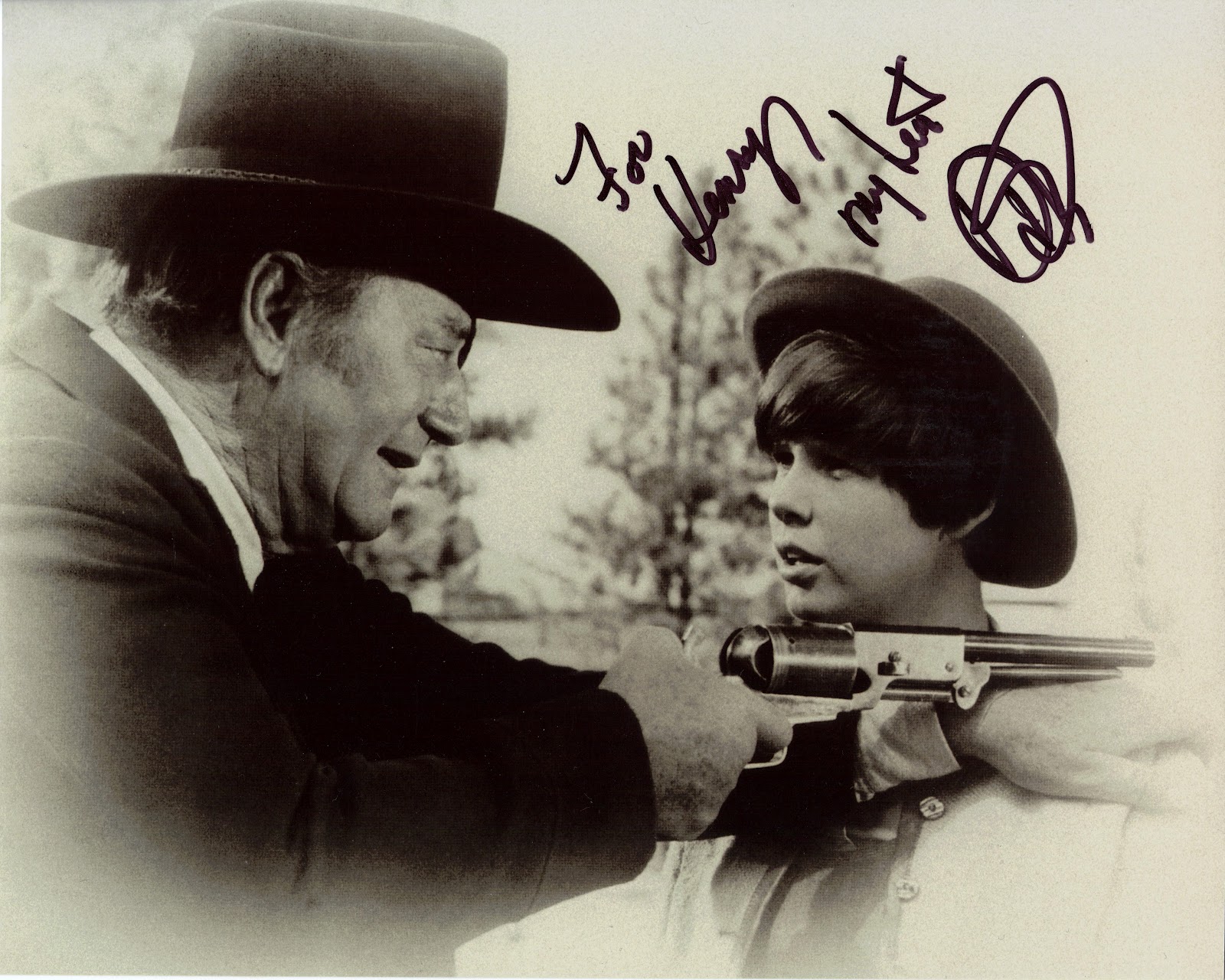
That'll have to do it for this week -- what with getting called for jury duty this week, I'm amazed I got half this much done.  Oh, and let's not forget to wish a happy birthday to an actress who, with a single performance, made a great addition to the Western film, Kim Darby!


Happy Trails,

Henry

All Original Contents Copyright July 2012 by Henry C. Parke -- All Rights Reserved


Sunday, July 1, 2012

HEATHENS AND THIEVES Hit the Screen Today!


HEATHENS AND THIEVES – a film review


I have nothing against big budgets, and I have high hopes for upcoming films like DJANGO UNCHAINED and THE LONE RANGER.  But I’ve noticed over the past couple of years that some of the best Westerns I’ve seen have been made with modest budgets, but a lot of heart, a respect for authenticity, and an understanding of what can be accomplished with the money they’ve got. 


Such a film is HEATHENS AND THIEVES, a noir-ish, suspense Western written by John Douglas Sinclair and co-directed by Sinclair and Megan Peterson.  A pair of men on the run – whether they’ve escaped from prison or simply from enemies is never quite clear – find themselves near a farm, recently bought by a ‘Chinaman,’ where, it is rumored, gold stolen en route to a bank is hidden, perhaps without the Chinaman’s knowledge.  Bill, the more experienced and brash of the two (Richard Doyle), is all for charging in and demanding the gold.  His less violent partner Saul (Andrew Simpson), offers to go in alone, looking for work, to see if he can gain their confidence and locate the treasure.  The man, Zen Hui (Boyuen) is skeptical; his wife, Kun Hai Hui (Gwendoline Yeo) is even more so, but Saul eventually worms his way into their trust. 


But talk has spread about the gold, and that night the most disreputable collection of treasure-hunting scoundrels since THE MALTESE FALCON – bandits, lawmen of various agencies, representatives of the wronged bank – descend upon the farmer, his wife and their tiny baby, and Saul is forced to decide where his loyalties must lie.  With the coming of daylight, many gold-seekers will be disappointed, and many more will be dead. 


Rather than opening up the story, the filmmakers have, after a forest and a saloon scene, isolated the characters at the farm-house, letting the claustrophobia help create the tension as relationships are made and broken.  It’s like THE DESPERATE HOURS if you couldn’t be sure who to root for. 


HEATHENS AND THIEVES is an exciting and satisfying Western suspenser that packs plenty of gunplay, makes excellent use of locations, and has a horse-stampede the likes of which, for sheer numbers, you haven’t seen in years.   Sinclair’s wise script is strong in the plotting, and amusing in subtle ways – like when Saul plays husband versus wife to get hired, and when he’s pleased to maneuver his way into a breakfast invitation, only to find out what they eat for breakfast.  More importantly, the characters are rounded and varied, and like real people, there is more to each of them than meets the eye.  There is not a false note in the entire cast of characters or actors.  Particular standouts are the beautiful Gwendoline Yeo from BROKEN TRAIL; Richard Doyle as Saul’s exuberantly untrustworthy partner; and Andrew Simpson as Saul, an actor with virtually no previous screen credits, who must carry most of the picture, and does so with startling skill. 


And because the villain must be worthy of a hero, special attention must be given to Don Swayze, in the plumb role of Col. Sherman Rutherford, late of the Union Army, currently represented the wounded party, i.e., the bank.  It’s a bravura performance that nears the edge but never goes over-the-top, and because so few bad guys truly know they are bad guys, he is particularly enjoyable trying to justify to himself and others the terrible things he does.  Also noteworthy is Michael Robert Brandon as Moses.  If Sidney Greenstreet made fat sinister, Brandon makes baldness creepy. 


No film is perfect, and here and there are story points that are a bit of a stretch, and there were times when the long night seemed a little too long.  It runs 110 minutes, and might be a little better at 100.  But overall the film is extremely satisfying, and the direction by Sinclair and Peterson is excellent – with nothing to suggest that it was not the work of a single vision.


Of particular note is the cinematography by Pyongson Yim, shooting with a Red 1 camera.  With so much of the story taking place indoors at night, the look is crucial.  The flat and artificial lighting of TV Westerns of the 1960s gave way to the ‘realistic’ but hideously dark lighting of so many later Westerns, where you simply can’t distinguish characters or make out what’s going on.  Yim sometimes leans towards noir-ish shadows, but she always allows enough light to make the scenes understandable.  Without calling attention to itself, much of her composition is original and stunning.  Together with the production design by Kyle Peterson, art direction by Erica Headley and Abigail Potter and costuming by Elaine Montalvo, this films visuals establish a beauty and reality that you accept without question.


And the good news is, you may be able to see HEATHENS AND THIEVES right now.  Starting today, July 1st,  Phase 4 will begin a limited cable VOD release via Cox, Cablevision, Comcast, and Insight, and it will be released much more broadly in November.  And if you’re going to be in Los Angeles on Wednesday, July 11th, you can see it on the big screen, as part of DOWNTOWN FILM FESTIVAL L.A..  It’s showing at 7:30 at Regal Cinemas L.A. Live Stadium, and you can learn more, and buy tickets, here: http://www.tugg.com/events/show/816#.T-dgjHBboX4

Incidentally, I interviewed writer/co-director John Sinclair today, and will be featuring the interview in the Round-up shortly.


STAMPS HONOR GREAT AMERICAN FILM DIRECTORS


With surprisingly little fanfare, on May 23rd, the U.S. Postal Service issued a series of four stamps honoring great American movie directors.  Frank Capra, John Ford, Billy Wilder and John Huston were the very worthy men chosen, and it is a testament to the ‘melting-pot’ theory of American society to note that of the four, only two were born in the United States: John Huston, in Nevada, Missouri; and John Ford in Cape Elizabeth, Maine (why did I think he was born in Ireland?).  Frank Capra was born in Sicily, and Billy Wilder was born in Austria-Hungary (now Poland). 


Though both Capra and Wilder both came to the U.S. speaking little or no English, they both quickly became masters of the American vernacular, and while neither man ever made a Western, their contributions to American film, comedy and drama, cannot be overstated.  John Ford’s contribution to Westerns is legendary, from STAGCOACH to THE SEARCHERS to THE MAN WHO SHOT LIBERTY VALANCE, and so many more.  John Huston’s period and modern Westerns include THE LIFE AND TIMES OF JUDGE ROY BEAN, TREASURE OF THE SIERRA MADRE (writing and directing Oscar), THE MISFITS, THE UNFORGIVEN, and THE RED BADGE OF COURAGE.


Each stamp features a portrait of the filmmaker, and a vignette from one of his most famous works: Ford’s shows John Wayne walking away through the doorway at the end of THE SEARCHERS, Capra’s shows Claudette Colbert teaching Clark Gable how to stop a car without using her thumb from IT HAPPENED ONE NIGHT, Wilder’s features Marilyn Monroe with her ukulele from SOME LIKE IT HOT, and Huston’s shows Humphrey Bogart examining ‘The stuff that dreams are made of,’ from THE MALTESE FALCON.


BUDD BOETTICHER FEST AT UCLA/BILLY WILDER JULY-AUGUST


From July 13th through August 12th, the UCLA Film & Television Archive and the Hugh M. Hefner Classic American Film Program present seven Budd Boetticher double-bills featuring many of his finest Westerns and gangster films.  Prominent are the films from the Ranown cycle, produced by the Randolph Scott and Harry Joe Brown company, starring Scott, and considered by many to be the best series of Westerns ever made.   While much is rightly made of the Boetticher/Scott collaboration, it should be remembered that it was a three-man collaboration: Burt Kennedy, later a successful director in his own right, wrote four of the six screenplays, and they are clearly the strongest films of the group.


‘PETER FORD – A LITTLE PRINCE’ ACADEMY RUN IN NOHO

 Alexander Roman’s fascinating 40 minute documentary about Peter Ford, son of Hollywood stars Glenn Ford and Eleanor Powell, will run at Laemmle 7 North Hollywood from Friday, June 29th thr...ough Thursday July 5th, to qualify for Oscar consideration. Read my write-up of the film here: http://www.henryswesternroundup.blogspot.com/2012/03/national-cowboy-museum-names-wrangler.html Read my review of Peter Ford’s book, GLENN FORD: A LIFE, here: http://henryswesternroundup.blogspot.com/2011/12/bad-blood-spills-in-kentucky.html

The showings are at 12:50 pm every day, the tickets are $8, and on Sat., June 30 and Sunday July 1, Roman and Ford will be present for a Q&A.

DJANGO CLIPS TO PREVIEW AT COMIC-COM


On Saturday night, July 14th, Quentin Tarantino will host a DJANGO UNCHAINED panel in Hall H. There will be clips, and there will be cast members on the panel, but no names have been announced yet!
TV WESTERNS ALL OVER THE DIAL!

More and more, classic TV Westerns are available all over the TV universe, but they tend to be on small networks that are easy to miss. Of course, ENCORE WESTERNSis the best continuous source of such programming, and has been for years. Currently they run LAWMAN, WAGON TRAIN, HAVE GUN WILL TRAVEL, RAWHIDE, GUNSMOKE, THE REBEL, and MARSHALL DILLON, which is the syndication title for the original half-hour GUNSMOKE, and starting Monday they're bringing back BONANZA.

RFD-TV is currently showing THE ROY ROGERS SHOW, first at 9:30 a.m. Sunday, Pacific Time, then repeated several times a week. They show a Roy feature every Tuesday as well, with repeats -- check your local listings.

INSP-TVshows THE BIG VALLEY Monday through Saturday,LITTLE HOUSE ON THE PRAIRIE seven days a week, DR. QUINN: MEDICINE WOMANon weekdays, and BONANZA on Saturdays.


WHT runs DANIEL BOONE on weekdays from 2:00 to 3:00 p.m., Pacific Time. They often show western films on the weekend, but the schedule is sporadic.


TVLAND has dropped GUNSMOKE after all these years, but still shows four episodes of BONANZA every weekday.

For those of you who watch TV with an antenna, there are at least a couple of channels that exist between the standard numbers – largely unavailable on cable or satellite systems – that provide Western fare. ANTENNA TV is currently running RIN TIN TIN, HERE COME THE BRIDES, and IRON HORSE.


THE AUTRY NATIONAL CENTER

Built by cowboy actor, singer, baseball and TV entrepeneur Gene Autry, and designed by the Disney Imagineering team, the Autry is a world-class museum housing a fascinating collection of items related to the fact, fiction, film, history and art of the American West. In addition to their permenant galleries (to which new items are frequently added), they have temporary shows. The Autry has many special programs every week -- sometimes several in a day. To check their daily calendar, CLICK HERE. And they always have gold panning for kids every weekend. For directions, hours, admission prices, and all other information, CLICK HERE.


HOLLYWOOD HERITAGE MUSEUM

Across the street from the Hollywood Bowl, this building, once the headquarters of Lasky-Famous Players (later Paramount Pictures) was the original DeMille Barn, where Cecil B. DeMille made the first Hollywood western, The Squaw Man. They have a permanent display of movie props, documents and other items related to early, especially silent, film production. They also have occasional special programs. 2100 Highland Ave.,L.A. CA 323-874-2276. Thursday – Sunday 12 p.m. to 4 p.m. $5 for adults, $3 for senior, $1 for children.

WELLS FARGO HISTORY MUSEUM

This small but entertaining museum gives a detailed history of Wells Fargo when the name suggested stage-coaches rather than ATMS. There’s a historically accurate reproduction of an agent’s office, an original Concord Coach, and other historical displays. Open Monday through Friday, from 9:00 a.m. to 5:00 a.m. Admission is free. 213-253-7166.333 S. Grand Street,L.A. CA.

TCM FANATIC - WESTERN NOW ONLINE!


That's right, the segment I was interviewed for is now viewable here:


IT'S BEEN AN EXTENDED BIRTHDAY WEEK FOR ME


Here I am, trying to pick up a gal at Knott's Berry Farm


I've managed to stretch my birthday to about two weeks of celebration, between being taken to Knotts, being taken to Glen Campbell at the Hollywood Bowl, with gifts and cake in between.  It's been a largely Roy Rogers-themed time for me, between catching up on several of the RFD episodes, seeing SAN FERNANDO VALLEY at the Andres Pico Adobe (more about that next week), and finally getting to see Roy's last movie, MACINTOSH ANDT.J. (don't know where my wife found that for me!)  Best of all, I've had some time to work on my own screenplays -- I can't leave everything in Tarantino's hands! Hope you're having a great summer!

Happy Trails,

Henry

All Original Contents Copyright July 2012 by Henry C. Parke -- All Rights Reserved