Showing posts sorted by date for query the man who shook the hand review. Sort by relevance Show all posts

Thursday, December 11, 2025

'EASTERN WESTERN' -- INTERVIEW WITH FILMMAKERS THE GROZDANOVA SISTERS, WHO'S TRYING TO SUPPRESS 'YOU'RE NO INDIAN'? PLUS CRAIG JOHNSON ON 'RENDEZVOUS WITH A WRITER'


FROM BULGARIA WITH LOVE – OF THE AMERICAN WEST!

FILMMAKERS BILIANA AND MARINA GROZDANOVA ON EASTERN WESTERN


Eastern Western is a beautiful, inspiring immigrant story, but then, so are the lives of the sisters who made it, Biliana Grozdanova and Marina Grozdanova. Marina elaborates, “We’re from Bulgaria originally. We immigrated when we were very young with our parents, and we lived many, many different places, from Australia to Canada, Spain, and then we finally landed in the U.S. We're based in Brooklyn, New York.” Certainly a journey that might help one appreciate the United States, but why the western part of the country? “The Western, I think was the perfect genre for us to start with because it's a genre in which you can talk a lot about those issues, specifically immigration and coming to new lands.”

Biliana says, “We grew up with the ‘90s Westerns. One of the first films I remember seeing was Dances with Wolves, by Kevin Costner. Then we discovered Clint Eastwood, then we started moving backwards to Sergio Leone and Redford. The Western has been an iconography in our creative process. And as Marina said, it's the perfect genre: to tell a story of coming to America in the Western is as old as cinema. And we found that throughout these films that we love so much, you don't really hear the immigrant's perspective. Specifically the Eastern European journey to America was something that we wanted to tell, in this re-imagining of this man coming to America. The main character, Igor, he's from Bosnia and Herzegovina. So we kind of fused our two paths, from Bulgaria, from Bosnia, and made this imaginary tale.”

In the story, in the late 1800s, we find the recently widowed Igor (Igor Galijasevic), and his 2-year-old son Ivo (Leonardo Galijasevic), in a frozen Montana, trying to survive the winter on their farm, and to make a life for themselves in America. They befriend a horse breeder (Duncan Vezain) and his family, and throw in together. The tale is told chronologically, with some abrupt forward leaps.  

Henry Parke: In making this film, were there any particular filmmakers or films that were key references to you, that influenced you?

Marina Grozdanova: I would say no. I would say going into making this film, I specifically was not thinking of any films, only because when you enter a landscape such as Montana, the landscape itself is what inspires the basis of your story, and then the characters you bring into it. Maybe tangentially the cinematic practice of recent filmmaker Chloe Zhao (note: director of The Rider, Nomadland, Hamnet); she does a lot of non-actor films, and she started off by making non-actor Westerns. And perhaps that was in the back of our minds, but I would say that in making this particular movie, I would like to think that it came purely from our minds and our hearts.


Biliana Grozdanova: I echo what Marina says. We didn't set out to make a movie like any other, but deep down, my personal inspiration does come from Kevin Costner. It does come from Don Quixote, Miguel Cervantes, the first modern novel, Cormac McCarthy's All the Pretty Horses. Just as general inspiration of the myths of the West, I do think influences are in the aura of Eastern Western.

Henry Parke: Your style of filmmaking tends to be very, naturalistic, not heavily plot-driven. I was wondering how you went about writing the screenplay.

Marina Grozdanova: To be perfectly honest, our screenplay was a very, I won't say short or rough, but it was an outline. We had a starting point. We had a midpoint; I would say the end point came after a few weeks of shooting, actually. We did one test shoot, and then we did our first shoot in November of 2022. And in that time period, we had maybe half of the outline of the screenplay thought out. And as we did our first shoot, we made the story as we were getting to know our real characters, our non-actors. Igor and his real-life son are the protagonists of the film. And then we incorporated another real-life Montana family to be featured later on in the film. And so we really allowed the story to mold around them. Therefore, the screenplay started off as an outline, then it developed more in detail as we met new characters throughout the shoots.

Biliana Grozdanova: And to piggyback off of that, we fluctuate between documentary and fiction. We come from a documentary background, and we are really open to -- we say this a lot -- the magic of cinema, where you can write the best script. Of course we love scripted cinema, but always being open to improv and discovering new twists and turns for your story was something that we worked with.

Henry Parke: The first sequence that you shot were the things with Igor and his son alone?

Biliana Grozdanova: Yes. Well, actually the first day of filming was the grizzly bear. We thought, if we can get this top list, we'll be good to go.

Henry Parke: Oh my God! Traditionally in Hollywood, you do that scene last, in case your lead gets eaten by the bear.

Biliana Grozdanova: Exactly.

Henry Parke: So you took a big chance there. Shooting a Western under any circumstances is a challenge, but some of the scenes shot in the snow must have been very challenging.


Leonardo Galijaseviv as Ivo

Biliana Grozdanova: It was. Winter was our probably hardest portion because of the cold. We were working with limited hours of daylight, and as you said, naturalistic is our style. We also don't really light any of our scenes, and heavily rely on daylight and moving with the characters and flowing with the characters. So it was difficult. We were also working with kids and horses and animals, which they tell you not to do, because there are lot of factors there. But the elements in Montana very much dictate your shoot, as well as the baby. The young Evo in the film, Leonardo in real life, we were on his schedule. If he has a nap, we'll film the napping scene. If he's crying, we'll film the crying scene. That, plus winter in a tiny cold cabin, was rough. But I think that those winter images are some of my favorite images of the film.

Henry Parke:  Oh, they're just beautiful. The whole film is beautiful, and I was struck by the fact that your cinematographer and editor are the same guy, Cameron Wheeless, which is very unusual, although maybe that would help with the cutting ratio.

Biliana Grozdanova:  We are a small production team. We never hide that. We are very nimble on set and also in post-production. And it did help. We cut the film along with our cinematographer and editor, the three of us together in a room, making some really hard decisions. A lot of scenes were left on the cutting room floor because of the nature of how we film, the improvt. But it's a special way of working. Maybe we're too close to the material; maybe he's too close to the material because he shot it, but in the end, I think it really worked out having a small team.


Igor Galijaseviv


Henry Parke: Was the epilogue sequence also shot in Montana?

Marina Grozdanova: The epilogue actually is shot in Bosnia and Hetzagovina. That portion of the film came out after we shot everything, and we knew that we were not done yet with the story of this spirit of the horse, of the child that grows up. We knew that there had to be some connection to home and a return to Bosnia. Therefore, we said, let's go to Bosnia. Let's shoot the end of this film and really make it a return to home. And also demonstrate that the 1800s led the way into the 20th century. And we had to also tell the story of the beginning of the 20th century, how the World War really showcased a new use for horses. The horse, as it existed in the Western, now had to go serve and help out the forces in Europe. And we thought that that was something that had to be told to really tell the full story of the horse. And also Igor's homeland Bosnia; you know, Eastern Europe is where everything started for World War I.

Henry Parke: How many shooting days did you have?

Marina Grozdanova: We shot over the course of three different chapters. The winter, then we took eight months off, shot in the summertime. We wanted to showcase the seasons, and then the epilogue was shot in the fall in Bosnia. So we had approximately, gosh, 35 shoot days. Which is probably more than you should have for an indie feature. But we were small and nimble, so we could do that.

Henry Parke: Were you shooting film or digital?

Biliana Grozdanova: Definitely digital. We actually have a great little doc style camera that really did wonders with the style of the film, primarily filmed with one wide angle, prime lens. And really, I think we're able to capture intimacy with the characters because we got so close to them. Our cinematographer got so close to them, and the vastness of Montana, really both of those and the nature in general were captured well with the style that we chose.

Henry Parke: Any favorite memories of the shoot?

Marina Grozdanova: I would say the winter, only because it was the start of the adventure. And the start is always, at least for me, less stressful than the middle, because you don't quite realize the avalanche you're gonna be a part of. And also, I really enjoyed the challenge of filming in the snow. I did sound for about 70% of the movie, and all that snow, right next to our cinematographer. We were running through fields and that was fun.

Marina Grozdanova


Biliana Grozdanova: I would say filming with Adam the Bear, who passed recently. Adam the Bear had a very great life, was part of a sort of animal sanctuary in Montana that was really special. And working with the horses in general, and discovering things that we weren't expecting as part of this magic of cinema. You know, some of the greatest lines in the film are improvised. Like when they're having the dinner conversation, Duncan says, we have to go west. Olivia ends that with, 'you Don't forget family.' That was not scripted. And that was one of my favorite lines of the film. So the, the magic magical moments that we didn't expect are, are some of my favorites.

Henry Parke: Most of the characters use their real first names. I was wondering if that was to loosen them up, with that kind of improvised dialogue?

Biliana Grozdanova: As directors we made that choice to leave their actual names, because each character is a version of themselves 150 years in the past. To a great extent they helped us create those characters. So Igor is Igor in the past. Duncan is Duncan in the past, and the only person who doesn't carry the same name is little Evo, because he grows up and he's played by two different real-life people. Everyone else carries their own names.

Henry Parke: There’s very little music in the film, and  certainly not the sort of sweeping Western kind of score that people tend to expect. What was your intention with your score?

Biliana Grozdanova: Thank you for noticing the music. We really are proud of the choice that we made. Six out of the seven tracks in the film are by a former Yugoslavian artist, Baranko Mathia, who passed in the 2000s. He was an immigrant from former Yugoslavia to the American West, I think California. And he built custom guitars, even for Johnny Cash. He had only two albums, I believe you can find him on Spotify, but it was very unique sound, which kind of fluctuates between the East and the West. It's a little rough and analog-y, and it reminded us of certain tones of the Spaghetti Western. And the fact that he was from Eastern Europe and came to America really fit with the motifs in our film. So that's six of the tracks, and then the seventh track that is during the gun battle is actually a Bulgarian composition. We have polyphonic singers in Bulgaria that are a very special type of niche music. And that's our stamp. The only Bulgarian element in the film, besides us, is that Bulgarian composition during the gun battle.

Henry Parke: Among your previous credits is a documentary about the heavy metal band Hessler.

Marina Grozdanova: It’s called Last Kamikazes of Heavy Metal, which features Igor Galijazavic, the main character of Eastern Western. He had a heavy metal band like 12 years ago in Chicago. We met him, we toured, and it was lovely. We became really good friends and when we started Eastern Western, we knew that we wanted him to play our lead cowboy.

Henry Parke: Does he want to have an acting career now?

Marina Grozdanova: I think he really enjoyed the process, and the fact that we made a film with his son, who is already now two years older. I mean, we work in family obviously, and he really discovered his love for acting since the Kamikaze days, but specifically with Eastern Western. I hope we do get to work together again. And I hope he does get roles because he's really talented.

Henry Parke: Is there anything else that I should know about Eastern Western?


Biliana Grozdanova, right

Biliana Grozdanova: Primarily to say that this film lives in a space between fiction and documentary, and the majority of everyone you see on screen there are non-professional actors. So they really left their souls on our screen and helped us create this truly ensemble cast-based picture. So we're really proud of our cast, and also really thankful for our crew. And we hope to continue making cinema as sisters.Henry Parke: I should say something about how good Duncan, your second male lead, was. He's quite a find.

Biliana Grozdanova: Duncan is an incredible horse wrangler and rancher from Montana. All the horses on screen are Duncan's. That's his family, his wife, his daughters. He has had small roles in other pictures where he's wrangling, and maybe delivers a few lines but I know that this is his biggest role yet, and he really did an incredible job and we loved having cast him.

Marina Grozdanova: And I just want to add one last thing. Thank you so much, Henry, for this interview. As independent filmmakers, I think for all of us, other filmmakers besides us, it's a really tough moment. And I think through articles such as this, and press, l think that audiences should support independent cinema and I really hope we're moving in that direction.

Henry Parke: I sure hope so. It was a real pleasure to speak to you both and, and to see your film and I wish you all kinds of luck with it.


WHO DOESN’T WANT YOU TO SEE ‘YOU’RE NO INDIAN’?


If you’ve read my article, A Century of Tribal Disenrollment, in the September/October 2025 issue of True West – and if haven’t, HERE is the link – you’ll know that documentarian Ryan Flynn has made a fascinating and infuriating film, You’re No Indian. It reveals an insidious form of ‘cancel culture’: the widespread practice, especially among tribes which own casinos, of disenrolling members without legitimate cause, for the purpose of increasing the casino share among those remaining. About 11,000 members have been disenrolled from various tribes.

When I spoke to Ryan on Wednesday, December 10th, he was just back from The Anchorage International Film Festival. “We had a sold-out crowd (of) about 250 people. You could feel it in the audience watching the film; they were moved. The Q and A was powerful. It was interesting; about an hour before the screening, the Film Festival received a ‘cease and desist’ from the lawyers representing Macarro.”

Mark Macarro is the Chairman of the Pechanga Band of Indians. “He's the president of the NCAI (National Congress of American Indians). He was just reelected.” As an Indigenous leader, he’s been a familiar face on television and in the news for decades. And unlike You’re No Indian Executive Producers Wes Studi and Tantoo Cardinal – Cardinal narrates the documentary – Macarro does not want you to see it.

At least they weren’t able to stop the screening. Earlier in the year, You’re No Indian was to premiere at the Palm Springs International Film Festival. “We had sold out two screenings, and we were working on our third, and just weeks before this major film festival, they said there was a scheduling issue. And basically said, there's nothing you can say to get this film screened.

I am not going to accuse anybody of doing it, but it's not hard to think that this is part of an effort to silence us.”

You’re No Indian has since played in several film festivals. At the Red Nation International Film Festival in Hollywood, “we received the Impact Award.” And in November, they received something else. As Flynn emailed supporters, “On November 24, we received a cease-and-desist letter from attorneys representing the Pechanga Band of Indians and Chairman Mark Macarro. The letter demands that all screenings and distribution of the film be stopped, citing concerns about research and representation.” The irony is that, not only did Flynn and company reach out to Macarro during the making of the film “multiple times. We've documented every instance because we thought reaching out to him might be a part of the film. We have ourselves on camera trying to call him, emailing him, texting him.  In the film, in its current form, we say that Mark didn't respond. At an NCAI conference a couple years ago, I introduced myself, shook his hand, and he invited us to give him a call. And we did. He didn't respond. Well, he did respond <laugh>: we got a cease and desist.”

When I suggested that, at any rate, a response two years later would be useless, Flynn responded, “I disagree. Responding now, it's still useful. (If Macarro would do an interview), we will include his perspective in the film, and as I've said, we will release the entire interview, our conversation uncut, so that everybody can see exactly what the conversation was. And I think that's fair.”

“You know, this is not about Mark Macarro, or the Pechanga tribe. This is about raising awareness for disenrollment, and part of that conversation is, what are we here to protect? What are we fighting for? We're fighting for the preservation of what disenrollment claims to protect, which is culture.”

Please check out the trailer below. To find out where you can see You’re No Indian, visit the official website HERE


CRAIG JOHNSON ON 'RENDEZVOUS WITH A WRITER' PODCAST!


I join Bobbi Jean and Jim Bell on the first Thursday of every month for their Rendezvous With a Writer podcast, and this month we had the great pleasure of speaking with Craig Johnson about his newest Longmire novel, Return to Sender. I'm giving you a choice of links below, depending on whether you just want to hear our voices, or prefer to stare at our happy smiling faces (previewed above).

VIDEO -- RENDEZVOUS WITH A WRITER

https://www.latalkradio.com/sites/default/files/Videos/Rendezvous-120425.mp4

AUDIO -- RENDEZVOUS WITH A WRITER


ONE MORE THING...

HOW COOL IS THIS! INSP has created an author page for me, linking to a bunch of my articles! https://www.insp.com/authors/henry-c-parke/


They’ve even created a Henry Parke avatar, which will never change, even if I go all Dorian Gray!


And please check out the November/December 2025 True West, featuring my article, Val Kilmer in His Cups, about the making of Tombstone from the perspective of costume designer Joseph Porro, and my review of the new Blu-Ray release, Hopalong Cassidy, the Legacy Collection, Vol. 1.

AND THAT'S A WRAP!


Have a very Merry Christmas, Hanukkah, or whatever you celebrate! And wishing you a very Happy New Year!

Henry

All Original Contents Copyright December 2025 by Henry C. Parke - All Rights Reserved


Friday, June 5, 2020

‘WARRANT’ STAR NEAL MCDONOUGH INTERVIEW, SCORSESE WESTERN FINDS NEW HOME, ‘GUNSMOKE’ 20-SEASON SET, TOUR THE ‘RED RYDER’ MUSEUM, AND MORE!


SCORSESE’S ‘KILLERS OF THE FLOWER MOON’ BITES THE APPLE!


Martin Scorsese is no stranger to making Westerns – back in 1998 he produced the Stephen Frears-directed film of Max Evans’ The Hi-Lo Country.   But he’s finally set to direct his first Western, based on David Grann’s book, Killers of the Flower Moon: The Osage Murders and the Birth of the F.B.I.  It’s non-fiction, set in the 1920s, and centers around a series of mysterious killing of Osage tribe members. 


Marty & Leo in the library (with a candlestick)

Set to star Leonardo Di Caprio and Robert DeNiro, the book was the center of a bidding war, and when the dust cleared, Grann had pocketed $5 million, and the deal was set up at Paramount.  But word is that when Marty and Leo came back with a new draft that that had Leo switch characters, from a hero to, to put it kindly, an anti-hero, Paramount froze: this is what they’ve committed $180 million to?  The word went out that they wanted to spread the risk by taking on a partner, and now Apple as stepped up.  Apple will make the film, and Paramount will handle the worldwide distribution.  By the way, Scorsese has another film planned that will also be of interest to Western fans: a biopic of Teddy Roosevelt, starring Leo Di Caprio.

I UNBOX THE ENTIRE RUN OF ‘GUNSMOKE’ IN ONE SET!


As you collectors know, CBS and Paramount have been putting out DVD sets of Gunsmoke, season by season, for about fourteen years.  They just released the final one, season twenty, and they’ve issued a giant mega set -- easily the biggest Western series set ever, with all twenty seasons of Gunsmoke!  That’s 143 disks!   They sent it to me, and all they asked in return is that I binge-watch them!  Thankfully they haven’t given me a deadline, but I’ve promised to watch them all, and post about them as I go along. 


And I decided to begin by making an unboxing video of myself checking it out – unboxing videos have been dominated by little kids opening toys, and nerds unwrapping phones long enough!

AIN’T YOU COMIN’ BACK, RED RYDER? A VISIT TO THE FRED HARMAN ART MUSEUM


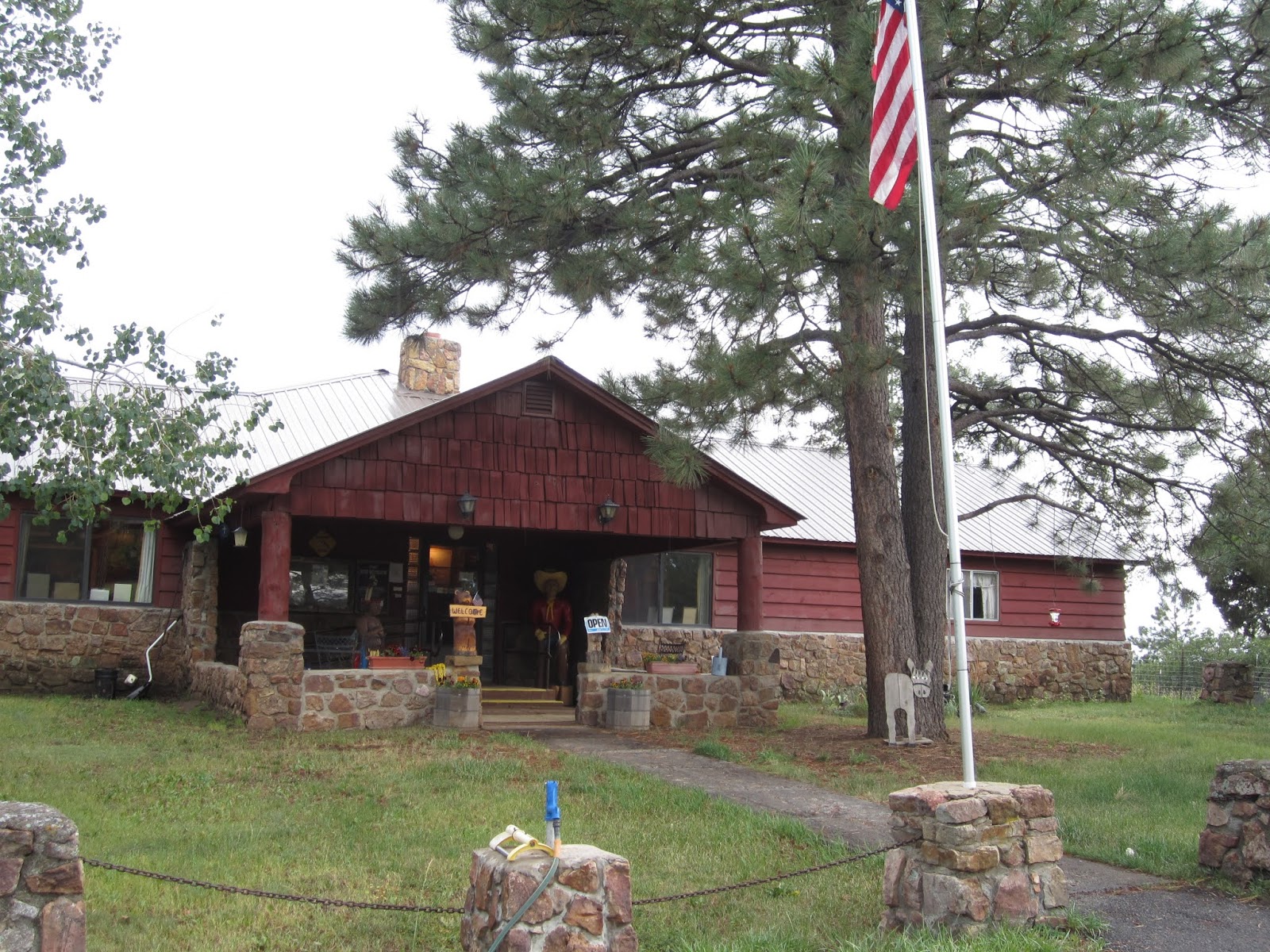
Since hardly any of us are going anywhere lately, wouldn’t it be nice to take a little trip?  How about a stroll through The Fred Harman Art Museum in Pagosa Springs, Colorado?  Frankly, this article has been delayed for years.  


Back in 2014, my daughter and her now husband were in Pagosa Springs, where they visited the museum of Fred Harman, the cowboy-turned self-trained western painter, who reached his greatest fame writing and drawing the hugely popular comic strip, The Adventures of Red Ryder, which featured not only Red, but his Navajo sidekick, Little Beaver. 


Red Ryder...


...and Little Beaver welcome you!

Knowing it would make a good piece for The Round-up, Sabrina took all of the photos you see, and brought me back a Red Ryder t-shirt as well.  The timing was perfect – I had just read a new book on the history of Red Ryder, and would run the review and the photo-tour together.  Then the publisher pulled the book – some problem with Red Ryder Enterprises Inc., who owns the rights to the character.  So I cancelled the review, postponed the article, and forgot about it, until a week ago, when I found the pictures again, and thought this would be a perfect time to run them.   


Artist's studio


Another view

But when I Googled the Museum, to make sure I had the address and hours correct, I was shocked to find this notice: Permanently Closed.  Was it a Coronavirus matter, or was it really closed? I knew that Fred Harman, a founder of The Cowboy Artists of America, had died at age 79 in 1982, and his son, Fred Harman III ran the Museum with his wife, Norma.  


The Dutchess was the third major character in the strip.

I got the full story from Bill Hudson, editor of the Pagosa Daily Post, an online community magazine. “Fred and Norma had been running the museum in memory of his dad. (They) were struggling to keep it financially viable, because those of us who remember Red Ryder are fewer and fewer. Fred passed away a few years ago, and Norma passed in 2019. Shortly after Norma passed away, the house-and-museum were sold to the Archuleta County government, and they’re currently in the midst of building a justice center that is not fully funded yet.”


The Ranch in its glory days!


If you look close, you can spot the screen's first Red, Don 'Red' Barry, 'Wild 
Bill' Elliot, and Bobby Blake as Little Beaver.
Norma had donated five adjacent acres of land for the justice center project, which was expected to include a jail, Sheriff’s office and courthouse, with the understanding that the project will be called The Fred Harman III Law Enforcement Center, in honor of her husband, who was very involved in volunteering and fundraising for the Sheriffs department.


What most people know of Red Ryder today:
"You'll shoot your eye out!"


Zoom in close to see hundreds of
beautifully drawn horses.

Bill Hudson remembers that in the Museum, a replica of Fred Harman’s art studio had been built. “It had his drawing table and his inks, set out as if he had just left the room.”  When the Sheriffs Office opens, somewhere inside, available to the public, will be a room, about 16’ by 30’, which will be that studio, holding a mini-museum of the art of Fred Harman.  When I first reached Bill, I suggested wistfully that my travel piece had become an obituary.  He thought, perhaps not.  “Maybe it's just a downsizing.” 


In addition to the photos, I’m including a 5-minute video tour of The Fred Harman Art Museum, and a link to the still-standing Museum website.  Enjoy, but don’t try to order anything, because I don’t think anyone’s monitoring the site. 


NEAL MCDONOUGH SERVES ‘THE WARRANT’


On Saturday, June 20th, the INSP network will premiere their newest original Western movie, The Warrant.  During the Civil War, Union soldiers John Breaker (Neal McDonough) and Virgil a.k.a. The Saint (Casper Van Dien) are friends, both fighting with their sons by their sides. Breaker, a lawman in civilian life, is tough as nails, but would rather wound an enemy than kill him. The Saint has an abiding hatred for Southerners, who he considers traitors: he’d rather kill an enemy, and is not above going through the corpse’s pockets.  When The Saint’s son is killed by a Rebel’s bullet, The Saint deserts, looking for revenge.

Four years after the war’s end, Breaker is a town Sheriff, and his son Cal (Steven R. McQueen), now a Federal Marshal, is on The Saint’s trail: leading a small but vicious pack, The Saint’s depredations against reconstructing Southerners are so brutal that unnamed men have placed a price on The Saint’s head, and the woods are full of dangerous bounty hunters. As John has no legal authority outside his town, son Cal deputizes his father – awkward! – to help bring The Saint to trial before the bounty hunters can shoot him down.

Writer Shea Sizemore, and director and cinematographer Brent Cristy are clearly aware that some story elements are well-traveled ground, and have found clever ways to vary them and make them fresh. There’s many a Western about a Confederate who won’t accept defeat, and keeps fighting a finished war, but a Northerner who can’t accept his victory is new. The fact that so much trouble comes out of John Breaker’s kindness, is original. As he says, “When you show a man mercy, he becomes your responsibility.”

One of the most intriguing surprises is the casting of the protagonists: from Justified to Yellowstone, Neal McDonough has made his mark as icy, heartless villains. Here he is the hero, and a deeply moral man. Casper Van Dien has long been the hero, from Starship Troopers  to Tarzan and the Lost City, but here he’s the sinister Saint. He’s a bad man, but not totally lacking in humanity, and his portrayal of a father who’s just lost his son is startling raw and moving.

I had the pleasure of interviewing both stars, Neal McDonough, and Casper Van Dien, about this movie, and about their other films, especially Westerns.  Here is my interview with Neal; my interview with Casper will be in the very next Round-up.

When I spoke to Neal, it was April 22nd, more than a month into our quarantine, mine in Los Angeles, his in Vancouver, B.C., Canada.  We started out discussing the weather, which had been good in both places.

NEAL MCDONOUGH: It's been blue skies and 55 degrees every day. It's been just dry and beautiful. And then today, rain.

HENRY PARKE: Are you in Vancouver to film something?

NEAL MCDONOUGH: Well, no.  My wife, Ruve, and I for years were trying to figure out a way how to get out of Los Angeles, because it was a difficult place to bring up five children on so many levels. Just the sheer amount of people, just getting through the traffic, getting to any practices or games or school. That was challenge enough. But I also wanted it a little more like how I grew up, back in the 70s; a more wholesome, less distractions type of place. We live 40 minutes south of Vancouver, right on the ocean. And it's just beautiful. It's a small town; feels like small town America. Small town Canada. It's nice people, earnest people here in Canada. I really enjoy it up here.  The other reason is there's so much darn work up here. I was brought up here by Greg Berlanti to do Arrow. And then Arrow turned to Legends, and Legends turned to The Flash, and Flash led to five other television series: Rogue to Van Helsing, to Altered Carbon to Project Blue Book to The 100, and a couple of movies. So it's been a very busy four years since I've been up here, and it's been a blessing upon blessing.

HENRY PARKE: Now I've been enjoying your work since way before Minority Report. And I go in expecting to be scared and unnerved by you. You scared the heck out of me in Justified.  


Neal in Justified

NEAL MCDONOUGH: Two years before that, I was fired from a show, for not doing a sex scene. They knew I wouldn't do it; it was in my contract that I wouldn't. And finally they say, if you can't do it we're going to fire you. I said I'm not going to do it, so go ahead. So they fired me, and for about two years I couldn't get a job. (Editor’s note: the ABC comedy/drama Scoundrels lasted eight episodes.) It was a really hard time for us. We lost our house, we lost cars, we lost all the material things that we thought were really important.  I thought, I don't know how are we going to get through this. I prayed so hard, and all of a sudden the phone rang. And it was (Writer/Producer) Graham Yost. And Graham said, "Hey, you want to be the bad guy for a couple episodes on Justified? I said, “Yeah, absolutely!” And it was my comeback. It was like my shot at the title again, and I was so revved up to crush this role that literally, after the first take of the first scene, Graham says, “I think you're going to be around for the rest of the season.” I'm like, good: that was my plan.  (Previously) Graham has written for me, for Boomtown and Band of Brothers, them to Justified.  He knows how to write to my strengths, and we just had a heck of a time. It's when I fell in love with acting again. You take a lot of things for granted in life, and sometimes you need a good swift kick in the butt to make you realize, Hey buddy, you got it good. Don't take it for granted. And the ten years since I was in Justified, (my) career has been so fantastic. God has given me so much. I wouldn't be speaking to you right now if it wasn't for Graham Yost and Justified.

HENRY PARKE:  I've got to say how much I enjoyed you in Yellowstone.

NEAL MCDONOUGH:  Paramount submitted me for the best supporting actor Emmy Award, which was pretty flattering. I don't do this for awards; I do this to entertain people. But every once in a while, it sure is nice when someone says, hey, you did a really great job; I want people to notice that. I was blessed that God gave me a great talent; God gives us all talents and sometimes we don't find them; sometimes we don't look hard enough. But just because you get that cool talent, that doesn't make you special.  You have to work hard at being a great human being. I was blessed to find out early that I was really good at getting in front of people and making them laugh or cry or make them angry or in some instances make them really frightened.

HENRY PARKE:  Speaking of making people really frightened, which you're really good at, after so many heavies, what's it like to play a hero in The Warrant?

NEAL MCDONOUGH:  I’ve got to tell you, when they sent the script to The Warrant, my agents -- I don't want to say passed on it -- but they said this is a really independent small film, and I'm not sure it's the right thing for you. I said, just let me read it. And after two pages I'm like, are you kidding me? Did you guys read this? This is gold! You know, the reason I play so many villains is because I won't do sex scenes. So, I have to figure out ways to keep working, to make money for my family. So when I have an opportunity to play a good guy who doesn't have to have those types of scenes, that doesn't happen often, because usually you're kissing a woman or you're doing whatever, and I'll only kiss one woman; that's my wife Ruve, and that's it.  So when I read the script, I was like, this is literally another gift from God, because this is the character that I always love playing. Like from Tin Men or Band of Brothers, those heroic guys that are tough as nails, but that also have their heart on their sleeves and are driven for the good. But that don't mind getting their hands dirty, to do a few things to get the law correct. To play this character, John Breaker, it’s right up my alley. I'm playing my dad, and it's such an honor for me to do that. And the people at INSP, (Senior VP of Programming) Doug Butts and (Senior VP of Original movies) Gary Wheeler and everybody else, these guys have been so good to me.  Gary was telling me the other day that The Warrant was (number one) watched new Western for six weeks in a row on Amazon, and at Walmart we sold out: they have to keep restocking it. I had no idea this would be successful for INSP. But I love what INSP does. They're faith friendly. They're telling stories of heroes, and in a time where people generally don't do stories about heroes anymore. There aren't many films you get to sit and watch with the whole family. I had the five kids about a week ago and I said, all right guys, let's sit down and let's watch The Warrant. And they didn't get up for a bathroom break once! I love, love, love The Warrant. I want to do part two, part three, part four, and part five!


Gregory Cruz, Neal, Annabeth Gish

HENRY PARKE: You said you were playing your father. In what sense?

NEAL MCDONOUGH:  My father was a Sergeant in the Army; came over from Ireland.  Immediately landed in Boston, walked into the Army office and said, "Make me an American." They said, "Okay, we'll ship you overseas for five years." That's fine. When he came back, my dad was a very driven, hardworking, do-the-right-thing kind of man. And he instilled that into all of us, I being the youngest of six. My dad my mom really (taught) me what was right and what was wrong and, my relationship with God. I was really fortunate to have my dad be such an integral part of my life. And this last couple of years I did Project Blue Book; there I am dressed up in military outfits and looking just like my father, and trying to tap into my dad. John Breaker is very much like my and like myself. So it was kind of easy for me to play Breaker.

HENRY PARKE:  Is The Warrant your first period Western?

NEAL MCDONOUGH: It is my first period Western. I always wanted to do one. I did the mini series for Syfi called Tin Man, which was kind of a Scifl take on the Wizard of Oz, with Zoe Deschanel and Alan Cumming. I play the Tin Man (in) cowboy hat, duster, six-shooter. A law enforcement man back in the late 1800s was the take on my character. It was a lot of fun to play that guy. But an actual, true Western? This is the first one I've ever done, and boy, I can't wait to get back in the saddle again and do it again.


From Tin Man, Alan Cumming, Raoul Max Trujillo, Neal
as Tin Man, aka Wyatt Cain

HENRY PARKE:  Did you grow up with Westerns?

NEAL MCDONOUGH: My favorite as a kid was The Rifleman. I couldn't get enough of it. I loved that and The Big Valley. My brothers loved Big Valley and I would watch it with them. And anything that John Wayne did, from The Cowboys to The Shootist; the movies that were later in his career, those were the John Wayne films that I cut my teeth on. I love watching INSP because they've always had The Big Valley.

HENRY PARKE:  As a kid, do you identify with a particular brother on The Big Valley?

NEAL MCDONOUGH:  Lee Majors to me was just like the coolest cat. My brothers were always, "I'm Heath," or "I'm Nick," For me it was more like, wow, those guys are just the dudes, more that than me trying to be any of them, because my older brothers say, no, no, no. We're these guys: you're too young. And they were right. My brother John says the reason I'm so successful as an actor is I get to steal from my brothers and my sister all the time, and he is absolutely spot on: the music I listened to was the music they listened to, the shows that I gravitated towards were the shows that they watched.  The Rifleman and My Three Sons or The Big Valley -- those are the ones I want to make. And I think that Hollywood has really gotten away from making those kinds of shows because everybody wants to see crazy, on your edge, dark stuff. That's the landscape of television nowadays. And it's really too bad. I mean, when I was a kid, Sunday nights, the whole family, we'd sit around and watch The Wonderful World of Disney. They don't have that anymore.   You know, for the last five weeks of this quarantine, my wife Ruve has been unbelievable in so many ways.  When six o'clock comes, she's sitting us down around the TV and we're all gonna watch a family movie. And we've watched a family movie every single night for the last five weeks. And it's been kind of awesome. What's going on (Covid-19) is heartbreaking. But again, with every curse, you've to find the blessing and the blessing in this is that Ruve and I've gotten to spend an extraordinary amount of time home with our children.  We're hunkered down here at home, and it's great for networks like INSP to be there for us.

HENRY PARKE: Doing a period story does have its own challenges. Were there any surprises for you?

NEAL MCDONOUGH:  I didn't realize I was that good with a Winchester. (Laughs) No, I'm kidding. But it was fun. They said, what (kind of gun) do you want? I'm like, The Rifleman's my favorite show of all time. You’ve got to get me a Winchester. That one shot where I take off on the horse, I crank it with one hand, like Rooster Cogburn, I'm firing a guy off the roof. You know, just to be on a horse, firing that Winchester! I knew I was going to enjoy it. I didn't realize I'd enjoy it that much, being on a horse and filming. My dad grew up with horses in Ireland.  On Sundays, after church, we'd go down to a place called Milford Farms. And as a young boy I'd be riding the smaller horses. My brothers would ride the bigger horses, but there I was pretending that I was John Wayne, riding around on my little pony, and it was so much fun. I'm not sure if anything really surprised me so much, except that I didn't realize how much I loved playing the good guy. I want to keep doing those, because when my family is sitting around watching movies, I want them to be able to watch my movies.  A lot of the things that I do, they can't really see, but this they can, or a Project Blue Book, the kinds of characters I'm doing now.  And I love that. I really do.

HENRY PARKE:  In The Warrant, do you have a particular favorite scene or moment?

NEAL MCDONOUGH:  I really like anything I do with Greg (Gregory Cruz), who played Bugle. We just had a ball.  He's such a talented actor and he's such a great guy; to have him as my sidekick -- or me as his, like sometimes it felt like in the scenes -- was great.  Originally the beginning of the film was supposed to be my voice doing the voiceover; talking about my daddy and the war and blah blah blah. And I told (Producer) Gary Wheeler, I think it might work better if Greg’s character, Bugle, does the voiceover. He's got that great voice, and it just seems more heroic opening it that way, instead of me kind of talking over myself.  And it works so well;, he's so dialed in, and he's great on a horse, great with weapons, and his comic timing. I love the fight scenes. I loved riding the horses. I love the scenes with Steven McQueen, talking about life when we're holed up in that barn and then coming up firing. I love the action of that. That to me, harkens back to this great old Western sense of alright, it's you and me against a bunch of people who've got a lot more guns and ammunition than we do, but what the heck? We'll just go for it. And boy, that was just fun to play.

HENRY PARKE:  One thing I found a really clever touch was that Stephen McQueen is playing your son, but you’re a sheriff, he’s a Federal Marshall, so for this particular job, he's your superior.

NEAL MCDONOUGH: That was a great moment. It wasn't the situation between me and Steven that made it so funny. It was the look on Greg's face that made it so funny. Again, you have that sidekick to work the humor; you need to infuse humor into these movies or else it just becomes kind of dry and forced. But that levity allows the drama to be that much higher staked.  Brent Christy did a fantastic job directing, with the time that we had to do it, which wasn't a ton of time. We went so fast, but he wouldn't go to the next scene until he got exactly what he wanted. Luckily with Greg and myself and Steven, we were so prepared that a lot of times it's the first take.  

HENRY PARKE: Casper van Dien –


Neal with Casper


NEAL MCDONOUGH:  What a performance he did!  We were talking about (casting) the bad guy, and (Producer) Gary Wheeler mentioned what about Casper? I knew he was such a great actor but I hadn't seen Casper in a while. And he's aged so well; he's such a striking-looking guy, that to have him play the villain, when you’ve seen him playing the good guys for so long.  It was such a breath of fresh air. And from the first time we shook hands, there was a bond s between the two of us.  It was interesting because this wasn't a film about the stereotypical good guy, stereotypical bad guy. These guys were kind of friends, and what he did was kind of justified because he was there to revenge the death of his son. But then he goes off the rails.

HENRY PARKE: If you'd been offered the role of The Saint instead of Breaker, if you guys traded roles, would you do it?

NEAL MCDONOUGH: Absolutely. The last 10, 15 years I've played so many villains that The Saint would have been easy. It's a lot harder for me to play Breaker because I had to tap into me. When I play villains, it's tapping into, okay, what's a fun thing here to scare people, and what's a moment that I can lift that eyebrow at the right time?  But you don't have those bags of tricks when you're the good guy; it's your heart on your sleeve, and you're just letting it out. It’s, well what's my life really about? Am I doing the right thing? If I go out and get shot and killed, what happens to my son and my wife?  There's a lot more at stake for the good guy, because the bad guy, if you shoot me, it's all over. What the heck: I'm going down with guns blazing.  It's not the same thing as a good guy. Ruve and I met the very first day doing Band of Brothers. I was at home with my work every night, not just reading the lines, but living the character as the method actor that I am. After two to three months of dating, she's like, look: when you're done with work, you've got to punch that card and (be) done until you punch in the next day. Because if you're going to be like this 24 – 7, you're going to drive yourself, myself and everybody else nuts.  I thought, are you crazy? I'm a method actor! But that may have been the greatest acting lesson I've ever had in my life. Because if you're not enjoying your life and living your life, you can't draw from anything.


HENRY PARKE:  Are there any particular memories or anything funny that happened on the set?

NEAL MCDONOUGH:  They said, we need to get someone for The Saint's son. My nephew Michael, had just graduated from college and is very artistic but also very athletic. I called Mike, I said, put yourself on tape, read the lines, and send them to me. I sent it to the producer, who said, wow, he did really good. And yes, he doesn't do much; he says a line and just gets shot.  But he has such an expressive face, and it really worked.  And my brother Bob came down, and we're all there to see him do what he did. Because it's hard for me to be away for five or six days. I'd fly back, be home in Vancouver for seven or eight hours, and fly back to Atlanta. When I'm away from Ruve and the kids, it really takes a toll on me. If it weren't for my brother Bob being there and my nephew Michael, it probably would've been a little bit more of The Saint in my performance than it would have been Breaker.

...AND THAT'S A WRAP!


If you haven't yet, please check out the June 2020 True West, which features my article celebrating Clayton Moore, and the 70th anniversary of the first Western TV series, The Lone Ranger! 

Hiyo-Silver, Away!
Henry

All Original Contents Copyright June 2020 by Henry C. Parke -- All Rights Reserved