Showing posts sorted by date for query copperhead review. Sort by relevance Show all posts

Tuesday, August 20, 2019

‘TURQUOISE FEVER’ PREMIERE, PLUS ‘MORRICONE IN HIS OWN WORDS’, LONE RANGER 75TH ANNI., NEW FOX WESTERN SERIES, ‘OLD TOWN ROAD’, AND MORE!


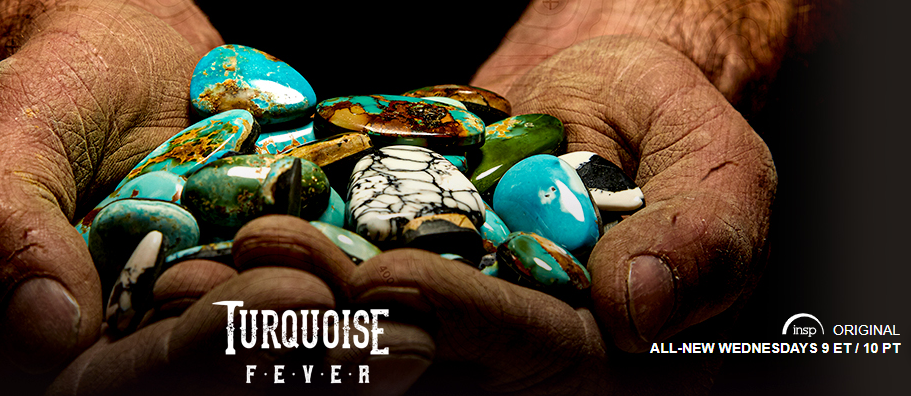
TURQUOISE FEVER premiered on the INSP network this past Wednesday. The weekly reality series follows the fortunes and follies of the Nevada-based turquoise-mining Otteson clan. The first show was about trying to satisfy the blue-stone needs of a big-time buyer and jewelry designer from Japan, who is very influential in the jewelry markets throughout Asia.  If you missed this one, don’t worry, because there will be other chances. Besides, in a way, episode 2, which airs this Wednesday night, August 21st, is just as good a place to start, as it really focuses on the family, and how the Ottesons became a ‘Blue Gold’ powerhouse.

It all started in 1958, when the family moved en masse from Colorado to Nevada, and patriarch Lynn Otteson staked his first claim. His sons Dean, Danny and Tommy worked with him, and soon there were wives and sons and in-laws in the mix.  Dean would become the patriarch, and during this show’s six-year gestation period, he would pass away, pledging his brothers not only to continue mining, but to take care of his widow, and family matriarch, Donna.

Last week I had the opportunity to discuss the show with one of the younger members of the Otteson turquoise-mining family, Danny’s 22-year-old son, and already a veteran miner, Tristan. He’s both the historian and scientist of the family, and he started out by giving me a verbal sketch of the history of turquoise mining, and the Otteson’s involvement with it.


Tristan: Turquoise in the southwestern United States has been mined since way before any white people got here. The Native American mines in the New Mexico region of Cerrillos are some of the oldest turquoise mines in the entire world. But as for the Ottesons, we got into the mining business about three generations before me. Grandpa Lynn's father, Christian Vern Otteson, had worked a little bit at the Lick Skillet Mine in, Manassa, Colorado in the very early 20th Century. He fought in World War I, and passed away when my grandpa was only three years old. With their father gone, my grandpa would work all sorts of jobs to support his family. His uncle Pete King owned Lick Skillet Mine and (Lynn), worked there. Then, when he was about 18, Pete told him to come out and mine one of his claims in Nevada, the Cloverdale, Nevada Blue Gem Mine; it's now called the Easter Blue Mine, and we mine it still. This was around the mid-1940s, and he really started to fall in love with turquoise.  So he moved his very young family from Colorado straight out to Nevada. I think it was 1958 that they moved out to Nevada permanently. They lived in Haybag Johnson's chicken coop, and from there my grandpa was able to work various mines around Cloverdale. Finally my grandpa was able to put a four-year lease on Lone Mountain Turquoise Mine, which is one of the most famous turquoise mines in the entire world today.

They barely scraped up enough money to get a little tiny mixer, that he would haul all the way out to that mine. They’d bring water in big metal milk containers, and they had this little tub that was about three-foot-wide, that the family would bathe in, and they’d run the dumps that the other miners had mined out. And when they could fill the bottom of that tub full of turquoise nuggets, they’d load everybody up, drive down to New Mexico to sell it to the Zunis. And not only for money. They would trade it for clothes, groceries, saddles, guns, blankets, anything they could get of value. My grandma would always tell my grandpa, “You can't eat a saddle. Come back with money or food.’ Sometimes they were able to sell a whole bunch of nuggets, and put $3000 or $4,000 in their pocket.  Sometimes they only came back with a saddle or two or a blanket.”

From there, my grandpa was able to build up his own operation. He got in with a whole lot of different people over the years where they would front equipment, and he had the mining knowledge. It never seemed like my grandpa got a fair shake out of those deals, but eventually he traded a silver claim he had in eastern Nevada for the Pilot Mountain Turquoise Mines.


Tristan Otteson

.
Henry: Have you ever considered a profession other than turquoise mining?

Tristan:  Personally? I really haven't. In high school, we all dream of being a different thing. But when it came down to it, I had gone out to the turquoise mines with my dad, my older brothers, since I was real little and I couldn't really imagine doing anything else.

Henry: Except for the DeBeers diamond family in South Africa, I can't think of another family that has so dominated the mining of a single mineral.

Tristan:  You can see them literally everywhere. The Royston Turquoise, that's one of the world-famous mines that we mined. Just recently there was a story on Jason Mamoa, Aquaman. He came out with a big Indian squash necklace, and said he felt like the native American, Mr. T. That was Royston Turquoise in that squash.


Fire in the hole!


Henry: I know there're many different grades and types of turquoise.  Can you give me a sense of the range of value?

Tristan:  We generally sell our turquoise by carat weight.  To put it in perspective, gold's at $1400 per ounce, right around eight or $9 a carat. Our turquoise ranges anywhere from one to $2 a carat for the not as rare stuff, all the way up to $80 to $100 per carat for really special stuff. So turquoise it can be worth 10 times its weight in gold.

Henry: Do you ever have trouble with claim jumpers?

Tristan:  Yuh. Over the years, there's been a lot of times when people come out on our claims, and try to scoop up the vein you're digging on. And with the way the turquoise is, if you don't know how to get it out of the ground, if you see a vein sticking out of the wall and try to go at it with a hammer, you're just going to destroy it. We've had it where you show up to work the next day and your vein is just a whole bunch of chips on the ground.

Henry: Of course, it's not like gold; you can't reform it. It's just gone.

Tristan:  Exactly it. They could have just destroyed a $40,000 pocket of Turquoise and not even know it.

Henry:  I was fascinated to learn how popular turquoise is in Asia. How much of the turquoise business is outside of the U.S., and what other countries are involved?


Donna shows a buyer from Japan their best stones.


Tristan:  In the United States, they want the unique stone. But in other countries, that hasn't caught on except for Japan, that romanticizes Native American jewelry. In other countries, straight blue stones is what they look for. So there's huge turquoise mines in China, over in Egypt, and in Iran. It's kind of a pattern; the high desert places around the world all have turquoise mines. They call it Persian turquoise and Egyptian turquoise; it's really beautiful stuff, along with the Chinese. And they more or less dominate the markets outside of the United States, except for those like the Japanese market that focuses on Native American jewelry.

Henry: When you're prospecting for gold, you look for quartz because they're found together. What sort of indicators do you have when you're looking for Turquoise?

Tristan:  There's two different kinds of formations. What you’re looking for is mineralized ground with iron outcroppings or a black chert (note: chert is a hard, fine-grained sedimentary rock composed of quartz crystals).  And there’s a kind of a tan rock, dominated mostly by quartz, but not the kind of crystal quartz that you think of. My dad has walked literally thousands of miles, prospecting for turquoise, and tried to teach me and Lane how to read the differences in the minerals.
Henry: What is the process that makes turquoise form?


Lonely out there!


Tristan:  Well, this is still largely up for debate. Pretty much the only thing people can really agree on is it's an aluminum copper phosphate. Water goes through the ground, through the cracks, and where the right kind of phosphates are. There's debate on whether the water was going down through the rocks or up through the rocks.

Henry: Do we know how long it takes for turquoise to form?

Tristan:  They tested some turquoise down in Arizona and dated it to over 10 million years old. And other people have theories that puts it clear back to the Mesozoic era.

Henry: I get the impression that turquoise is getting harder to find. Do you have any sense of when turquoise will be mined out?

Tristan:  That's speculation, but the huge producing mines don't exist anymore. I would put a shelf life on the southwest and American turquoise to maybe 150, 200 years until it could literally be all dug up. Turquoise forms in two different ways;  it's either in veins, through the rocks, or it can get into a clay and actually make nuggets of turquoise where it formed and bubbled up.


Don't drop it!


Henry: I know your son is just a baby, but when he grows up, would you want your son to follow in your footsteps in the turquoise mining business?

Tristan:   If he wants to mine turquoise, he should. The thing is, it's hard. It's not easy if you weren't brought up in mining turquoise. Honestly, the biggest future in our business are the children that we have that come out to the mines with us, that are constantly learning from us. So I would kind of expect them to mine turquoise. But if they don't want to, that's cool too.

Henry: What is the most important thing to know about turquoise mining?

Tristan: The most important thing about a turquoise mining is appreciating the stones that you're digging up, and appreciating the ground that they come from, and having a good reason to dig them up, which is for your family.

A BOOK REVIEW:
ENNIO MORRICONE IN HIS OWN WORDS – IN CONVERSATION WITH ALESSANDRO DE ROSA, Translated from the Italian by MAURIZIO CORBELLA


Oxford University Press – Hardcover -- $34.95

First let me go on record as saying that I am not a musician, and I have three years of guitar lessons to prove it.  But I love music, and I love movie soundtracks. The first soundtrack I ever owned was Monty Norman’s score to DR. NO. I was eight years old, and I begged for it, not because of the music, but because there was a photo of a nearly nude Ursula Andress on the back of the cover. But I listened to the music while I stared at the picture, and I became fascinated.

At NYU Film School I got turned on to Ennio Morricone by fellow student and later screenwriter, the late Ric Menello (TWO LOVERS, THE IMMIGRANT). He made me buy an Italian import album, I, WESTERN, a collection of music from a fistful of Morricone Westerns, and I was hooked.

So, I love film music, I know a fair bit about it, but like the guy who doesn’t want the magic trick ruined by being told how it was done, I am an audience member, not an insider.  All of this is my roundabout way of saying that I absolutely loved reading ENNIO MORRICONE IN HIS OWN WORDS, and I probably understood about 10% of it.

The book represents a year of discussions between fellow-composers De Rosa and Morricone, and De Rosa’s encyclopedic knowledge of the maestro’s work makes him a perfect interviewer. If you aren’t signed up for Spotify yet, you’ll want to be, because there is an official cut list, and there are frequent music cues throughout the book, to give voice to the music they are discussing.

You’ll learn about the start of Morricone’s musical career, as a trumpet sideman filling in for his father during World War II.  You’ll learn about his classical education, ‘paying his dues’ in radio, and his early scores, including a pair of Spaghetti Westerns he scored before being approached by Sergio Leone for THE MAGNIFICENT STRANGER (later FISTFUL OF DOLLARS).  Much space is appropriately devoted to the Morricone/Leone collaborations, and Morricone describes both the inspirations and the frustrations – as when Leone used a piece from Dimitri Tiomkin’s RIO BRAVO score on a temporary music track, then fell in love with it and didn’t want to part with it. He did eventually – he had to part with the recording, or with Ennio.  

His other Euro-Western collaborations are not dealt with in similar depth – directors Sergio Sollima (three Westerns together) and Sergio Corbucci (seven Westerns together), each receive just a single reference, but as Corbucci’s was in a list of directors who did not get involved with the scoring, that may be why.

Morricone has much more to say about his work with Brian De Palma, Dario Argento, Bernardo Bertolucci, John Carpenter, Terence Malick, and many others. As an audience member, I was thrilled at the insights, and surprised at how much I learned. I can only imagine how much more I would have learned, had I been a musician.

‘LONE RANGER’ 70TH ANNIVERSARY CELEBRATION SEPT. 17 – WORD ON WESTERNS AT THE AUTRY!


It was on September 15th, 1949, that Clayton Moore first tied on the black mask, mounted the great horse Silver, and thundered into TV history as THE LONE RANGER!  On Tuesday, September 17th, join us at 11 a.m. at the Wells Fargo Theatre at The Autry to celebrate the 70th anniversary of television’s first Western series, and one of the most beloved.  It’s too early to post a guest attendee list just yet, but Clayton’s daughter, Dawn Moore, is taking part, and Rob Word always gets wonderful guests for his events.  I’ll have more details as the event gets closer.  In the meantime, here’s a link to my interview with Dawn Moore: http://henryswesternroundup.blogspot.com/2014/09/daughter-remembers-clayton-lone-ranger.html


Dawn and Clayton Moore


FOX BUYS ‘GO WEST’ FROM ‘WESTWORLD’ PRODUCER BRIDGET CARPENTER

GO WEST, a pre-Civil War Western that follows the trek of a diverse group of adventurers heading to California for gold and freedom, has been given a script commitment, as a co-production of Fox Entertainment and CBS.  Writer/Producer Bridget Carpenter shared an Emmy nomination for her work on FRIDAY NIGHT LIGHTS, as well as WGA nominations for her work on LIGHTS, and for season one of WESTWORLD. She was also Exec Producer on 2014’s dark contempo American Indian series RED ROAD.

ACTOR/SCREENWRITER/DIRECTOR PETER FONDA DIES AT 79

“Westerns are our way of exploring our own mythology.”
                                                                                    Peter Fonda


The movies’ counter-culture Captain America has died of lung cancer at age 79.  Nominated for an Oscar for ULEE’S GOLD, the son of Oscar-winning screen legend Henry Fonda, and kid brother of double Oscar-winner Jane Fonda, Peter charted his own path. Not always pleased with his mainstream Hollywood films – in a Playboy interview he referred to his 1963 film TAMMY AND THE DOCTOR as TAMMY AND THE SHMUCKFACE – he starred for edgier independent filmmakers like Roger Corman in films like THE WILD ANGELS. Working both in front of and behind the camera, he not only co-starred in 1969’s earth-shaking EASY RIDER, he also wrote and produced it.

Although he didn’t star in a lot of Westerns – his earliest appearances include a WAGON TRAIN and an unsold HIGH NOON pilot where he played Will Kane Jr. – two of the three films he directed were Westerns.  In 1971’s poetic tragedy, THE HIRED HAND, Fonda and frequent collaborator Warren Oates play cowboy drifters who split up when Fonda goes back to abandoned wife Verna Bloom. But obligations force them back together. With strong performances, a wise script by Alan Sharp, stunning photography by Vilmos Zsigmond, and very creative visuals, editing and score, HIRED HAND was an artistic triumph for Fonda.

In his second, 1979’s much more light-hearted WANDA NEVADA, Fonda is a modern-day gold prospector who wins 13-year-old Brooke Shields in a poker game.  For Fonda, who described his relationship with his father as, “fraught,” one of the great thrills of that production was the chance to direct Henry Fonda, and to afterwards receive a letter from him about the experience. “It was a five-page letter.  And at the end, ‘In my forty-one years of making motion pictures, I have never seen a crew so devoted to the director.  You are a very good director.  And please remember me for your company.’  Now a company is a word we normally use in stage.  But in John Ford’s time, he carried a (stock) company of actors with him from one film to the next.  Ward Bond was one of them.  John Carradine was another.  Great characters that he would have as his company.  And the fact that my dad wanted to be part of my company… How cool is that?”

Fonda’s later acting career would get a considerable boost after his strong supporting role in 2007’s 3:10 TO YUMA. Fred Olen Ray, who was making AMERICAN BANDITS: FRANK AND JESSE JAMES, told me, “He was somebody we were really looking forward to having, because he’s very iconic. We had made the deal, I had spoken to him in France, and coming back on the plane, he fell on the jet-way. He busted his jaw open, and he had to have stitches. And (his people) were saying, he can’t be there on this day, and he could probably be ready in a week.

And that’s a week after the movie shoot had ended. So we thought, let’s not get ourselves caught in a tough spot here. Let’s go ahead and film these scenes anyway with a different actor. And a few days later, after the movie had wrapped, we heard, ‘Okay, Peter Fonda’s ready!’ So we shot the scenes over again with (Peter Fonda), and those are what we used in the movie.” 

Ron Maxwell enjoyed directing Fonda in the Civil War home-front drama COPPERHEAD. “Oh, he’s a lot of fun; he’s an icon.  There’s one scene where he meets Abner, and they speak about the issues that are dividing the town.  And that first shot, when you first see him, is an exact replica, to every detail, to his father playing YOUNG MISTER LINCOLN in John Ford’s 1939 film.   The only difference is that film was in black and white, and ours is color.  After we finished filming that scene, Peter looked up in the sky and said, ‘Dad, I hope you’re proud of me.’”  There is little doubt about that.

OLD TOWN ROAD BOOSTS WRANGLER JEANS SALES!


When, in the song-of-the-summer, OLD TOWN ROAD, Lil Nas X intoned that timeless lyric, “Wrangler on my booty,” the sales of the long-time denim favorite sky-rocketed. It’s kind of the reverse of when the 1934 equivalent of Lil Nas X, Clark Gable, in IT HAPPENED ONE NIGHT, removed his shirt to reveal no undershirt: sales of the undergarment plummeted. Scott Baxter, honcho of Wrangler’s parent company, Kontoor Brands, says they didn’t see it coming.  "We knew nothing about it, and then it just took off.  It's introduced Wrangler to a more diverse group of folks, and that's where we want to be as a brand." Which is why Wrangler is partnering with Lil Nas X on a line of t-shirts (apparently not learning the Clark Gable lesson).

I don’t quite get the popularity of OLD TOWN ROAD myself. I have nothing against it – I love the opening western stuff, I love Chris Rock in anything, and the contemporary stuff is at worst innocuous, and sometimes amusing, but the song just seems repetitive; it doesn’t grow after the first few bars, and just peters out.

Actually, the big fashion-effect I was expecting this summer is related to ONCE UPON A TIME IN HOLLYWOOD, and the swoon heard ‘round the world when Brad Pitt took off his shirt. If only they could sell that like they can sell a pair of Wranglers. But then, they couldn’t figure out how to sell it in Gable’s day either.

AND THAT’S A WRAP!

Please check out the September TRUE WEST MAGAZINE, on newsstands now, featuring my article, STAGECOACH – THE LEGEND AT 80!

Speaking of which, I was amazed recently to look at Henry’s Western Round-up – I write it, but I don’t read it that often – and realize that I hadn’t put up links to any of my True West articles in about a year! There are about twenty new ones now, and I’ll update the links to my movie reviews very soon.  I don’t understand why the size of the type on these links keeps changing – the Rifleman one is huge, and others are tiny – but at least they work!

Happy Trails,
Henry
All Original Content Copyright August 2019 by Henry C. Parke – All Rights Reserved


Wednesday, August 10, 2016

THE FESS PARKER ISSUE! DARBY HINTON – ISRAEL BOONE – INTERVIEWED, PLUS ‘DANIEL BOONE’ SEASON ONE, ‘CLIMB AN ANGRY MOUNTAIN’ REVIEWED!


DANIEL BOONE – SEASON ONE – A DVD Review

One of the true pleasures of home video viewing is discovering a hidden treasure-trove from a series you thought you knew completely.  Fess Parker, fresh from his success playing Davy Crocket on Disney’s Wonderful World of Color, starred as DANIEL BOONE for six TV seasons, from 1964 to 1970.   There were 165 episodes in all, and you can catch one daily on INSP.   But you can’t catch the first season – no one airs it because it was in black and white!  Now that entire first season is available from TIMELESS VIDEO, and it’s not only entertaining, it’s something of a revelation.  


Just as the black and white GUNSMOKEs are a different animal from their color descendants, these early BOONEs, while as warm as the later tales, are tougher, more historically based adventures.
While most Western series and movies center around the post-Civil War era, the real Daniel Boone lived from 1734 to 1820, and that’s the time period the plots are drawn from.  These stories have the novelty of an earlier time, when relations with different tribes varied, and where the English and the French were still involved.   In the pilot episode KEN-TUK-E, Daniel is sent by General Washington to build a fort, soon to be known as Boonesborough, in the Kentucky Territory (not yet a state), located to hopefully prevent several Indian tribes from joining forces  with each other, and with the British.  Here he rescues and befriends Mingo (Ed Ames), an Oxford-educated Cherokee half-breed who will be Dan’l’s closest friend throughout the series.  (While I always thought the Oxford business was pretty random, I suspect the idea was to have an Indian character that didn’t speak like Tonto.)  


At the end of the pilot, Dan’l is joined by his family; his wife Rebecca Boone (beautiful Patricia Blair), daughter Jemima (Veronica Cartwright) and son Israel (Darby Hinton).  It was scripted by the brilliant Borden Chase, who wrote WINCHESTER ’73 (1950), and was Oscar-nominated for adapting RED RIVER (1948) from his own short story. It was directed by George Marshall, one of the all-time great studio directors, who started out making Westerns with Harry Carey Sr. in 1916!  A master of Westerns, comedies, and noirs, he directed some of the best work of Hope and Crosby, Martin and Lewis, Alan Ladd and Veronica Lake, and directed both James Stewart and Audie Murphy as Destry.  His skill at combining good-natured humor with serious danger was ideal for Fess Parker’s personality and talent.  With the pilot, Marshall and Chase set the adventurous tone for the series – and they set the bar high. 

The second episode concerns a white girl, stolen by one tribe as a child, rescued by another tribe later on.  In what world does she truly belong?  In succeeding episodes Daniel deals with a Welsh family trying to escape indentured servitude, an accusation of murder against Mingo, a French river pirate who was once a friend, a seemingly minor injury that gets infected, leaving daughter Jemima to have to protect her father against outlaws.  There is a powerful sense of home just under the surface, which makes the adventures of the Boone kids that much more compelling.  One of my personal favorites is the Val Lewton-like, atmospheric DAUGHTER OF THE DEVIL, which was broadcast in April, but is ideal around Halloween. 


Albert Salmi with Fess

The talented Albert Salmi plays Yadkin, Boone’s often blustery right hand aside from Mingo, but only in the first season.  Dal McKennon, who runs the fort store, a very busy voice-actor in cartoons, was in the show from the first season to the last.  So were Patricia Blair and Darby Hinton, but Veronica Cartwright only lasted a few episodes into season two, and another brother didn’t survive the pilot – read my interview with Darby to find out why.      

Interestingly, while Ed Ames was in until the last season or two, Mingo changes quite a bit.  In season one he is surprisingly, and cheerfully, bloodthirsty, always eager to slay one or many Shawnee, enemies.  And his weapon of choice is a bullwhip!

The set from TIMELESS MEDIA/SHOUT FACTORY contains all 29 hour-long episodes from season one, as well interviews with Darby Hinton, Veronica Cartwright, Ed Ames, and the late great man himself, Fess Parker.  Of particular fun are the kids’ memories of working with animals on the show, especially bears, panthers, and Israel’s pet goose, Hannibal.  The set is available exclusively from Walmart, either in-store or HERE.


SON OF DAN’L – A CONVERSATION WITH DARBY HINTON


Fess and Darby

Looking at the muscular, handsome bearded man who plays George Donner on The Weather Channel’s THE DONNER PARTY, and who portrays Texas’ first president in the blockbuster mini-series TEXAS RISING, it’s hard to reconcile the fact that said man was once a tow-headed sprite named Israel on DANIEL BOONE, back in the 1960s.  But they’re both Darby Hinton, an actor before he was a year old, and an international TV star before he was 7. 

When I made contact with Darby, to discuss Fess Parker, the series, and his career since, he was in the midst of putting together an awards banquet.  I asked him who it was for.

DARBY:  It’s called Looking Ahead.  It’s an organization I’ve been involved with since the beginning – over a dozen years.  It looks out for young performers in the business.  We make a nice little community; we take them down to community service, and take them paint-balling.  Child actors can be very isolated, and feel left apart, so this is an organization that tries to do things for them to make them feel better, and then we look ahead and see what they might want to do after acting.

HENRY:  That’s a terrific cause, because as you say, child actors do get very isolated, and it’s not a kind business when they get a little older. 

DARBY:  I know, because I’ve lost quite a few friends, so that’s why I’ve gotten involved, and glad to do it.

HENRY: I talked to Paul Peterson (note: Jeff Stone on THE DONNA REED SHOW) about his organization, A Minor Consideration, about similar concerns.

DARBY:  I’ve been a member of that for a long time.  As a matter of fact, Paul Peterson will be at my table for the awards on Thursday night, along with Tony Dow (note: Wally Cleaver on LEAVE IT TO BEAVER) and some other fun people.  


Darby today

HENRY: What was the earliest show you remember doing?

DARBY: I started when I was six months old.  The earliest one that really stands out was a MR. ED (1963) I did, because I remember watching the show, and I was a little disappointed to learn how they made Mr. Ed talk (note: pulling a nylon string under Ed’s lip made him appear to talk).   I remember when I did BROTHERS GRIMM (1962), they had a fake snow-machine, and they kept saying, “Don’t look up at the snow.”  So of course I would look up at the snow.  And I would have to keep going to the nurse because I would have these plastic pieces of snowflake stuck in my eye.  (LAUGHS)  So I guess it’s those painful things that stick out. 

HENRY:  Before DANIEL BOONE, you did a couple of episodes of Western series, WAGON TRAIN and BIG VALLEY.  Were you a fan of the genre as a kid?

DARBY:  Oh sure, I still am.  I think it’s great; I love being a cowboy.

HENRY: Do you remember how you got the part of Israel Boone?

DARBY: Yeah.  My mom came and picked me up, said “Come on, we’ve got an interview at Fox.  It’s for a movie.”  And she dressed me up in lederhosen and knee-high socks, and all the way to 20th she had me singing ‘Edelweiss’, because it was for THE SOUND OF MUSIC.  In the original (story) the youngest one was a boy, and that was what they were casting.  And my mom, God bless her, was always late to everything.  We were late to the interview, we got to the casting building, and she said, “Quick, go run in there!   They’ll be waiting.  I’ll park the car and I’ll come right in.”  I ran in; saw a line of kids, so I jumped in that line.  I saw the secretary, and she saw me, and she must have cracked up.  All of a sudden she took me to the front of the line, into a room full of adults.  “I think you might want to see this guy.”  And that was it.  Fess was in there.  They didn’t really even have a part for me.  I had an older brother called Israel Boone, and they wrote a part for me for the pilot, called Nathan Boone.  I came out of there, my mom saw me in the hall, and was upset.  “What are you doing?  They were just looking for you!”  I said, “I don’t know, but whatever’s in there, I just got that!”  And that’s how I got the DANIEL BOONE SHOW.  I’m sure I made a sight in lederhosen.  

HENRY:  What happened to your older brother?  I don’t remember him.


Fess, Darby, Veronica Cartwright, Patricia Blair


DARBY:  It’s really funny.  Now thanks to DVDs you can see all this.  If you watch the pilot, the last shot, Daniel’s walking out of the fort with his family, he’s got two kids (Israel and Jemima) in tow.  But in the very beginning, there’s two boys (and the girl).  George Marshall was the director – he was one of those old-time directors who yelled and screamed at everybody.  I liked him; we got along great.  Anyway, he got to like me, and halfway through it he added a scene to the pilot, where a flaming arrow goes into a powder-keg, and I run out, grab the flaming arrow, pull it out, stomp on it, put the fire out, run back to Becky, who goes, “Awww!”  They saw that in dailies and said, “We don’t need the older one.  The little one seems able to handle all this stuff.  Let’s just go with him.”  So right in the middle of the pilot, Daniel went from having two sons to having one son.

HENRY: You were certainly involved in a lot of action.  Was that a plus or a minus?

DARBY:  Loved it!  Are you kidding?  That’s all the fun of it.  I remember when I did that BIG VALLEY (BOY INTO MAN 1967) you were talking about, Richard Dreyfus was my older brother.  They had asked him, can you drive a team of horses?  He said, “Oh sure I can.  No problem.”  (LAUGHS) He was a New York actor just out here: he didn’t know which end of the horse to feed.  We got on the set to do the scene, we’re on the wagon.  There was a little girl between us, playing my sister, and I was on the outside.  Ricky had the reins, and when they said ‘action’, he only had to go a three or four feet, pull up, and stop.  But when they said action, he did the only thing he’d seen in the Westerns.  He yelled “Yee-haw!” and they took off!  That was quite a stunt scene, even though it wasn’t supposed to be.

HENRY: After the first season, the show went from black and white to color.

DARBY: I remember everyone as very excited about it.  They knew it was a real tip of the hat by NBC because we were one of their first to go to ‘living color.’

HENRY: How old were you when the show started?

DARBY: For that pilot I was five and a half.  By the time we started shooting the full lot of thirteen, I had just turned six.

HENRY: Did you attend school at the studio?

DARBY:  Three hours a day with my tutor.  It was interesting.  You know, Veronica (Cartwright) was my sister for a couple of years, so I had her.  But then she left the show, and it was just me and any young kid guest stars.  So it was good one-on-one education, but I kind of missed the sports, being with the kids, playing on a playground and having that kind of fun.

HENRY:  So you weren’t with a group of kids from other shows or movies.

DARBY: We filmed out at Sunset and Western Avenue, which was the smaller lot for Fox.  So there was LANCER and HIGH CHAPARRAL and 12’OCLOCK HIGH, but nothing else with kids, so any time we were shooting there it was just me.  Now if I was off the show for a number of days, then they would have me come to the Fox lot (in Century City), and I went to the schoolhouse there, with the teacher who taught everyone from Shirley Temple on up.  And at that time there was Billy Mumy, Angela Cartwright, Veronica’s sister, doing LOST IN SPACE.  All the young actors at Fox came through there.   Tammy Locke with THE MONROES was another.  

HENRY: Did you have kid friends who were not in the business?

DARBY: One; there was one guy who lived down the street for a while, and we got along really well.  But there was just no time. 

HENRY: What was your schedule like on an average week?  How long did it take to shoot a show?

DARBY: I believe they could work me – was it eight hours?  And one hour off for lunch.  Once we were on location we had an hour and a half for lunch.  Then it just depended what we were filming.  I might be there all day to shoot one shot.  The teacher would go out with me, and I might have school in the back of a car, or on a walk, or in a trailer somewhere.  That’s the thing about the business.  You never know what you’ll do – there is no normal.

HENRY: Looking back, are you satisfied with the education you got?

DARBY:  Oh sure.  I’m dyslexic, and back then they didn’t even know what that meant.  But it actually served me to be able to have a teacher to work with one-on-one.  Because I could communicate and learn and study, but when it came to getting something from the chalk-board to the paper, that’s where it gets tricky, and I didn’t have to do that so much.  And my mom is also a schoolteacher, so education was always important to her.  And as I got off (the show), I went to a junior high school, found out what real life was like, got beat up and everything.  Then I got myself to Switzerland, so I graduated high school from The American School in Switzerland.  I came back and went to college on World Campus, which was the floating college that went around the world.  You’re only supposed to go once but I loved it so much I went three semesters on that.  Then I studied at Pepperdine under Cousteau with Project Ocean Search.  I kept my studies up at UCLA.  I still consider myself learning. 

HENRY:  That’s terrific.  Because I’m sure you’re aware, when you speak to former child actors, they often missed out on a lot of education.  You said that you shot in the Fox lot in Hollywood.  Was that for interiors or exteriors? 

DARBY: Both.  They had two sound stages, and one was the Boone cabin interior, and the Cincinnatus interior; all the interiors.  And the other soundstage was for all the exteriors.  And when they needed bigger exteriors we would got to the Fox Ranch out in Malibu.  We shot some of the pilot and one other episode in Kanab, Utah.  And we went to Fraser Park up in the snow a couple of times.

HENRY:  What was the best part of doing the show?

DARBY: I think Fess, and the family that I just kind of had there.  You know, I lost my father when I was a year old.  I only had my mom and two older sisters, so I really liked the male influence.  One of the prop guys was an Eagle Scout leader, so when we worked together he would show me knots.  So when you talk about education, it might not all have been calculus and reading, but I had great pyrotechnics teaching me about gun powder and all different kinds of weapons.  Indian history I always found fascinating, and I got to spend time on Indian reservations.  I look on it as a rounded thing more than the academics. 

HENRY: What was Fess like to work with?

DARBY: Fess was a lot like what you saw on the screen.  A great family guy – look how long he was married to Marcie all thorough his successful career.  Two great kids.  Ron Ely, who was a great friend of his, spoke at his wake right before I did.  And one of the things that got me was he said, “When I came to visit on the BOONE set, I couldn’t believe that it was a working set.  Nobody was yelling at anybody, there were no tempers flaring, there were no drama queens.”   And that was all Fess.  You did your job, we had fun, and that was it.   


HENRY:  Were you close with Fess after the show?

DARBY:  Yes, I was.  There were a number of years in between when I didn’t see him as much.  We would run into each other and it would be great.  But towards the end, I started going up to Santa Barbara a lot and having fun up there – Ely, his son, and Ashley I really enjoyed.  I know it sounds weird, but on Marcie’s birthday, I just woke up and I told my wife I have to go up and wish Marcie a happy birthday.  She said, were you invited?  I said no, but I just feel that I really need to go up and wish Marcy a happy birthday and give her a kiss, and see Fess.  And she said if you feel that strongly, go do it.  I’m driving up, and just as I’m at the spot where you hit the Pacific Ocean, Ashley called me up and said, “Darby, I just wanted to tell you before you hear it on the news that Fess just passed away.”   I said, “You know what? I’m driving up there now.  Is it okay if I just swing by?”  She said, “We’d love to have you.”  So yes, we were close.

HENRY:  You mentioned Veronica Cartwright, who played your sister Jemima.  What was your relationship like?

DARBY: She was a lot of fun.  You know I had sisters, so I didn’t need any more of them.  (laughs)  I still see her today, and we have fun doing things.   I think she’s a wonderful actress.

HENRY: Why did her character disappear after the second season?

DARBY: (laughs) For all these years, I was always told that she left because she asked for too much money.  It wasn’t until Fess has us up when he got the DVDs released, and he had a big party at the vineyard.  We tried to get everybody back – we had Ed (Ames) and Rosey (Grier), and a lot of people; it was fun.  I sat down with Veronica, hadn’t seen her in ages, and we started talking about that.  And she laughed, and said, “Darby, we didn’t ask for too much money.  We were thrilled to be on the show – that’s not what happened.”  (On one episode), a young Robert Logan was flirting with her; actually gave her a kiss.  Evidently Pat Blair said, “No! No! No!  I don’t have a daughter old enough to be dating, and becoming a love interest.  Either she goes or I go.”  And that’s why, Veronica told me, she was off the show.  But they told my mom she had asked for too much money, so Mom didn’t ask for any more money.

HENRY:  Over the years there were several players that came and went, and I was wondering what they were like to work with, starting with Ed Ames.

DARBY:  Wonderful.  Saw Ed not too long ago.  He sang at Fess’s internment up on the hill in Santa Barbara. He broke into Amazing Grace, and it was just spiritual.  His voice is still that dreamy; wonderful.  Great guy.


Fess and Ed Ames

HENRY: Rosey Grier?

DARBY:  Fabulous guy; talked to him not too long ago.  You know he’s a pastor now, doing wonderful things.  Actually I shouldn’t say anything, because it was one of the world’s worst movies, but we did a thing called (THE TREASURE OF JAMAICA REEF, and we got Rosey to come down to Jamaica for that.

HENRY: Jimmy Dean?

DARBY: Jimmy was fun. Evidently they had warned him, ‘There’s a minor on the set; you’ve got to watch your humor.’  I could tell he was a little like – uh-oh, it’s the kid.  So I just came out with the dirtiest joke I knew at the time.  It cracked him up, and we had a little thing every morning in make-up, where we would trade dirty jokes with each other.  Which I’m sure didn’t make the school teacher happy, but it was sure fun.  Jimmy was a great guy, great talent.

HENRY: Dal McKennon?

DARBY: Dallas was great fun.  He did a lot of voicework, Archie and Jughead, lots of cartoons.  He’d always get me cracked up telling me stories in the different cartoon voices – it would just come alive in front of me.  We used to have the stretch limo, and he would get in the back, and he could do such a great police siren that he kept pulling the driver over.

HENRY: Did you have favorite episodes? 

DARBY: ‘THE OLD MAN AND THE CAVE (1965) is one.  I liked the one with Vincent Price (COPPERHEAD IZZY, 1969), because there were a lot of other kids; that meant I got to hang out with a lot of kids for that week.  One was Butch Patrick; he went on to do THE MUNSTERS, and we’re still friends today.  We had great guys that did come through: Kurt Russell, Ron Howard.  Jodie Foster was going to be Jimmy Dean’s adopted daughter if the show had gone another year, because I was getting too old to be the kid in danger any more – I’d hit my teens.  So they brought her in and a young boy, in one of the last episodes, where Jimmy had found them in the forest and was going to adopt them.

HENRY:  I remember one with you and Michael Dante as a Shawnee Chief who’s kidnapped you.  You’re really the center of that one, working one-on-one with a very interesting actor.  


Neville Brand with Darby

DARBY: I remember that one; that was a lot of fun, and the one where Neville Brand kidnapped me.  That was a really great one – I loved working with Neville.  I did a show called HERO’S ISLAND (1962) with him when I was maybe 3 ½ or 4.  Then we worked on DANIEL BOONE together.  Then I did two or three for Greydon Clark that Neville was in.  It was fun that I got to touch base with him all along the way.  It kind of amazes me: I’ll go back and see some of the DVDs and I forget that I worked with Dick Sargent, Darrin from BEWITCHED, and all these people who went on to do other things. 

HENRY: Did you have any favorite directors? 

DARBY:  George Marshall, who directed the pilot, and for a couple of years after he would just pop and in out (of the series) a lot.  I got along with all of them.  Like I said , I got along with adults really well; I grew up in an adult world, and learned to take direction early.

HENRY:  In the late 1960s there was a lot of pressure to tone down the violence on TV. Were you aware of that?  Did that affect DANIEL BOONE?

DARBY:  Absolutely: I think it’s what killed BOONE.  Once Martin Luther King was shot, there were no more gunfights on the show.  There was no more shooting Indians – there were no more heathen savages either; there were just Indians.  Couldn’t call them redskins, couldn’t say anything derogatory.  You took all the gunplay and Indian fighting out of the show, and it basically became a family show, and for that they had FAMILY AFFAIR, and other places to go.    

HENRY: What was the work schedule like?  How many days did you have to shoot a show? 

DARBY: Usually we did it in a week, which means the five days.  Occasionally it would go over to six days, but usually you’ try to get it wrapped up in a week.

HENRY: What was working at Fox like compared with other studios?

DARBY: Well, the smaller lot was like my back yard; I knew everything there.  The big Fox lot was fun because Friday was ‘arts & crafts day’, so we’d go where we wanted.  It was huge!  We’d go to the metal shop and use the welders.  Or the wood shop.  I loved going into make-up – I helped make the masks for all the PLANET OF THE APES movies.  I used to have a great collection of everyone, all the way down to the mutants.   VOYAGE TO THE BOTTOM OF THE SEA also had great sea monster that we would make masks for.  That always seemed like home because I grew up there.  Disney was fun; I did things there.  I love a movie lot: once you get behind the guard gate, it’s a very freeing feeling for me. 

HENRY:  I’ve asked you about the best part of doing the show.  Was there a worst part?

DARBY:  No; I could harp on some bad things, but it was great!  I was a very lucky kid, and I feel very blessed that I had that opportunity, so I don’t spend any time visiting the negatives. 

HENRY: Between 1964 and 1970, 165 episodes were produced, and eventually folks run out of ideas.  Some of the ‘lost civilization’ episodes were kinda out there.  Did you feel there was a point when DANIEL BOONE jumped the shark?

Patricia Blair


DARBY:  You know it’s funny.  I think Pat (Blair) was the one who first pointed it out to me.  “We just did this script two years ago.  All they did was change the names.”  I guess that’s what happens. 

HENRY: You all had a good, long run, but after 6 seasons, the series was cancelled.  Were you surprised, or did you see it coming?

DARBY: No, I didn’t see it coming.  Mom just said, it looks like we’re not going back there to work.

HENRY: How old were you then?

DARBY: I was twelve.

HENRY: At that point, did you want to keep acting, or did you want to do something else?

DARBY:  I was very curious to see what school was like.

HENRY: Having been so visible for so long as Israel Boone, did you have trouble with typecasting?

DARBY: I got to do THE BOLD ONES: THE NEW DOCTORS (1970).  I got to play a young drug addict in that, which was a lot of fun, and helped me to shake that image.  Then of course on DAYS OF OUR LIVES I was ‘The Salem Rapist.’ I guess I kind of had the gamut of characters.

HENRY:  You mentioned earlier about going to school and getting your ass kicked.  Was that just average school rough-housing, or was it the problem of being a well-known kid star?

DARBY: Oh no; I got my nose broken a couple of times.  As I said, I only had two sisters, so I didn’t have any brothers to rough-house with.  I grew up in an adult world, so I did what I was told.  I kind of identified with the teachers more than I did the kids.  And you know, kids can be bullies.  ‘Let’s see if you’re as tough as you are in DANIEL BOONE,’ or, ‘My girlfriend thinks you’re cute.’  And they pushed me, and I didn’t know to fight back.  But it was great; it led me on a quest to learn martial arts.  Which lasted quite a long time, so I was very happy with it. 

HENRY:  How did you get involved?

DARBY: On the Fox lot, one of the sets I liked to visit was THE GREEN HORNET (1966/67).  I used to love to watch this little Kato (Bruce Lee). They told him, you need to slow down your attacks; the camera isn’t catching it.  He said, “I don’t slow down my attacks: you slow down your camera.”  That was one of the first times they started using slow motion for fights.  He intrigued me so much that I went to Hong Kong, found out who he studied under, which was Grand Master William Chung, who’s now in Australia.  We became good friends.  Then out here Danny Inosanto, who was Bruce’s number one student – I studied under him for many, many years.

HENRY: I don’t know if you have kids, but if so, would you want them to act?

DARBY:  I have five kids, and one of them is at Cal Arts; he’s an actor getting ready to open in a play.  All my kids, I told them, if you want to do it, that’s great, but you’re going to wait until you’re sixteen, so you’re old enough to drive yourself to the interviews.  I’m a lousy stage mother.  But he’s the only one who’s got the acting bug and pursued it.

HENRY: You attend a number of film festivals and western events.  What are these events like?  What is it like to meet fans?

DARBY: Oh, it’s fun; I love that.  That’s how Dan Haggerty (GRIZZLY ADAMS) and I became such good friends.  I shied away from doing those for a long time.  Then somebody invited me to go, and all of a sudden it was all the kids I knew, and all the actors I’d grown up with.  It was like having a school reunion, and I never had that, because I never stayed in one school long enough.  During the day, meeting everyone’s lots of fun.  It’s nice to be appreciated, and people are coming up to you and appreciating you.  And the fun really starts afterwards at the bar, when we sit down, trading war stories and talking shop.

HENRY: Last year you were in the blockbuster mini-series TEXAS RISING, playing Texas President Burnet.  How did that come about?

DARBY:  I’d taken a lot of time off from making movies and doing things that kept me away from home, because I’d be ten weeks in Romania, and off to Bulgaria, and my kids started having birthdays and stuff that I was missing.  I had my four boys, and then my littlest, my little girly, when she came around…  Without stating it, I started backing away, except I kept doing a play that I love, that I do in Beverly Hills, called THE MANOR, which is up at Greystone Manor, and all about the Dohenys, and we get to actually do it in the Doheny Estate.  It’s such a wonderful, fun, dynamic play that I enjoy doing that.  That’s the only thing I did to keep the acting chops up, that and commercials that are done locally.  This casting director I love came to see the play, and then she came back a couple of nights later with the producers.  They said, we have this thing that we think you’d be great for.  Would you like to go down to Mexico and do it?  And I said, you betcha!  Because now my daughter’s old enough where she’s got her driver’s license and ‘see ya’, so now I’m having fun getting back into it.  And I’ve just done THE DONNER PARTY.

HENRY:  I was just watching that.  It’s very good, and you’re excellent in it.  You’ve played a lot of real people – Israel Boone, the first President of Texas, George Donner.  How do you feel about playing real people over invented characters?

DARBY: It’s great, because I love history.  I’d heard about the Donner Party in school, but I didn’t read up on it, because it was gross, and who cared? So I didn’t appreciate it back then. But to go up there and live it for a few weeks, oh my goodness!  As soon as I knew I was going to play the role I read three or four books and did the homework.  It’s fun to keep this alive and show it in a way that people might really get it.  What it took to come out here and settle this.  We should be so grateful that we’re already here.   Think of that every Thanksgiving, as we overeat, and here’s people stuck in the snow that didn’t eat for four months.  When I’d heard about the cannibalism before, I thought that’s terrible.  Until you realize that the little girls are there; six, seven, eight-year old daughters.  You’re going to watch them starve?  I think it’s great, any time you can bring a thing to life like that, shine a light on it, that people haven’t seen. I think it’s a good thing.    

HENRY:  Did working on a period piece again spark a lot of memories?

DARBY:  Oh yeah; it’s all fun.  The equipment is a lot different from when I was a kid, that’s for sure, but a set is still a set.  It’s the circus comes to town.

HENRY: What’s next on the horizon?

DARBY:  We’ve got things in the fire.  Nobody likes to talk about those things until they’re done.  I just voiced a video game I can’t talk about until it’s released.  But my kids’ll be happy about that because they’ll be playing it.  We just move onward and upward, and are grateful for each day. 


CLIMB AN ANGRY MOUNTAIN - a DVD Review


Fess Parker’s final film performance came just two years after the end of DANIEL BOONE’s run, after which he devoted himself fulltime to his business interests.  Available from the Warner Archive Collection, CLIMB AN ANGRY MOUNTAIN (1972), a made-for-TV movie, is a modern-day Western.  It’s a variation on TELL THEM WILLIE BOY IS HERE, of two years earlier, which starred Robert Redford and Robert Blake as white lawman and Indian escaped killer.  In this version, shot in and around the beautiful snowy peaks of Mt. Shasta, Fess is Sheriff Elisha Cooper (Elisha was Fess’ real middle name), a pre-LONGMIRE lawman going after Indian acquaintance Joey Chilco (football legend Joe Kapp), an escapee convicted of manslaughter. 

Chilco is planning to scale the highest mountain in the range, following his peoples’ belief that if he does so, his sins will be forgiven.  And he wants to meet his baby son, and see his wife Sheila (Stella Stevens).   The Sheriff must track him, at the same time dealing with snow-related problems, and an intrusive New York City cop (Barry Nelson), who lost Chilco in the first place.

A feature-length unsold pilot for a TV series, there are extraneous characters who would no doubt have become regulars, the most welcome being Western stalwart Arthur Hunnicutt as housekeeper and babysitter to the widowed Sheriff’s two kids.   One of the writers, Sam Rolfe, had already created THE MAN FROM U.N.C.L.E. and co-created HAVE GUN WILL TRAVEL. 

While it seems contrived that, of all possible kids, it’s the Sheriff’s son that Chilco happens to be forcing to help him climb the mountain, it’s all played with sincerity. Stella Stevens is memorable as the wife who doesn’t want Chilco there, but can’t bear to keep saying no.   While it didn’t go to series, the movie works fine as a stand-alone, and is a cut above most TV movies of the period.  CLIMB AN ANGRY MOUNTAIN is available from Warner Archive as a made-on-demand DVD HERE.


WESTERN WEEKEND CELEBRATION AT THE AHRYA FINE ARTS!


The Ahrya Fine Arts Theatre in Beverly Hills, part of the Laemmle family of theatres, was recently the venue for two Western premieres, TRADED and OUTLAWS AND ANGELS.  This Friday, Saturday and Sunday they’re celebrating a Western weekend as part of their Anniversary Classics series.  On Friday night at 7:30, they’ll be showing THE GOOD, THE BAD AND THE UGLY, celebrating its 50th anniversary. Saturday at 2:15 pm, DANCES WITH WOLVES, 25th anniversary, will screen, and star Mary MacDonnell will be a guest speaker.  That night at 7:30, they mark the 50th anniversary of THE PROFESSIONALS.  Sunday at 2:15 they’ll mark the 60th anniversary of THE SEARCHERS, with Lana Wood, the little girl kidnapped at the beginning, as a guest speaker.  Then at 5:30 pm, it’s the 55th anniversary of THE MISFITS.  All films will be introduced by Hollywood Reporter film critic Stephen Farber.  To learn more, and order tickets, go HERE.


AND THAT’S A WRAP!

In the next Round-up I’ll have details about a whole slew of new and returning Western and Westernish TV series on the way!

Happy trails,

Henry


All original contents copyright August 2016 by Henry C. Parke – All Rights Reserved